Most conflicts never reach a mediator, and most of them should not have to. A professional mediator is invaluable for high-stakes or entrenched disputes, but the everyday disagreements that make up the bulk of our lives, the recurring argument with a partner, the tension with a neighbour, the misunderstanding with a colleague, rarely warrant one. The problem is not that these conflicts need outside help. It is that most people were never taught how to work through them on their own.
That skill has a name: self-mediation. It means borrowing the structure and principles that make professional mediation effective, and applying them yourselves, without a third party in the room. Learning how to resolve a dispute without a mediator is one of the most useful capabilities you can build, because it turns conflicts you would otherwise avoid, escalate, or leave to fester into something you can actually resolve. This guide gives you a practical self-mediation framework, the techniques that make it work, and an honest account of when to do it yourself and when not to.
What self-mediation actually is
Self-mediation is not just “talking it out.” Talking it out, without structure, is what most people already do, and it is exactly what produces the same circular arguments over and over. Self-mediation is different because it deliberately imports the things a mediator would otherwise provide: a fair process, ground rules, turn-taking, a focus on underlying interests rather than fixed positions, and a push toward a concrete outcome.
In effect, the two of you agree to run a structured process together, taking on between you the neutral, procedural role a mediator would normally hold. It asks a little more discipline than a normal conversation, but that discipline is precisely what keeps the discussion from collapsing back into a fight. It is DIY conflict resolution in the best sense: you supply the structure yourselves.
When you can self-mediate, and when you should not
Self-mediation works well for the large middle ground of ordinary interpersonal conflict where both people, despite the friction, are willing to engage in good faith and are roughly equal in power. Partners, friends, family members, colleagues, and neighbours all fall into this category most of the time.
It is not appropriate everywhere, and being honest about the limits is part of doing it well. Where there is abuse, coercion, or a significant power imbalance that would stop one person speaking freely, a self-directed process is the wrong tool, and a qualified professional or relevant support service is needed instead. The same is true for disputes with serious legal or financial stakes, where formal mediation or legal advice protects both parties. In Australia, services listed at disputes.gov.au can point you toward formal dispute resolution when a conflict is beyond a do-it-yourself conversation. For everything short of that, self-mediation is a genuinely viable path.
The core principle: separate the people from the problem
If you take only one idea from professional mediation into your own conflicts, make it this: separate the people from the problem, and separate positions from interests.
A position is what someone says they want. An interest is why they want it. “You need to stop coming home so late” is a position. The interest underneath might be “I feel anxious and alone in the evenings.” Positions tend to be fixed and opposed, which is why arguing at the level of positions goes nowhere. Interests are often compatible even when positions clash, which is why uncovering them is where resolution actually becomes possible. Almost every step of the framework below is really a way of getting the conversation down from positions to interests.
A self-mediation framework that works
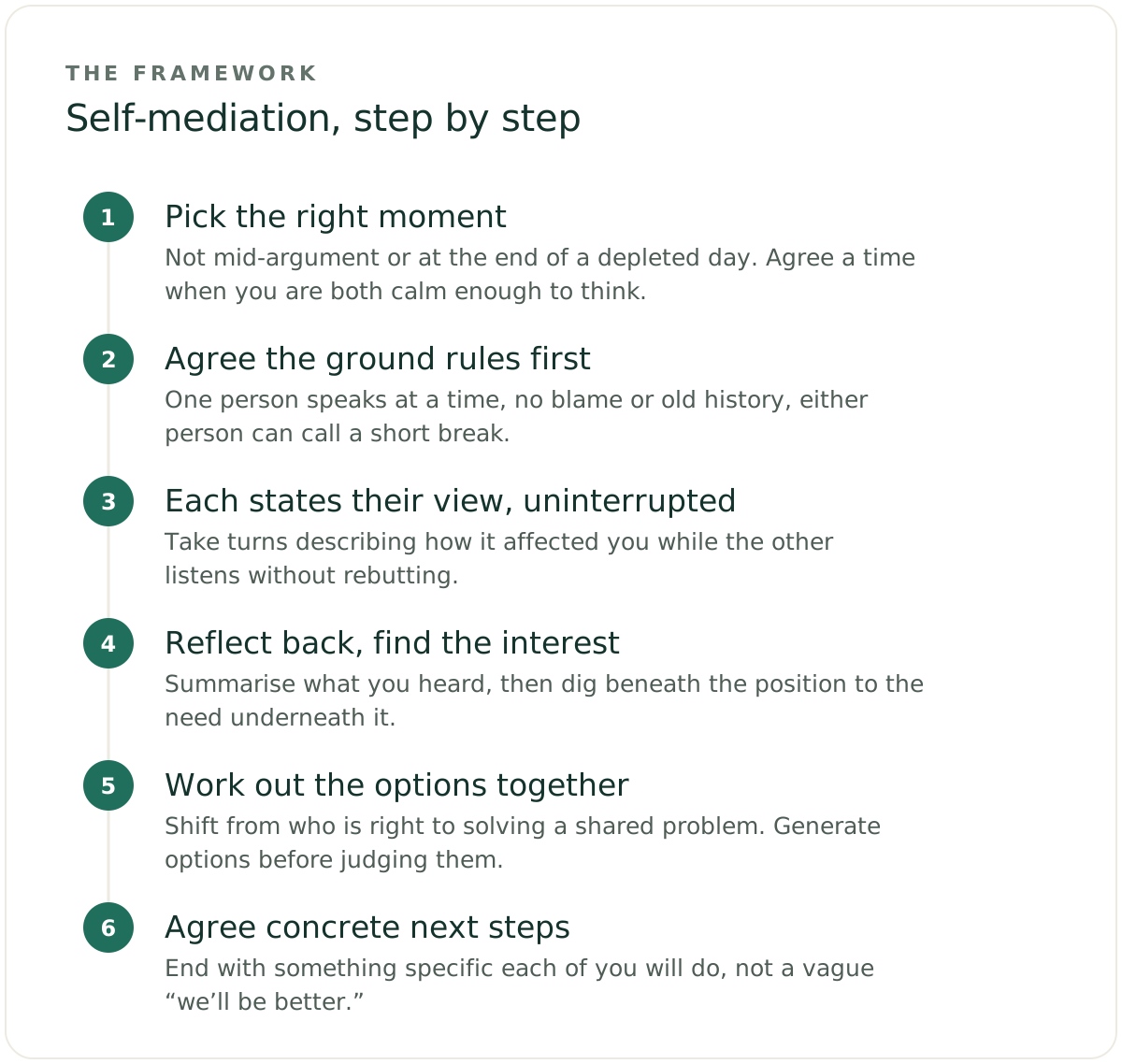
Here is a structure the two of you can run together. The order matters, because each step sets up the next.
-
Pick the right moment. Do not attempt this in the heat of the argument or at the end of a depleted day. Agree a time when you are both calm enough to think clearly. A conflict addressed from inside your window of tolerance goes very differently from one addressed while flooded.
-
Agree the ground rules first. Before discussing the issue at all, agree how you will discuss it: one person speaks at a time without interruption, no name-calling or bringing up unrelated history, and either person can call a short break if things heat up. Setting the rules together, up front, is what stands in for the mediator keeping order.
-
Each person states their view, uninterrupted. Take turns describing how you see the situation and how it has affected you, while the other simply listens, without rebutting. Speaking from your own experience rather than accusing is the shift covered in our guide to I-statements versus you-statements, and it is what keeps this step from reigniting the fight.
-
Reflect back, and dig for the interest. Before responding, the listener briefly summarises what they heard: “So it sounds like you feel sidelined when I make plans without checking.” This is active listening doing the mediator’s most important job, making each person feel genuinely heard, and it naturally surfaces the interest beneath the position.
-
Work out the options together. Once both interests are on the table, shift from arguing about who is right to solving a shared problem: what could actually meet both sets of needs? Generate options before judging them. This is the moment the conflict stops being two people against each other and becomes two people against the problem.
-
Agree concrete next steps. End with something specific that each of you will do, in plain terms, rather than a vague “we’ll be better.” A conflict is only really resolved when both people leave with a clear, shared understanding of what happens next.
The techniques that make it work
The framework gives you the shape; a few underlying skills give you the substance.
- Regulate before you engage. If either of you tips into fight or flight, the thinking brain goes offline and no framework will save the conversation. Knowing how to bring the temperature down is essential, and our guide to de-escalation techniques covers how.
- Listen to understand, not to reply. The single biggest difference between a conversation that resolves and one that loops is whether each person feels heard before solutions are attempted. Reflecting back, in step four, is not a nicety; it is the mechanism.
- Stay with your own experience. Describe the impact on you rather than the other person’s character. It is the difference between an account they can absorb and an accusation they have to defend against.
- Hold your boundaries without attacking. Self-mediation is not about caving in to keep the peace. You can be fully accountable and still clear about your limits, which is the balance struck in setting healthy boundaries.
For a broader treatment of raising something heavy without it turning into a fight, our guide to difficult conversations sits closely alongside this one.
Common mistakes in self-mediation
Even with the right structure, a few habits reliably derail it. The most common is skipping straight to solutions before either person feels heard, which leaves the real issue untouched. Another is arguing positions rather than interests, so the conversation stays a tug-of-war. A third is trying to resolve everything at once: piling every grievance into one session almost guarantees overload, so it is better to take one issue at a time. And the quietest failure is having the conversation but never agreeing concrete next steps, so nothing actually changes and the same argument returns a fortnight later.
When to bring in help
Self-mediation has a ceiling, and recognising it is a strength rather than a failure. If you have genuinely tried a structured conversation more than once and keep hitting the same wall, if the power balance is too uneven for one person to speak freely, or if the stakes are legal, financial, or safety-related, that is the point to bring in a professional. Interest-based negotiation and structured dispute resolution are, after all, whole disciplines; bodies such as the American Psychological Association document how much structure improves conflict outcomes. Knowing when the do-it-yourself version has reached its limit is part of using it wisely.
Where FairTalk fits in
The hardest part of self-mediation is being neutral and structured while you are also one of the two people in the conflict. Holding the process fairly, taking turns properly, staying off blame, and keeping to the interests rather than the positions is a lot to manage when you are also emotionally involved.
That is the gap FairTalk is designed to fill. It gives two people the neutral structure of a mediated conversation without a human mediator in the room: a single guided session both of you take part in, with the AI holding the process so neither of you has to. Either person can pause it if things get too heated, and because the analysis comes afterwards rather than in the moment, you both get a fair summary of each perspective, where you align and differ, and a set of concrete next steps, exactly the outcome a good self-mediation aims for. For the full walkthrough, see how FairTalk works. Where a conflict involves abuse, coercion, or a serious imbalance of power, a qualified professional remains the right support rather than any self-directed tool.
Frequently asked questions
How do you resolve a dispute without a mediator?
You import the structure a mediator would provide and run it yourselves. Pick a calm moment, agree ground rules up front (one person speaks at a time, no blame, either can call a break), let each person state their view uninterrupted, reflect back what you heard before responding, dig beneath the stated positions to the underlying interests, then work out options together and agree concrete next steps. The discipline of the process is what keeps a self-directed conversation from sliding back into an ordinary argument.
What is self-mediation?
Self-mediation is resolving a conflict directly with the other person by applying the principles and structure of professional mediation, without a third party present. Rather than an outside mediator managing turn-taking, neutrality, and the focus on interests, the two people take on that procedural discipline between themselves. It works best for everyday interpersonal disputes where both parties are willing and roughly equal in power, and it is distinct from simply “talking it out” precisely because of the structure it imposes.
When should you not try to resolve conflict yourselves?
Avoid a self-directed process where there is abuse, coercion, or a power imbalance significant enough that one person cannot speak freely, and where the dispute carries serious legal or financial consequences. In those situations a qualified professional, mediator, or relevant support service protects both people in a way a do-it-yourself conversation cannot. Self-mediation is built for the large middle ground of ordinary conflict, not for situations involving safety or genuine imbalance of power.
What is the difference between a position and an interest in a conflict?
A position is what someone says they want; an interest is why they want it. “You need to be home earlier” is a position; the interest beneath it might be a need to feel less alone in the evenings. Positions are often fixed and directly opposed, which is why arguing at that level stalls. Interests are frequently compatible even when positions clash, so uncovering them is usually where a workable resolution becomes possible. Getting from positions to interests is the heart of self-mediation.