An avoidant attachment style is a way of relating in which too much closeness starts to feel uncomfortable, especially under stress, so the person copes by pulling back. In arguments it often looks like going quiet, changing the subject or leaving. Paired with an anxious partner who pushes for reassurance, it can lock a couple into a cycle.
Understanding attachment styles will not end every argument, but it can change how you read them. A partner who withdraws is not necessarily cold, and a partner who keeps pressing is not necessarily needy. Both are often doing what once kept them feeling safe. This guide explains the main attachment styles, how each tends to show up in conflict, the push and pull that so many couples recognise, and what each of you can do differently.
What attachment styles are
Attachment theory began with the work of John Bowlby and Mary Ainsworth on how infants bond with their caregivers. In 1987, researchers Cindy Hazan and Phillip Shaver extended it to adult romantic relationships, proposing that adults show the same three broad styles seen in childhood: secure, avoidant and anxious. Australian researchers were early contributors too: Judith Feeney and Patricia Noller at the University of Queensland published an influential study of attachment in adult romantic relationships in 1990.
In everyday terms:
- Secure attachment. Comfortable with closeness and with independence. Can trust a partner, ask for what they need, and stay engaged when things get hard.
- Anxious attachment. Craves closeness and worries about whether it will last. Sensitive to signs of distance, and likely to seek reassurance when something feels off.
- Avoidant attachment. Values independence and self-reliance, and finds a lot of closeness or emotional intensity uncomfortable. Likely to create distance when things feel too much.
Many researchers now think of attachment less as fixed boxes and more as two sliding scales: how anxious someone feels about closeness, and how much they avoid it. Some people are high on both, sometimes called fearful avoidant: they want closeness but also find it threatening.
Two important cautions. An attachment style is not a diagnosis, and it is not a label to pin on your partner in an argument. Most people are a mix, and the same person can feel more secure with one partner than another. Online quizzes can be a useful prompt for reflection, but they are not an assessment.
Avoidant attachment style in arguments
For someone with an avoidant attachment style, an argument is often experienced as too much, too fast. The emotional intensity, the demand to respond, and the feeling of being pinned down all push the same instinct: get some distance.
That can look like:
- going quiet or giving short answers
- changing the subject or making a joke to deflect
- saying “it’s fine” when it is not
- focusing on facts and logistics instead of feelings
- physically leaving the room, or getting busy with something else
From the inside, this usually feels like self-protection, or even like keeping the peace. From the outside, it can look like not caring. It is closely related to the shutdown described in our guide to why people shut down in arguments, and when it becomes a habit it can tip into stonewalling.
Anxious attachment in arguments
For someone with an anxious attachment style, conflict tends to set off the opposite alarm. Distance feels like danger, so the instinct is to close the gap: keep talking, ask again, follow the other person, need to resolve it now. Silence can feel unbearable, and a partner stepping away can feel like a sign the relationship itself is at risk.
Research supports the idea that attachment shapes how people experience conflict. In a 1996 study published in the Journal of Personality and Social Psychology, dating couples were filmed trying to resolve a problem in their relationship. People with a more anxious orientation saw their partner and relationship less positively after discussing a major problem, while more avoidant men were rated by observers as less warm and supportive. The same discussion was a different experience depending on each person’s attachment orientation.
The anxious avoidant cycle
Put an anxious and an avoidant partner in the same argument and the two instincts feed each other.
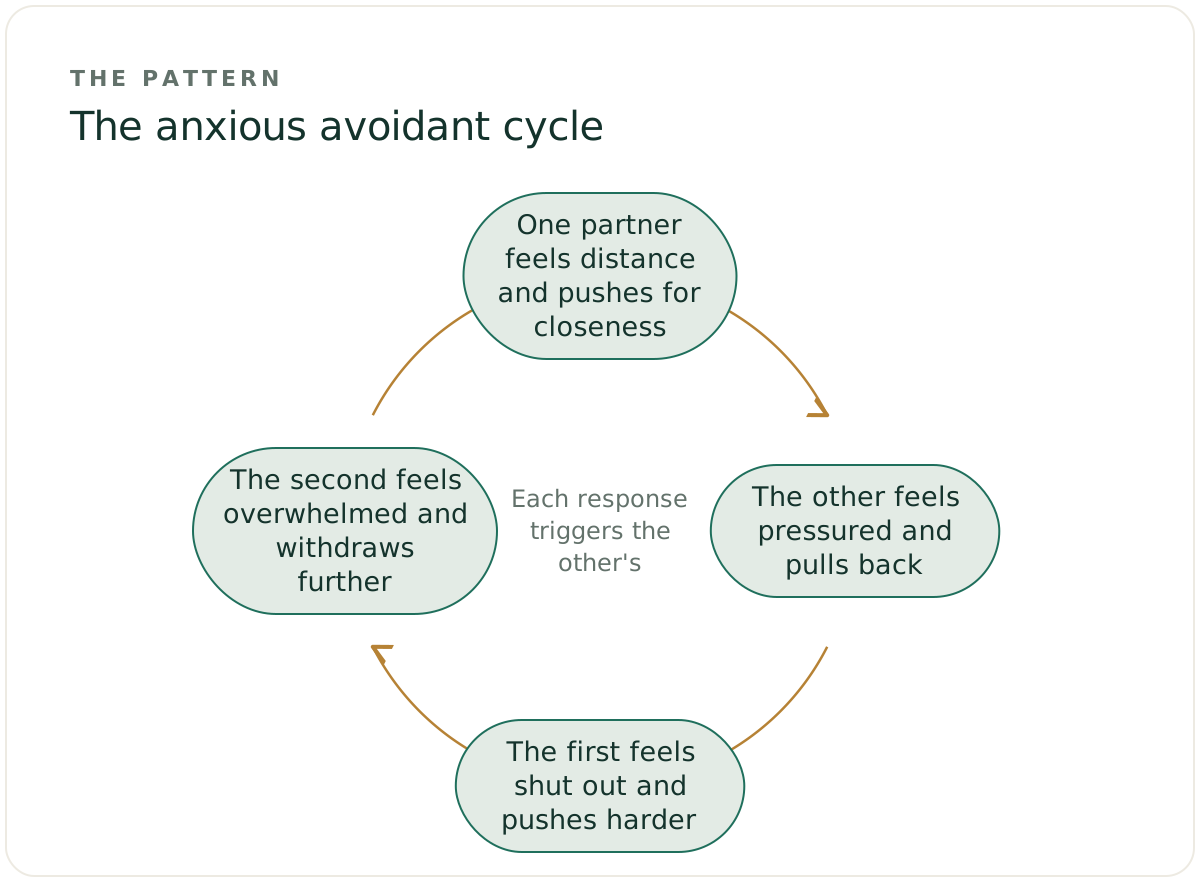
The anxious partner pushes because they feel shut out. The avoidant partner pulls back because they feel pushed. Each response confirms the other person’s fear, so the harder one pursues, the further the other retreats. Couples can run this loop for years, each convinced the other is the problem.
Researchers who study couple communication describe a closely related pattern called demand and withdraw, and it shifts depending on whose concern is on the table. If you are the partner who usually wants to talk, our guide to the reluctant partner covers gentler ways to invite someone in.
The way out is not for one person to win. It is for both people to recognise the loop, and to step out of their part of it.
How to argue better with your attachment style
If you tend to pull back
- Name it instead of disappearing. “I’m getting overwhelmed and I need a few minutes” turns a silent withdrawal into something your partner can understand.
- Always give a return time. “Can we come back to this at eight?” is the difference between a pause and abandonment for an anxious partner.
- Stay in smaller doses. You do not have to resolve everything in one go. Agree to talk for twenty minutes, then take a break.
- Notice the urge to minimise. “It’s not a big deal” can feel calming to you and dismissive to them.
If you tend to push
- Settle yourself before you pursue. Slow your breathing, step away briefly, remind yourself the relationship is not ending because a conversation paused.
- Ask for reassurance directly. “I just need to know we’re okay” works far better than repeated questions, accusations or following them from room to room.
- Accept a pause with a time attached. If they promise to come back, let them. Each time they do, trust grows.
- Start softly. Opening with how you feel, rather than what they did, makes it easier for a withdrawing partner to stay.
Together
- Talk about the pattern when you are calm, not in the middle of it: “I think when I push, you pull back, and then I push harder. Can we try something different?”
- Agree a pause signal that either of you can use, and a promise to come back.
- Lead with reassurance, then the problem: “I love you and I want to sort this out” changes how the next sentence lands.
- Describe the loop, not each other. “We get stuck in a cycle” is a shared problem. “You always run away” is an accusation.
Attachment styles can change
Attachment styles are not fixed. A review of the research by Chopik and colleagues, titled Attachment security and how to get it, looks at how and why attachment orientations change in adulthood. Experiences in relationships, including a partner who reliably comes back after a pause, can shift how secure people feel over time, and couples counselling can help where the patterns run deep.
If what you are dealing with is not anxiety and distance but control, such as a partner who tracks you, isolates you or makes you afraid, that is not an attachment style. Contact 1800RESPECT on 1800 737 732, or 000 in an emergency.
Where FairTalk fits in
The anxious avoidant cycle is hardest to break in the moment, when one of you is pushing and the other is pulling away. In a FairTalk session, you talk the issue through together while FairTalk listens without taking sides, and either of you can pause if it starts to get too much, which gives a withdrawing partner a structured way to step back and come back. Afterwards, you both get a fair picture of each other’s perspective and a way forward you have shaped together, along with guidance on the communication skills each of you could build. If your partner is not ready to take part, the solo session feature lets you work through your side first.
Frequently asked questions
What is an avoidant attachment style?
An avoidant attachment style is a way of relating in which a person values independence and finds a lot of closeness or emotional intensity uncomfortable. Under stress they tend to create distance, by going quiet, changing the subject or pulling away. It is a pattern, not a diagnosis, and many people show it more in some relationships than others.
How does someone with an avoidant attachment style act in an argument?
They often withdraw. That can mean going quiet, giving short answers, deflecting with a joke, focusing on logistics instead of feelings, or leaving the room. From the inside it usually feels like self-protection or keeping the peace, even though a partner may read it as not caring.
What is the anxious avoidant cycle?
The anxious avoidant cycle is a loop in which one partner pushes for closeness because they feel shut out, and the other pulls back because they feel pressured. Each response triggers the other’s, so the more one pursues, the more the other withdraws. Breaking it means both people recognising the loop and changing their own part of it, such as taking pauses with an agreed return time and asking for reassurance directly.
Can attachment styles change?
Yes. Research on adult attachment shows that attachment orientations can change over time, and experiences in relationships can shift how secure people feel. Couples counselling can also help where patterns are long-standing.
Can an anxious and an avoidant partner have a healthy relationship?
Yes, when both understand the pattern and work on it together. Practical habits make a big difference: the withdrawing partner naming their need for space and always giving a time to come back, the pursuing partner asking for reassurance directly and accepting pauses, and both talking about the cycle when they are calm rather than in the middle of it.