Burnout is usually talked about as a work problem: the flat exhaustion, the cynicism, the sense of running on empty no matter how much you sleep. But burnout does not politely stay at the office. It comes home with you, and one of the first places it shows up is in your closest relationships, as a shorter fuse, a colder distance, and arguments that seem to catch fire over nothing.
If you have found yourself snapping at the people you love most, withdrawing from them, or fighting the same pointless battles when you are worn down, you are not simply being difficult. Exhaustion changes how you handle conflict at a physiological level. Understanding how burnout affects relationships, and why it so reliably turns into conflict, is the first step to stopping it from quietly eroding the connections that matter most.
What burnout actually is
Burnout is more than being tired. The World Health Organization classifies it as an occupational phenomenon with three dimensions: exhaustion, increased mental distance from or cynicism about what you are doing, and a reduced sense of effectiveness. Although it was defined in the context of work, researchers now recognise the same pattern in other demanding roles, including parenting and caregiving.
Those three dimensions matter here because each one maps directly onto how you show up in a relationship. Exhaustion leaves you with no spare capacity. Cynicism and detachment pull you away from the people around you. And a reduced sense of effectiveness makes every additional demand, including the ordinary needs of a partner or family member, feel like one more thing you are failing at. Burnout does not just drain your energy for work; it drains the energy a relationship runs on.
Why burnout lands hardest on the people closest to you
There is a cruel irony in how burnout distributes itself. All day, you spend your dwindling reserves holding it together for other people: colleagues, clients, a boss. You manage your tone, swallow your frustration and perform being fine. By the time you get home, the regulation tank is empty, and the people who get the depleted, unfiltered version of you are the ones you care about most.
This is sometimes called the “spillover” effect: stress and depletion from one domain bleed into another. Home is where the mask comes off, which is healthy in principle, but under burnout it means your partner or family absorbs the exhaustion, the irritability and the withdrawal you spent all day suppressing elsewhere. They often get the worst of you precisely because they are the safest place to fall apart.
How burnout turns into conflict
Burnout does not create conflict out of nowhere. It lowers your threshold for it and strips away the resources you would normally use to handle it well. A few mechanisms do most of the damage.
- A shorter fuse. Depletion narrows your window of tolerance, the zone in which you can stay calm and think clearly. Small irritations that you would usually let slide tip you straight into reactivity, which is why burnt-out people flare up over dishes and tone rather than anything that actually matters. Our guide to de-escalation techniques covers how to bring the temperature back down.
- Withdrawal and distance. The cynicism and detachment of burnout often show up as pulling away: less conversation, less affection, less interest. To a partner, that emotional absence can read as rejection, and the pursuit that follows can deepen the withdrawal, a dynamic explored in why people shut down in arguments.
- A shrinking supply of empathy. Understanding someone else’s perspective takes energy, and burnout leaves little to spare. The emotional bandwidth that would normally let you meet a partner’s bid for connection, or hear their frustration without defensiveness, is simply not there. It is the opposite of the state described in emotional intelligence in relationships.
- Resentment over the invisible load. When you are running on empty, the imbalances you might otherwise absorb, who does more, who carries the mental load, start to feel unbearable. Burnout turns quiet tolerance into simmering resentment, and resentment is fuel for conflict.
The burnout and conflict cycle
The real danger is that burnout and relationship conflict feed each other. Burnout makes conflict more likely; the conflict then adds stress and removes one of your most important sources of recovery, a supportive relationship, which deepens the burnout, which generates more conflict. Left alone, the loop tightens.
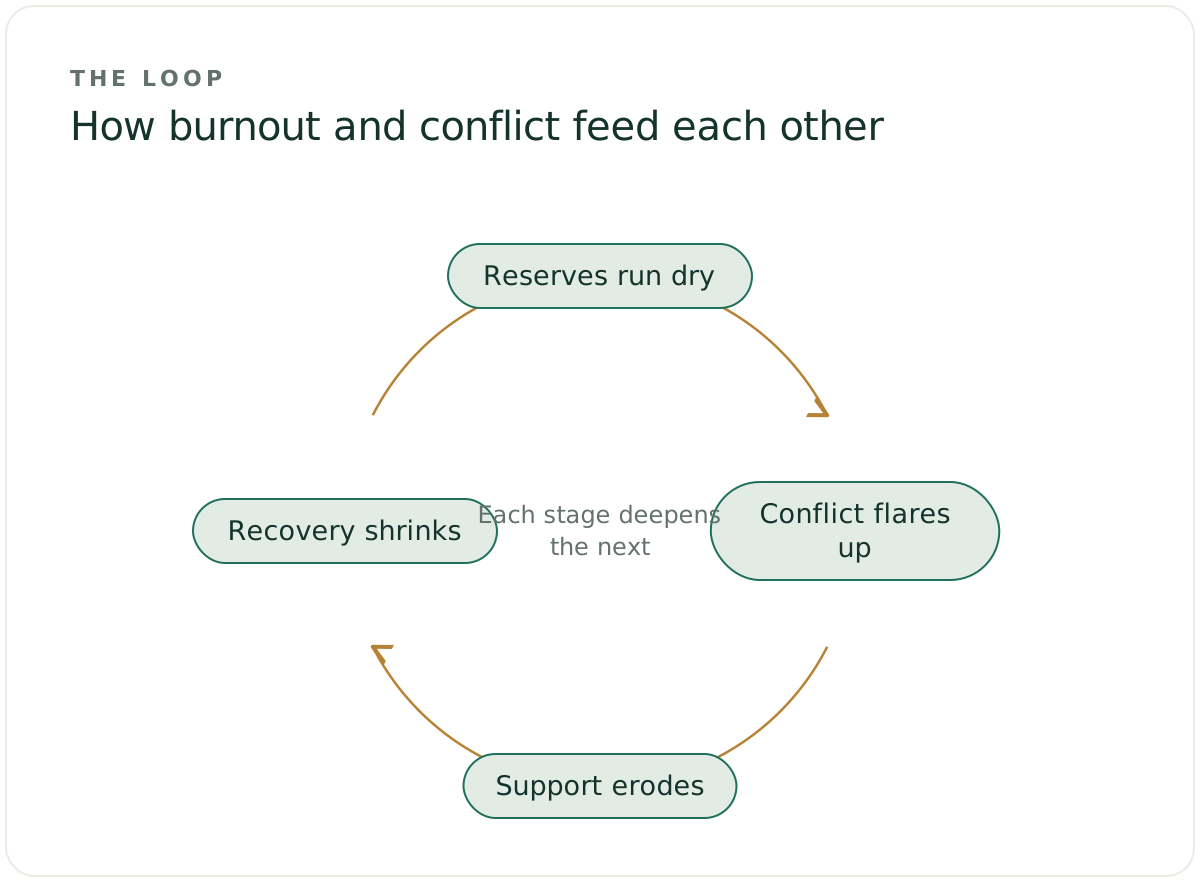
Breaking this cycle is not about trying harder to be patient, which is just asking an empty tank to produce more fuel. It is about interrupting the loop at a point where you actually have leverage.
How to break the cycle
Name it, out loud, as burnout. The single most useful move is to say plainly that you are burnt out and that it is affecting how you are showing up, rather than letting your partner interpret your withdrawal and short temper as being about them. “I’m running on empty and I know I’ve been snappy. It’s not you.” That one sentence reframes the whole dynamic from a relationship problem to a shared challenge.
Separate the person from the exhaustion. For the partner on the receiving end, it helps enormously to recognise that the coldness or irritability is a symptom, not a verdict on the relationship. That does not mean tolerating genuinely hurtful behaviour, but it does change the response from counter-attack to teamwork.
Protect recovery like it matters, because it does. Burnout does not resolve through willpower; it resolves through genuine rest and a reduction in demands. That often means renegotiating the load at home and holding firmer limits at work, which is where setting healthy boundaries becomes a relationship-saving skill rather than a selfish one.
Have the conversation when you have something in the tank. The worst time to work through the resentment and imbalance is at the end of a depleted day. Choose a calmer moment, and approach it as a shared problem to solve. Our guide to difficult conversations covers how to raise something heavy without it turning into a fight.
When it is more than burnout
Burnout and depression can look similar from the outside, and they sometimes travel together, but they are not the same thing, and persistent low mood, hopelessness, or a loss of interest that does not lift with rest deserves proper attention. If exhaustion is bleeding into every part of your life, or the conflict at home has become constant or frightening, that is a sign to reach for real support rather than another weekend of trying to recharge. In Australia, Beyond Blue offers free, confidential help.
Where FairTalk fits in
When you are burnt out, the conversations most worth having are the ones you have the least energy for, and they tip into conflict fastest. FairTalk is built to take some of that load off. Because a session is one structured conversation rather than an open-ended argument, and because either person can pause it the moment it becomes too much, it lowers the effort and the risk of raising something hard when your reserves are already low.
And because the analysis comes after the session rather than in the heat of it, you both get a calm, fair summary of each perspective and a few concrete next steps, at a point when you actually have the capacity to take them in. It will not fix the burnout itself, that takes rest and change, but it can stop exhaustion from quietly turning your closest relationship into one more thing that drains you.
Frequently asked questions
Can burnout really cause relationship problems?
Yes. Burnout reduces the exact resources a relationship depends on: patience, emotional energy, empathy and the capacity to stay calm under stress. It lowers your threshold for irritation, pulls you into withdrawal and detachment, and turns tolerable imbalances into resentment. Because you spend your regulation managing other people all day, your partner or family often absorbs the depleted version of you. Left unaddressed, this reliably produces more frequent and more intense conflict at home.
Why do I snap at my partner when I’m exhausted but hold it together at work?
Because all day you are spending energy to regulate yourself in front of colleagues and clients, and by the time you get home that tank is empty. Home is where the mask comes off, so the frustration you suppressed elsewhere surfaces with the people who feel safest. It is not that you care less about your partner; it is that they get you at your most depleted, when you have the least left over to manage your reactions.
How do I stop burnout from ruining my relationship?
Start by naming it openly, so your withdrawal and short temper are understood as burnout rather than as being about your partner. Then treat recovery as non-negotiable: reduce demands, renegotiate the load at home, and hold firmer boundaries at work. Have the harder conversations when you have some energy rather than at the end of a draining day, and approach the situation as a shared problem to solve together rather than a fault to assign.
Is it burnout or is it depression?
They can look alike and sometimes overlap, but burnout is typically tied to chronic demands and eases with genuine rest and reduced load, while depression tends to be more pervasive, colours everything, and does not lift simply by resting. If low mood, hopelessness, or loss of interest persist, or the conflict at home has become constant or frightening, that is a signal to seek professional support rather than to push through. A GP or a service like Beyond Blue is a good starting point.