If your partner is reluctant to talk about a problem, start with what you can do on your own. Get clear on what you actually need, try to understand why they might be holding back, and then invite them in gently, at a calm moment, with a small and fair first conversation rather than a confrontation.
Most relationships have one. When something needs sorting out, one person wants to talk about it now, and the other would rather not talk about it at all. It is easy for the keen one to read that as not caring, and for the reluctant one to feel cornered. Neither is usually true. This guide is for the person who wants to sort it out: how to make progress without shaming or blaming anyone, and how to make it easier for a reluctant partner to say yes.
Reluctance is not the same as not caring
A partner who avoids a conversation is rarely saying “I don’t care about this relationship.” Far more often they are saying something like:
- “I’m worried I’ll be blamed.” If past conversations ended with them feeling like the problem, avoiding the next one makes sense.
- “I’ll lose.” Some people feel out-argued in conflict. Staying quiet feels safer than another discussion they cannot win.
- “It’ll turn into a fight.” If talking has led to shouting before, silence looks like the peaceful option.
- “This sounds like therapy.” Being asked to “work on the relationship” can feel heavy, clinical or embarrassing.
- “I need more time.” Some people process slowly and need to think before they can talk well.
- “I don’t see a problem.” What feels urgent to one person may genuinely not register for the other yet.
Reluctance also has a lot to do with which side of the issue you are on. In a well-known 1990 study of couples published in the Journal of Personality and Social Psychology, both husbands and wives were more likely to push when discussing a change they wanted, and more likely to pull back when discussing a change their partner wanted. In other words, the reluctant partner on this issue may be the keen one on the next. It is a position in the conversation, not a character flaw.
The pattern also feeds itself. The more one person pushes, the more the other withdraws, and the more they withdraw, the harder the first person pushes. If your partner goes quiet or leaves the room when things get tense, our guide to why people shut down in arguments explains what is usually happening underneath.
Work on the problem yourself first
You cannot make someone talk. But you can do a great deal of the work on your own side, and that work often changes the conversation when it does happen.
- Get clear on what is actually bothering you. Not the list of everything that annoys you, but the one thing that matters most right now, and why. “I feel like I’m the only one who notices what the kids need” is workable. “You never help” is not.
- Find the need underneath. Behind most complaints is a need: to feel respected, supported, included, or heard. Knowing yours makes it far easier to ask for something specific.
- Look honestly at the pattern, without blaming yourself either. If you tend to raise things when you are already frustrated, or in a long list, your partner may be reacting to the delivery as much as the issue.
- Decide what you would like to happen. A specific change, a decision, or simply to be understood. Each needs a different conversation.
- Notice when the clarity is enough, and turn it into a next step. Sometimes, once you understand what is really going on for you, the issue shrinks, or the next step becomes obvious without a big talk at all. Either way, aim to come away with something concrete you can act on, whether that is a change you will make yourself or a plan for how to raise it. The section on FairTalk below covers one way to get there.
This is the same groundwork covered in our guide to resolving conflict on your own. It is not a consolation prize for a partner who will not engage. It is usually the best preparation for one who eventually will.
How to invite a reluctant partner into the conversation
When you are ready, the way you ask matters more than almost anything you say afterwards.
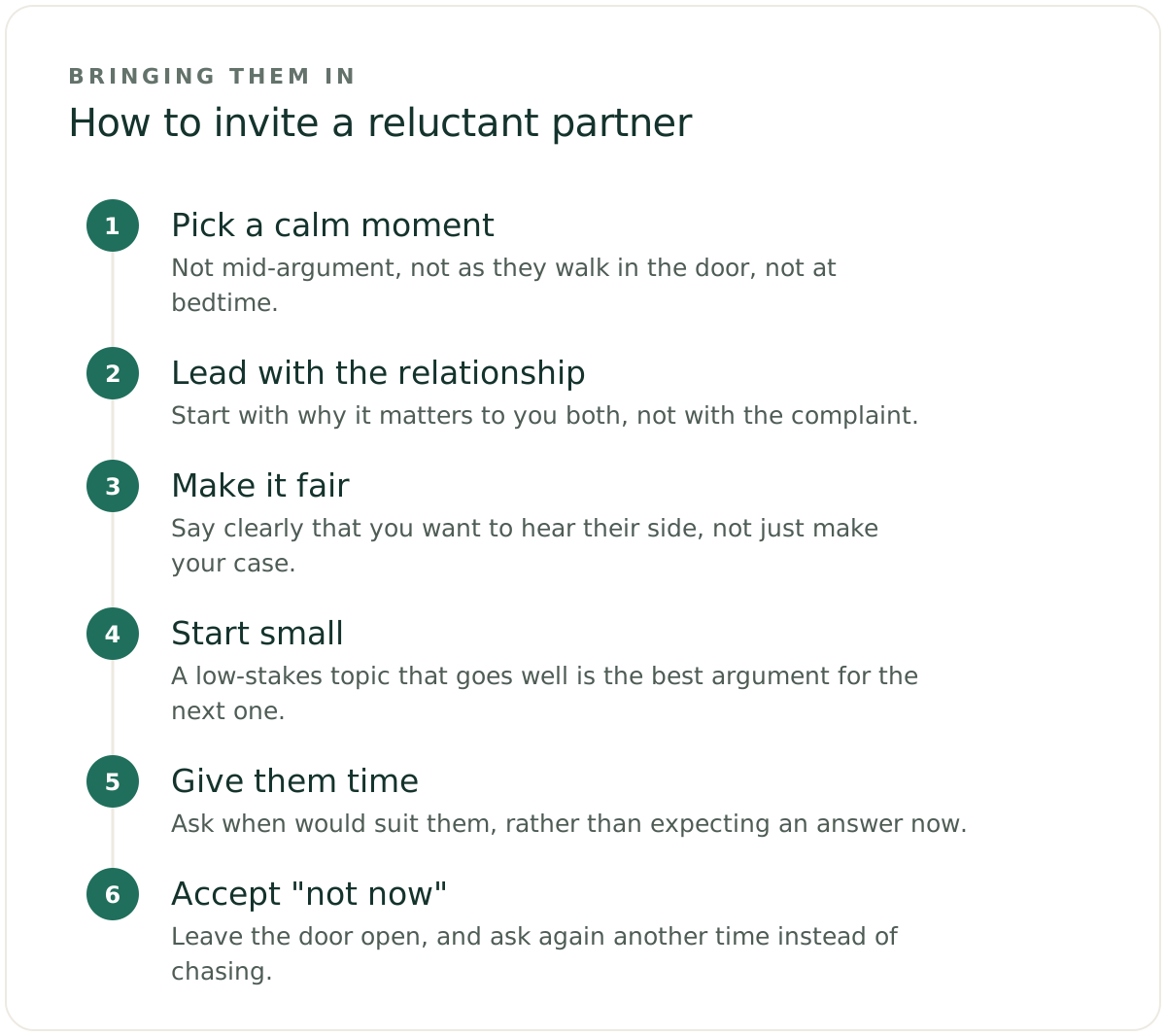
- Pick a calm moment. Not in the middle of an argument, not as they walk in the door, not at bedtime.
- Lead with the relationship, not the complaint. “I don’t want us to keep going round in circles on this” lands very differently from “We need to talk.”
- Make it fair. Say clearly that you want to hear their side, not just make your case. “I’d like to sort this out properly, and that means hearing how you see it too.”
- Start small. If big conversations feel threatening, begin with something low-stakes, like the chores, a holiday plan or how you split a cost. A small conversation that goes well is the best argument for the next one.
- Give them time. Ask when would suit them rather than expecting an answer on the spot. Being able to choose the moment makes people far more willing.
- Accept “not now” without chasing. Leave the door open (“No pressure, whenever suits you”), and ask again another time rather than pushing harder now.
Using “I” language helps throughout: describe your experience rather than their faults. Our guide to I-statements has examples you can adapt.
What to avoid
- Ambushes. Raising it in front of others, or the moment they relax, teaches them that being near you means being confronted.
- Ultimatums. “Talk about it or else” can win a conversation and lose the relationship’s trust.
- Bringing in allies. Telling them their friends or family agree with you turns a disagreement into a gang-up.
- Keeping score. Lists of past failures put people on the defensive before the real issue is even raised.
- “We need to talk.” Few phrases make a reluctant person brace faster.
When they still say no
Some partners will not be ready, and that is painful. You can still keep working on your side, and individual counselling can help you think it through with someone in your corner. Over time, a calmer and less pressured approach often changes the other person’s willingness more than any argument would.
But reluctance is different from fear. If your partner refuses to discuss things because they control the relationship, or if you are afraid of how they will react to being asked, the problem is not a communication gap. In that situation, raising it may not be safe, and a tool for two willing people is not the right approach. Contact 1800RESPECT on 1800 737 732 for confidential support, or 000 in an emergency.
Where FairTalk fits in
FairTalk was built around this exact situation. You can start on your own: a one-person conversation lets you talk the issue through privately and get clear on your side and what matters to you. It does not stop at clarity. You also leave with actionable suggestions for resolving the issue, practical steps you can take to move forward, along with guidance on the skills worth building.
Those suggestions work in two directions. Some are about moving forward yourself: a change you can make, a boundary you can hold, or a way of seeing the situation that takes the sting out of it. Others help you prepare for the conversation with your partner: what you want to say, what you would like to ask for, and how to raise it so it lands as an invitation rather than a complaint. It will not tell you what your partner thinks. But sometimes the clarity and a clear next step are the resolution, and when they are not, you go into the conversation knowing exactly what you want from it.
When you are ready, you can invite your partner to join you. That invitation tends to answer a reluctant partner’s worries before they voice them. FairTalk takes no sides, and both of you get heard equally, so it is not two against one. It is not therapy. And nobody is told they lost. You talk the issue through together while FairTalk listens, either of you can pause if it gets heated, and afterwards you both get a fair picture of each other’s perspective and a way forward you have shaped together. Starting with a small, everyday topic is a good way to try it.
Start on your own. Bring them in when you are ready.
Frequently asked questions
Why is my partner reluctant to talk about problems?
Most often because they expect the conversation to go badly for them: they worry about being blamed, losing the argument, or it turning into a fight. Some people also need more time to think before they can talk, or simply do not see the issue as a problem yet. Research on couples suggests that people tend to pull back when discussing a change their partner wants, so reluctance often reflects which side of the issue someone is on rather than a lack of care.
How do I get my partner to open up without pushing?
Choose a calm moment, lead with the relationship rather than the complaint, and make it clear you want to hear their side too. Start with a small, low-stakes topic, let them choose when to talk, and accept “not now” without chasing. Pushing harder usually makes a reluctant partner withdraw further, while a fair and unpressured invitation makes it easier to say yes.
Should I give my partner an ultimatum to talk?
Usually not. An ultimatum may get a conversation started, but it tends to put your partner on the defensive and can damage trust. A calm, specific invitation, repeated gently over time, is more likely to lead to a conversation that actually resolves something.
Can I work on relationship problems on my own?
Yes, more than most people expect. You can get clear on what is bothering you and the need underneath it, look at your part in the pattern, and decide what you want to happen. That work often changes how the conversation goes when your partner does engage, and sometimes it resolves the issue without a big talk at all. A structured one-person conversation, such as FairTalk’s, can help by giving you actionable suggestions for moving forward, either on your own or in preparing for the conversation with your partner.
What if my partner refuses because I’m afraid of how they’ll react?
Then this is a safety issue rather than a communication problem, and you should not feel pressured to raise it. Contact 1800RESPECT on 1800 737 732 for confidential support, or 000 in an emergency. Tools designed for two willing people to talk things through are not the right approach where there is fear, control or coercion.