Stonewalling is when one person shuts down and withdraws from a conversation: they stop responding, go quiet, look away or leave, and the other person is left talking to a wall. In relationships it usually happens in the middle of conflict, and more often than not it is a sign of overwhelm rather than a deliberate tactic.
That distinction matters, because the two need very different responses. Stonewalling is one of the four patterns the Gottman Institute found most reliably predict a relationship breaking down, alongside criticism, contempt and defensiveness, which together are known as Gottman’s Four Horsemen. The good news is that it is also one of the most fixable, once both people understand what is actually going on.
What stonewalling means
To stonewall is to withdraw from an interaction while still being physically present, or to leave it without saying when or whether you will come back. The person doing it may be sitting right there, but they have stopped engaging: no eye contact, no acknowledgement, no real reply.
It helps to separate stonewalling from three things it is often confused with:
- Taking a break. A break is named and time-bound: “I need twenty minutes, then let’s come back to this.” Stonewalling is silent and open-ended.
- Needing time to think. Some people process slowly and need quiet before they can respond well. That is not stonewalling, as long as they say so and return.
- The silent treatment. Deliberately withholding words to punish someone is a different thing. Stonewalling is usually about being overwhelmed; the silent treatment is usually about control. More on that below.
The signs of stonewalling
Stonewalling can be loud in its quietness or almost invisible. Common signs include:
- one-word answers (“fine”, “whatever”, “okay”) that close the topic rather than engage with it
- a blank or frozen face, or looking at a phone, the floor or the television instead of the other person
- turning away, busying themselves with something else, or leaving the room
- changing the subject abruptly
- going completely silent while the other person is still talking
On their own, any of these can happen for ordinary reasons. The pattern is what matters: a shutdown that arrives when the conversation gets difficult, and that leaves the issue exactly where it was.
Why people stonewall: emotional flooding
Most stonewalling is not strategy. It is physiology. When a conversation becomes intense enough, the nervous system shifts into a threat response: heart rate climbs, stress hormones rise, and the parts of the brain needed for listening, empathy and problem solving work far less well. Gottman’s research describes this state as emotional flooding, and found that once a person’s heart rate passes roughly 100 beats per minute, calm conversation becomes very hard.
From the inside, flooding feels like being swamped. Anything said next seems likely to make things worse, so the safest-seeming option is to say nothing at all. The person shutting down often experiences themselves as calming the situation down, while the person facing them experiences the exact opposite: being ignored, dismissed and shut out.
That mismatch is what makes stonewalling so damaging. The partner who is left talking usually pushes harder to get a response, which floods the stonewaller further, which deepens the shutdown. Our guide to why people shut down in arguments covers that cycle, and how to reconnect after it, in more depth.
Other things feed the habit too: growing up in a home where conflict was dangerous or pointless, a belief that nothing said will change anything, or a fear of saying something that cannot be taken back.
Stonewalling or a deliberate pause?
Stepping away is not the problem. Stepping away in silence, with no sign of when it ends, is. The same moment can go two very different ways depending on whether the withdrawal is named.
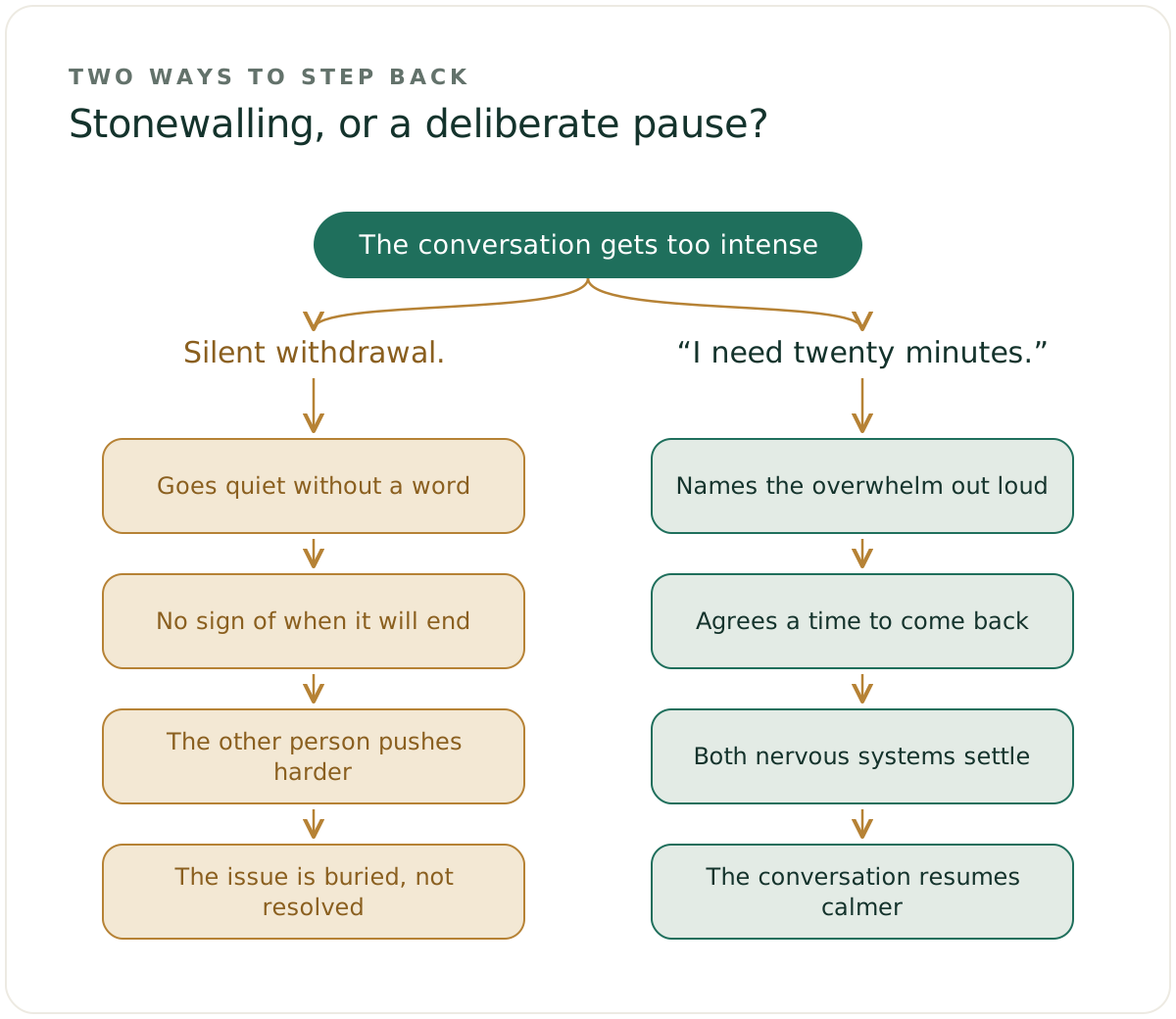
The pause is not a technicality. It tells the other person that you are still in the relationship and still willing to have the conversation, just not in the state you are in right now. That changes how the silence feels to them, and it gives both nervous systems the time they need to settle.
Is stonewalling a form of abuse?
Usually, no. Most stonewalling is a flooded person shutting down, and it improves when both people learn to spot flooding early and pause well.
But silence can also be used deliberately to punish, frighten or control someone: refusing to speak for days until the other person gives in, or withdrawing as a way of keeping them anxious and compliant. That is not a communication habit, and it is not something a structured conversation can fix. If silence is being used against you in that way, or if you feel afraid of how your partner will react, contact 1800RESPECT on 1800 737 732, or 000 in an emergency. FairTalk is not the right tool where there is abuse, coercion or a significant power imbalance.
What to do if your partner stonewalls you
When someone has shut down, the instinct is to chase the response: say it again, louder, or more pointedly. That almost always deepens the shutdown. What helps instead:
- Stop pushing. More words land on a nervous system that is already overloaded. Pausing is not giving up the point.
- Name what you see, without accusation. “It looks like this has got too much. Should we take a break?” is far easier to hear than “Why are you ignoring me?”
- Offer a break with a time attached. Suggest twenty minutes or more, and agree when you will both come back to it.
- Use the break well yourself. Do something calming, and resist rehearsing your case, which keeps your own stress running.
- Start softly when you return. Open with what you are both trying to sort out, not with the shutdown itself.
If the stonewalling is a regular pattern rather than a one-off, raise it at a calm moment, as something you want to work on together rather than a charge against them.
What to do if you are the one who stonewalls
If you recognise yourself in this article, you are in good company, and the fix is more practical than it might sound.
- Learn your early signs. A hot face, a tight chest, a racing heart, the urge to escape. The earlier you notice, the more options you have.
- Say it out loud. “I’m getting overwhelmed and I don’t want to shut down on you” turns an invisible withdrawal into something the other person can understand.
- Take a real break. Twenty minutes is roughly the minimum for the body to settle after flooding. Walk, breathe slowly, do something absorbing.
- Don’t rehearse the argument. Replaying who said what keeps you flooded. Give your attention to something else.
- Come back when you said you would. Returning is what makes a pause different from stonewalling, and it rebuilds trust every time you do it.
Many couples find it useful to agree on this in advance: a word or signal either of you can use to call a pause, and a standing promise to come back. The techniques in how to stop fighting with your partner include the timed break in more detail, and how to fix a relationship after an argument covers reopening the conversation gently afterwards.
How FairTalk helps
A conversation that keeps ending in a shutdown needs structure more than willpower. In a FairTalk session, both of you talk the issue through in one conversation while the AI listens impartially, and either of you can pause the session if it gets heated, then come back to it. Afterwards, the analysis sets out both perspectives side by side, the communication patterns that showed up, and specific actions each of you can commit to.
And if your partner is not ready to take part, FairTalk also offers a one-person conversation, so you can work through the situation from your side and leave with a structured summary of your perspective and practical next steps.
Frequently asked questions
What does stonewalling mean?
Stonewalling means shutting down and withdrawing from a conversation, by going silent, refusing to engage, looking away or leaving, so the other person is left talking to a wall. In relationships it most often happens during conflict, when one person becomes overwhelmed. It is one of the four communication patterns that Gottman’s research links most strongly to relationship breakdown.
Is stonewalling the same as the silent treatment?
No, although they can look similar from the outside. Stonewalling is usually an overwhelmed person shutting down because they cannot engage well in that moment. The silent treatment is a deliberate refusal to speak, used to punish or pressure someone, and when it is used to control or frighten a partner it can be a form of emotional abuse.
Is stone walling a form of emotional abuse?
Stone walling is usually not abuse: most of the time it is a flooded person shutting down, and it improves when both people learn to pause and come back. It becomes abusive when silence is used deliberately and repeatedly to punish, frighten or control someone. If that describes your situation, or you feel afraid of your partner, contact 1800RESPECT on 1800 737 732, or 000 in an emergency.
How do you respond to someone who is stonewalling you?
Stop pushing for a response, name what you see without blame, and offer a break with an agreed time to return. Pressing harder floods the other person further and deepens the shutdown. When you come back to the conversation, start softly, with what you are both trying to sort out rather than with the silence itself.
Can a relationship survive stonewalling?
Yes, when both people understand it and change how they handle it. Stonewalling is a habit, usually driven by emotional flooding, and couples who learn to spot flooding early, take real breaks and reliably return to the conversation can break the pattern. If it is entrenched, or combined with contempt, support from a qualified couples therapist can help.