You are in the middle of an argument, trying to get through to someone, and they go quiet. They stop responding, look away, give one-word answers, or leave the room entirely. It feels like being stonewalled, like they have decided you are not worth engaging with, and it is one of the most frustrating and hurtful things that can happen in a conflict.
Here is the reframe that changes everything: most of the time, that shutdown is not indifference. It is the opposite. It is emotional flooding, a nervous system so overwhelmed that it can no longer engage. Understanding what is actually happening, and why pushing harder makes it worse, is the key to bringing the other person back.
What Is Actually Happening: Emotional Flooding
The shutdown has a physiological name: emotional flooding. When a conflict becomes intense enough, the body’s threat-response system takes over. Research from the Gottman Institute, which has studied couples in conflict for decades, found that once heart rate passes roughly 100 beats per minute, the capacity for empathy, listening, and rational thought drops sharply. The thinking brain effectively goes offline and the survival brain takes charge.
We usually talk about fight or flight, but there is a third response: freeze. When fighting feels impossible and leaving is not an option, the nervous system shuts the system down instead. That is what a person who goes silent and withdrawn in an argument is often doing. They are not calmly refusing to engage. They are flooded, and the shutdown is an involuntary protective reflex, not a considered decision to ignore you.
Recognising this matters because it completely changes the appropriate response. You do not reason someone out of a freeze response, any more than you can talk someone out of a panic attack by arguing with them. For the fuller picture of what is happening in the brain when a conflict tips over, see the science of conflict.
Shutdown Is Not Always the Same Thing
It is worth being honest that withdrawal can mean different things. A single shutdown in a heated moment is usually flooding. When withdrawal becomes the habitual way someone handles conflict, it is what the Gottman research calls stonewalling, one of Gottman’s Four Horsemen, the communication patterns most corrosive to relationships over time. Stonewalling is usually rooted in overwhelm too; what makes it so damaging is that it becomes silent, open-ended and routine. Our explainer on what stonewalling is covers the signs and what each person can do.
Something different again is the silent treatment: deliberately withholding words to punish or pressure someone. The difference usually shows in the body. A flooded person tends to look tense, distressed, or frozen. Someone using silence as a weapon tends to look dismissive or cold. Either way, continuing to pursue them in the moment rarely helps, but knowing which one you are dealing with shapes the longer conversation you need to have. And if silence is being used to control or frighten you, that is not a communication problem to solve together: contact 1800RESPECT on 1800 737 732.
Why Pushing Makes It Worse
The instinct, when someone withdraws, is to chase: to raise your voice, follow them into the next room, demand a response, or say “don’t you dare walk away from me.” It is completely understandable, and it is exactly the wrong move. If your partner avoids difficult conversations more generally, our guide to the reluctant partner covers gentler ways to invite them in.
To a flooded nervous system, pursuit reads as an increasing threat. The more you press, the more the alarm system fires, and the deeper the shutdown becomes. This is the pursue-and-withdraw cycle that traps so many couples: one person chases connection, the other retreats to cope, and each behaviour intensifies the other. The pursuer feels abandoned; the withdrawer feels invaded. Both are trying to feel safe, and both are making the other feel less so.
Breaking the cycle means doing the counterintuitive thing: when they pull back, you stop pushing.
How to Bring Someone Back
When you recognise a shutdown for what it usually is, a few steps help the other person come back to the conversation.
-
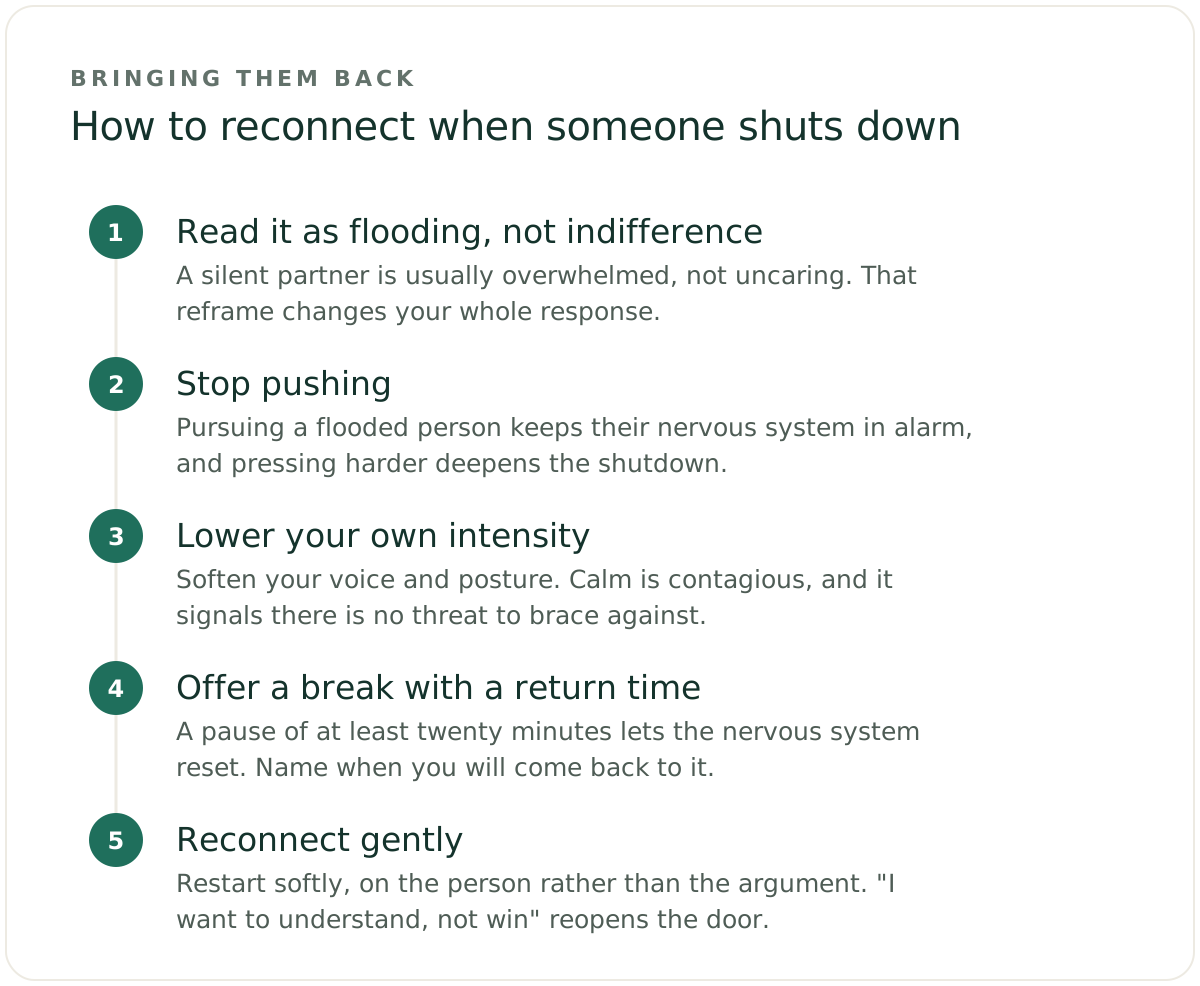
Read it as flooding, not indifference. Start from the assumption that the person is overwhelmed rather than uncaring. That single reframe softens your own response and stops the situation escalating.
-
Stop pushing. Pursuing a flooded person keeps their nervous system in alarm. Pressing for a response right now will only deepen the shutdown, so ease off the pressure first.
-
Lower your own intensity. Soften your voice, slow your pace, unclench your posture. Calm is contagious, and it signals to their nervous system that there is no longer a threat to brace against.
-
Offer a break with a return time. The research points to at least twenty minutes for an activated nervous system to return to baseline, so a genuine pause helps. The crucial part is naming when you will come back to it, so the break is a reset, not an abandonment. Our guide to de-escalation techniques covers how to do this well.
-
Reconnect gently. When you return, restart softly and focus on the person rather than relitigating the argument. Something like “I don’t want to fight, I want to understand” reopens a door that pressure keeps closed. If the shutdown followed something you said or did, this is often the moment for a genuine repair; our guide to how to apologise properly covers what makes one land.
If You Are the One Who Shuts Down: How to Stop Withdrawing Emotionally
Sometimes the person who withdraws is you. That is nothing to be ashamed of, and it is very changeable. The goal is not to never need space. It is to replace an involuntary shutdown with a deliberate, announced pause, so the other person knows you are still in the conversation.
- Learn your early warning signs. A hot face, a tight chest, a racing heart, going blank, or the urge to escape the room. The earlier you catch them, the more choice you have.
- Name it before you disappear. “I’m starting to shut down and I need a few minutes, but I do want to finish this” tells the other person you are not rejecting them, which stops the pursue-and-withdraw cycle before it starts.
- Agree a pause signal in advance. A word or gesture either of you can use, agreed at a calm moment, makes stepping away feel like a shared rule rather than a walkout.
- Use the break to settle, not to rehearse. At least twenty minutes, doing something calming or absorbing. Replaying the argument in your head keeps you flooded.
- Come back when you said you would. The return is what makes a pause different from stonewalling, and every time you keep the promise, the other person trusts the next pause a little more.
Emotional withdrawal is not always confined to arguments. If you notice yourself going quiet for days, avoiding certain topics entirely, or keeping a partner at arm’s length more generally, the same principle applies on a longer timescale: say what is happening before the distance speaks for you, and share small things before trying to talk about the big ones. If withdrawal feels constant, or rooted in something that happened long before this relationship, a counsellor or psychologist can help you understand where it comes from.
Where FairTalk Fits In
Shutdowns happen precisely because a conversation has outrun both people’s capacity to stay regulated. FairTalk’s structure is designed to reduce that risk. Because a session is one guided conversation rather than a free-for-all, and because either person can pause it the moment they feel overwhelmed, there is a built-in way to step back before a shutdown takes hold, without it feeling like storming off.
And because the analysis comes after the session rather than in the heat of it, each person gets to see the other’s perspective laid out calmly, which is often where the understanding that was impossible mid-argument finally becomes possible. For building the underlying skill of noticing and managing your own flooding, FairTalk’s Knowledge Hub offers practical guidance you can work through in your own time. For anything involving abuse, coercion, or safety, a qualified professional is the right support rather than a self-directed tool.
Frequently Asked Questions
Why does my partner shut down during arguments?
Most often it is emotional flooding rather than indifference. When a conflict becomes intense, the nervous system can become so overwhelmed that the capacity to think and respond drops sharply, and shutting down is an involuntary protective reflex. It usually means your partner cares and is overwhelmed, not that they have stopped caring. If withdrawal has become the usual way your partner handles conflict, it is closer to stonewalling, which is worth raising calmly at a quiet moment rather than mid-argument.
Is shutting down the same as stonewalling?
Not exactly. Shutting down in a heated moment is usually emotional flooding, an overwhelmed nervous system going into a freeze response, while stonewalling is what it becomes when withdrawal turns into the habitual, silent way someone handles conflict. Both are usually driven by overwhelm rather than indifference. Using silence deliberately to punish or pressure someone is different again, and is often called the silent treatment.
What should I do when someone shuts down mid-argument?
Stop pushing. Pursuing a flooded person deepens the shutdown, so the most effective move is to lower your own intensity, ease the pressure, and offer a genuine break with a specific time to return. When you come back, restart gently and focus on reconnecting rather than winning. Reading the silence as overwhelm rather than rejection makes all of this far easier to do.
How do I stop shutting down myself?
Start by learning to notice the early signs of flooding, the racing heart, the urge to go blank or flee, and name it before you disappear. Saying “I’m getting overwhelmed and need a short break, but I want to finish this” keeps the other person from feeling abandoned. The essential part is always returning to the conversation once you have settled, so a pause stays a reset rather than becoming avoidance.