
The defining feature of friendship drama is not the argument. It is that the argument never actually happens with the person it is about. A friend does something that stings, or a slow imbalance builds, and rather than being raised directly it gets carried quietly, mentioned to other people, and turned over endlessly in your own head, while the one person who could resolve it has no idea anything is wrong.
Friendships are uniquely prone to this, because they have so little structure forcing a difficult conversation. The friction that would get aired in a marriage or a workplace simply goes underground, where it hardens into resentment and leaks out sideways as coolness and passive aggression. This guide is about those underlying tensions and how they quietly wear friendships down: how to recognise them, why they so reliably go unspoken, and what to do about them, including when you cannot, or would rather not, raise it with the friend directly.
What underlying tension in a friendship looks like
Unspoken tension rarely announces itself. It shows up as a set of small signals that are easy to dismiss individually but revealing together:
- Conversations feel slightly effortful, or you find yourself walking on eggshells around certain topics.
- There is a current of comparison or competition, a flicker of something when they share good news.
- The effort feels one-sided: you always text first, plan first, reach out first.
- You leave time together feeling drained rather than filled up.
- Things are being said about each other, through other people or the group chat, rather than to each other.
None of these is a crisis on its own. But left unnamed, they are exactly the conditions in which friendship drama grows.
Why friendship tension goes unspoken
Friendship is uniquely prone to unspoken tension because it has so little structure holding it together. There is no shared household forcing a conversation, no vow, no formal reason to work things out. So when something feels off, the path of least resistance is to say nothing and hope it passes.
There is also a specific fear at work: raising an issue feels like it will “make it awkward” or seem petty, especially when the tension is vague. So instead of addressing the friend, people often do the more comfortable thing and talk about it to someone else. That venting feels like relief, but it quietly feeds the drama, because the tension now has an audience and a narrative, while the one person who could actually resolve it still has no idea anything is wrong.
Common sources of the tension
Underlying friction in friendships tends to come from a handful of familiar places:
- Jealousy and comparison. A friend’s success, new relationship, or new friendship can stir something uncomfortable that is hard to admit even to yourself.
- Imbalance. One person consistently gives more, reaches out more, or shows up more, and the imbalance breeds a quiet resentment.
- Life-stage drift. A move, a baby, a demanding job, and suddenly two people who were in step are living very different lives, which can feel like rejection when it is really just change.
- Feeling replaced or left out. Group dynamics shift, and the fear of being on the outside of them is a powerful, rarely spoken tension.
- A small breach. A confidence shared, a plan cancelled one too many times, a comment that landed wrong and was never addressed.
Naming which of these is really driving the tension is the first step, because the response to jealousy is different from the response to imbalance.
Why unspoken tension turns into drama
The reason simmering tension so reliably becomes “drama” is triangulation: instead of A talking to B, A talks to C about B. Each retelling sharpens the grievance and recruits other people into it, so a small, fixable friction becomes a group-wide storyline with sides. By the time it surfaces, it is far bigger and harder to resolve than the original issue ever was.
Breaking that pattern means doing the harder, quieter thing: taking the tension back to the one person it actually concerns, before it becomes everyone’s business.
How to handle friendship tension before it becomes drama
You do not have to confront every flicker of friction, but the ones that keep recurring are worth addressing. The same foundations apply as in resolving any personal conflict; a few steps make it manageable.
-
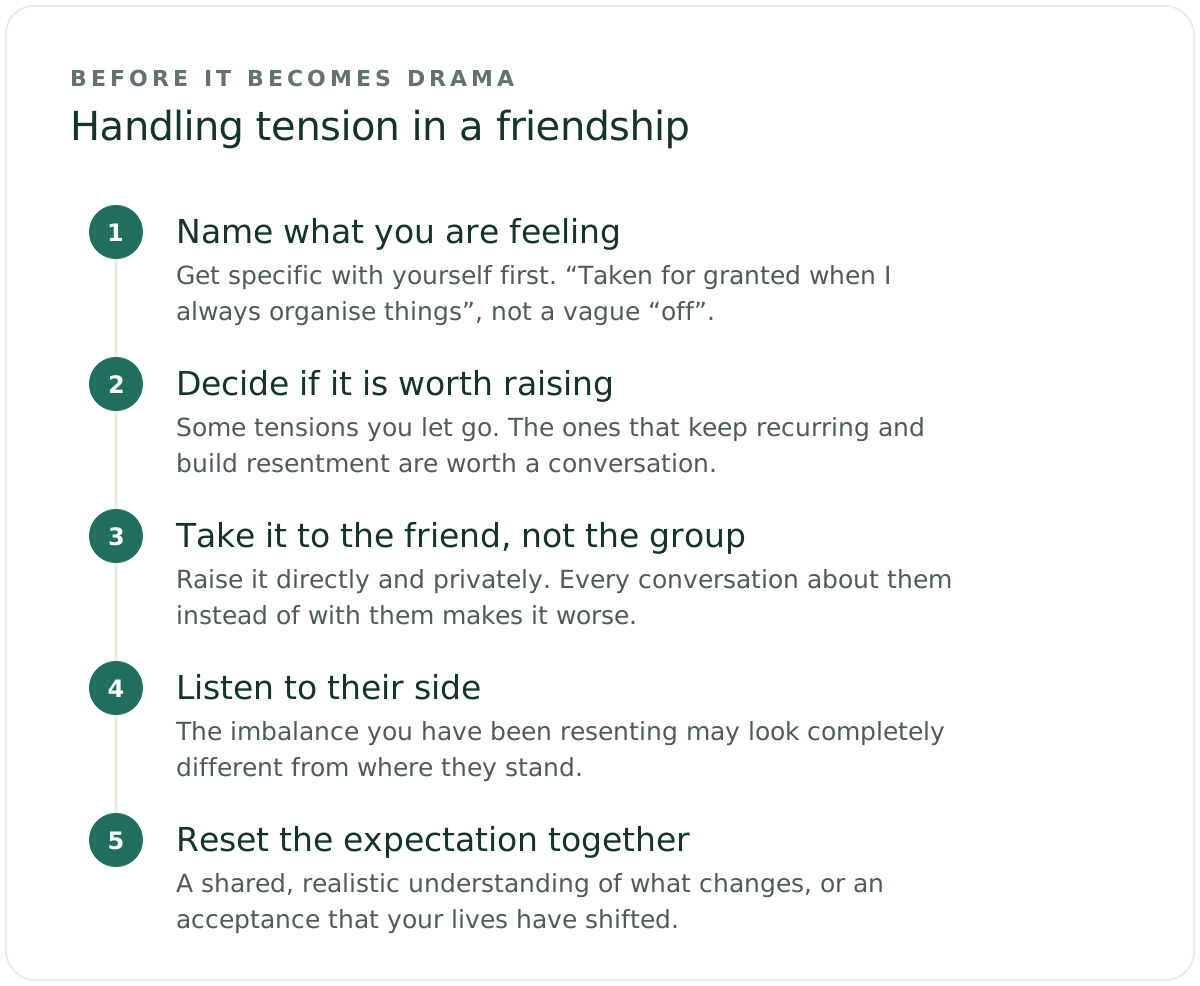
Name what you are actually feeling. Get specific with yourself first. “I feel taken for granted when I am always the one organising things” is workable; a vague sense that things are “off” is not.
-
Decide whether it is worth raising. Some tensions you simply let go of, and that is a legitimate choice. Others keep recurring and quietly poison the friendship, and those are worth a conversation. Knowing the difference is part of setting healthy boundaries with the people you care about.
-
Take it to the friend, not the group. This is the single most important move. Raise it directly and privately, describing your own experience rather than accusing, the shift covered in I-statements versus you-statements. Every conversation you have about the friend instead of with them makes it worse.
-
Listen to their side. The imbalance you have been quietly resenting may look completely different from where they stand. Genuinely hearing them, covered in active listening, often dissolves a tension that felt enormous in your own head.
-
Reset the expectation together. End with a shared, realistic understanding of what changes, or an acceptance that your lives have shifted and the friendship can shift with them. If the tension has already tipped into a genuine rupture, our guide to conflict resolution for friends covers repairing a proper falling out.
When you cannot, or would rather not, raise it directly
Sometimes a direct conversation is not available to you. The friend is not willing to engage, the tension is tangled up in group dynamics with no clean way in, or you genuinely cannot tell whether it is worth a confrontation at all. Staying stuck in that uncertainty is its own kind of drain, and it is often where people spiral into overthinking, or into venting that makes things worse.
That is precisely the situation the one-person option is built for. You do not need the other person present, or even willing, to get a clear, structured read on what is actually going on for you and what you might do about it.
Where FairTalk fits in
When a friendship tension is ready to be talked through and the friend is willing, FairTalk gives both of you a structured, neutral conversation: you talk it through together, and the analysis afterwards lays out each perspective, where you align, where you differ, and a few concrete next steps.
But friendship drama is often not that tidy, and this is where FairTalk’s one-person conversation is genuinely useful. On your own, you describe what has been building, and FairTalk helps you untangle it: a clear summary of your own perspective, the underlying tension named plainly, and suggested actions you can actually take, whether that is raising it, letting it go, or resetting a boundary. It also offers individual coaching and a Knowledge Hub to build the skills these situations call for. It will not do the hard part for you, but it turns a swirl of unspoken tension and group-chat drama into something clear enough to act on, which is usually exactly what has been missing. For anything involving genuine cruelty, manipulation, or a friendship that has become harmful, stepping back and seeking your own support is the wiser path than another conversation.
Frequently asked questions
How do you deal with tension in a friendship?
Start by naming, to yourself, what you are actually feeling and what is driving it, whether that is jealousy, an imbalance of effort, or a life-stage drift. Decide whether it is worth raising; some tensions are better let go, but recurring ones are worth a conversation. When you do raise it, take it directly to the friend rather than to the group, describe your own experience instead of accusing, and genuinely listen to their side. Most friendship tension shrinks dramatically once it is spoken about honestly with the one person it concerns.
Why do friendships have so much unspoken drama?
Because friendship has very little structure holding it together, and no obvious reason to force a difficult conversation, so people avoid raising issues and hope they pass. The discomfort then gets vented to other people instead of the person involved, which feels like relief but quietly feeds the drama by giving the grievance an audience and a narrative. The original friction becomes a group storyline with sides, far bigger and harder to resolve than it started.
Should I confront a friend about something small?
Not always. Some small frictions genuinely are not worth a conversation, and letting them go is a legitimate, healthy choice. The test is whether it keeps recurring and quietly building resentment. A one-off annoyance can usually be released; a pattern that is slowly changing how you feel about the friendship is worth addressing directly, calmly, and privately, before it grows into something larger.
How can I sort out friendship drama on my own?
You can get a long way without the other person by getting clear on what is actually bothering you rather than looping on it. Name the specific tension, separate what is genuinely about the friend from the story you have built around it, and decide what you want to do: raise it, let it go, or adjust a boundary. FairTalk’s one-person conversation is designed for exactly this, giving you a structured summary of your perspective and concrete next steps, which is often what turns swirling drama into something you can actually act on.