
To fix a falling out with a friend, reach out first with a simple message, lead with what the friendship means to you, own your part, explain how things landed for you without blaming, listen to their side, and agree what you both want going forward.
A falling out with a close friend can hurt in a way that surprises people. We expect conflict with a partner or a family member, and those relationships usually have some structure holding them together while things get repaired. Friendship has none of that: no shared mortgage, no family gathering that forces you back into a room, no vow that says you will work it out. That is why so many good friendships quietly end, not with a blazing row, but with a small rupture neither person knew how to mend. Repairing one draws on the same foundations as any personal conflict, applied to the particular dynamics of friendship.
The good news is that most friendship conflicts are far more repairable than they feel in the raw days after they happen. What they need is someone willing to reach out first, a bit of honesty about what actually went wrong, and a way back in that protects the friendship rather than relitigating the fight. This guide walks through how to do that, and how to tell the difference between a friendship worth repairing and one it is healthier to let go.
Why friendship conflict hits differently
Because friendship is voluntary, it is uniquely easy to let it lapse. When something goes wrong with a partner, avoidance is difficult; you still share a life. With a friend, avoidance is effortless. You simply stop texting back, let the group chat carry the relationship, and tell yourself you have both been busy. Weeks become months, and a friendship that could have survived one honest conversation dies of neglect instead.
The other reason it stings is that friends are chosen. A friend hurting or disappointing you can feel like a judgment on the whole relationship in a way a family argument does not, because family is a given and friendship is elective. That makes the fear of a real conversation higher: if you raise the issue and it goes badly, it can feel like losing something you picked on purpose. So people stay quiet, and the silence does the damage the conversation was supposed to prevent.
First, work out what actually went wrong
Before you do anything, it helps to be honest with yourself about what kind of rupture this is, because different kinds need different repairs.
- A one-off incident. A thoughtless comment, a forgotten birthday, a night that went wrong. Painful, but usually the easiest to fix, because there is a specific thing to address.
- A slow build-up. Lots of small resentments that never got aired, until one moment tipped it over. Here the presenting issue is rarely the real one, and the repair has to reach the pattern underneath. Catching this earlier, while it is still simmering, is the subject of our guide to handling friendship drama and underlying tension.
- A values or life-stage drift. You have grown in different directions, or a big life change (a move, a new relationship, parenthood) has quietly changed what each of you needs. This is less a fight than a gap.
- A genuine betrayal. A breach of trust, disloyalty, something said behind your back. This is a different order of problem, and we come back to it below.
Naming which one you are dealing with stops you from over-repairing a small thing or under-repairing a serious one.
Before you reach out, check your own part
The instinct after a falling out is to rehearse your case: everything they did, in order, ready to present. That instinct is worth resisting. Almost every conflict has two contributors, and going in as the prosecutor guarantees the other person becomes the defence.
Give yourself a little cooling-off time, then ask honestly what your share was. Maybe you were short with them because you were stressed about something else. Maybe you let a resentment build for months rather than saying anything. Maybe you read the worst into an ambiguous message. Finding your part is not about deciding the whole thing was your fault; it is about being able to own something genuine, which is often what unlocks the other person doing the same. It also shifts how you speak, from accusation toward describing your own experience, the shift covered in our guide to I-statements versus you-statements.
How to repair a friendship
When you are ready to reach out, a few steps make the conversation far more likely to land as a repair rather than a rematch.
-
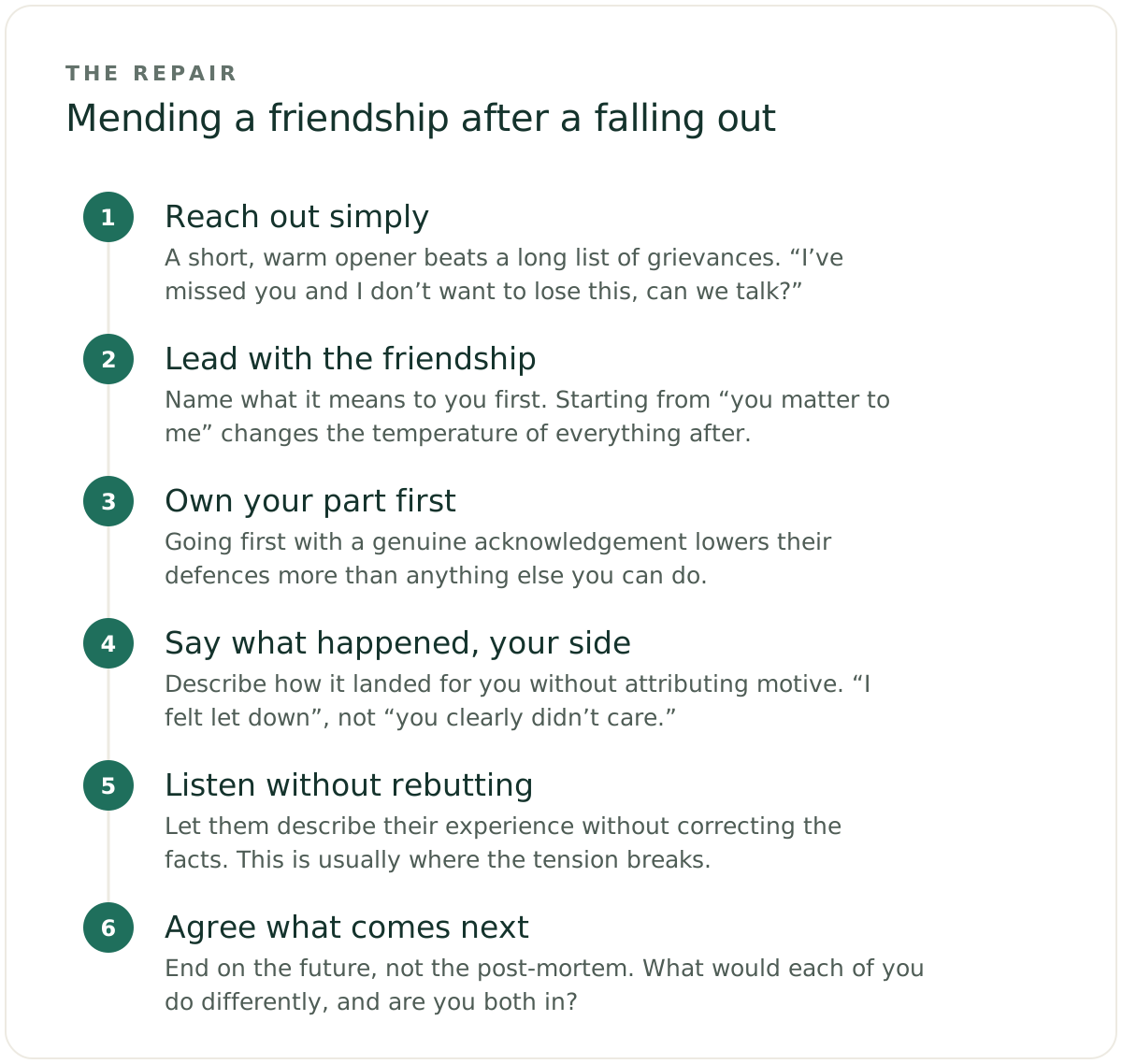
Reach out simply, without the whole case attached. The first message does not need to solve anything. “I’ve missed you, and I hate that things have been off between us. Can we talk?” does far more than a long text laying out grievances, which invites a long defence in return.
-
Lead with the friendship, not the grievance. Open the conversation by naming what the friendship means to you. Starting from “you matter to me and I don’t want to lose this” changes the entire temperature of what follows.
-
Own your part first. Going first with a genuine acknowledgement of your share lowers the other person’s defences more than anything else you can do. It signals this is a repair, not an ambush.
-
Say what happened from your side, without attributing motive. Describe how things landed for you in terms of your own experience: “I felt really let down when I didn’t hear from you,” rather than “you clearly didn’t care.” One invites a response; the other invites a fight.
-
Listen to their side without rebutting. Let them describe their experience without correcting the facts or defending yourself. You are not agreeing with everything; you are showing you can hear it. This is usually the moment the tension actually breaks.
-
Agree what you both want going forward. End on the future, not the post-mortem. What would each of you do differently, and are you both in? A shared, forward-looking agreement is what turns a one-off patch-up into a stronger friendship.
When it was a betrayal, not a misunderstanding
Not every rupture is a misunderstanding. Sometimes a friend genuinely breached your trust: talked about you behind your back, let you down when it mattered, crossed a real line. Repairing that is a different task, because the issue is not miscommunication, it is broken trust.
Two things matter here. First, a real breach needs a real apology, one that names the specific harm and takes responsibility without excuses, rather than a quick “sorry you were upset.” Our guide to how to apologise properly covers what makes the difference. Second, trust rebuilds through changed behaviour over time, not through a single conversation. You can accept an apology and still let the friendship earn its trust back gradually. That is not holding a grudge; it is being realistic about how repair actually works.
When to let a friendship go
Repair is the goal, but it is not always the right one. Some friendships have run their course, and forcing them back to life costs more than it returns. It is worth honestly asking whether this is one of them, especially when the effort has been consistently one-sided, when the same hurtful pattern keeps repeating no matter how often you raise it, or when your lives and values have simply moved too far apart.
Letting a friendship go does not have to be a dramatic ending. Often it is just a gradual, mutual easing off, held with some gratitude for what it was. Knowing the difference between a friendship worth fighting for and one worth releasing is itself a skill, and it is closely related to setting healthy boundaries: protecting your own wellbeing is a legitimate reason to step back, not a failure to try hard enough.
Where FairTalk fits in
Some friendship ruptures are simple enough to mend with a warm message and an honest chat. Others are tangled: each of you remembers the falling out differently, the real issue is buried under months of small resentments, and it is hard to have the conversation without it sliding straight back into the argument.
That is the kind of situation FairTalk is built for. Both friends talk the issue through in one guided conversation, and the analysis afterwards lays out each person’s perspective and a few practical next steps for each of you. Seeing it set out calmly, rather than in the heat of the moment, often makes it possible to hear the other side properly for the first time, and the tailored suggestions each person receives point toward the specific things that rebuild the friendship. For the deeper skills that keep friendships healthy, FairTalk’s Knowledge Hub offers guidance you can work through in your own time. And if a friendship involves genuine cruelty or manipulation rather than an ordinary falling out, stepping back and seeking your own support is the wiser path, not another conversation.
Frequently asked questions
How do I fix a friendship after a big fight?
Start by reaching out simply, without laying out your whole case in the first message. Something as short as “I’ve missed you and I don’t want to lose this, can we talk?” reopens the door. When you do talk, lead with what the friendship means to you, own your part before pointing to theirs, describe how things felt for you rather than accusing, and let them share their side without rushing to defend yourself. Most big fights are more repairable than they feel once one person is brave enough to go first.
Should I apologise first even if they hurt me too?
Usually yes, for your part. Most conflicts have two contributors, and apologising for your share, how you spoke, your timing, your silence, is not the same as accepting all the blame. Going first often lowers the other person’s defences enough that they can acknowledge theirs, whereas waiting for them to apologise first tends to produce a standoff where nobody moves. Own what is genuinely yours, and leave space for them to own what is theirs.
How do I reconnect with a friend after months of silence?
Acknowledge the gap without over-explaining it. A message like “I’m sorry it’s been so long, I’ve thought about you a lot and I’d love to catch up” is enough. Long silences often build up their own awkwardness, where both people want to reach out but each assumes the other is not interested, so naming it gently and warmly usually breaks the stalemate. Once you are talking, focus on reconnecting rather than relitigating why the silence happened.
When should I let a friendship go?
Consider stepping back when the effort has been consistently one-sided, when the same hurtful pattern repeats no matter how often you raise it, or when your values and lives have drifted too far to bridge. Letting go does not have to be dramatic; it can be a gradual, respectful easing off. Protecting your own wellbeing is a legitimate reason to release a friendship, and recognising when a relationship has run its course is a sign of self-respect, not of failing to try.