Many neighbour disputes settle with one calm, early conversation: cool off first, assume the problem is unintentional, raise the specific issue in person rather than by note, listen to their side, and agree one concrete next step. If talking does not work, free or low-cost community mediation is the next step before anything formal.
A dispute with a neighbour has a particular way of getting under your skin. It happens at home, the one place you are supposed to be able to relax, and it involves someone you cannot simply avoid: you will see their car, hear their dog, and pass them at the bins for years. That combination of proximity and permanence is what makes neighbour conflict so easy to mishandle. It is a distinctive kind of personal conflict, and the general principles behind resolving one are covered in our guide to how to resolve personal conflict.
The good news is that most neighbour disputes are far more resolvable than they feel in the moment, and the difference between one that settles and one that hardens into a decade of frostiness usually comes down to how the first conversation is handled. This guide covers how to approach it, how to keep it from escalating, and when to bring in outside help.
Why Neighbour Disputes Escalate So Easily
A few features of living next to someone make these conflicts unusually combustible.
It is your home. Noise, smells, or overlooking feel like an intrusion into your sanctuary, which raises the emotional stakes well above what the issue might objectively warrant.
You assume intent. When you cannot see why something is happening, it is easy to read deliberate inconsiderateness into what is usually just thoughtlessness. Most neighbours causing a problem have no idea they are causing it.
Small things compound. A single late night is nothing; the same noise every week for a month becomes a grievance that colours everything else they do.
The first move is often the worst one. A furious note left in the letterbox, or a complaint to the council before a single word has been exchanged, tends to start a war rather than solve a problem, because the other person now feels ambushed.
Understanding this is what lets you do the opposite: approach early, assume good faith, and talk before you escalate.
Before You Say Anything
A little preparation prevents most of the ways these conversations go wrong.
Cool off first. Do not knock on the door in the middle of the incident while you are angry. A conversation started in the heat of the moment almost always makes things worse.
Assume it is unintentional. Begin from the premise that your neighbour does not realise there is a problem. You will usually be right, and even when you are not, the assumption sets a far more productive tone.
Check the facts and the rules. Know what you are actually asking for. If it is about noise, parking, or building work, your local council or, in an apartment, the owners corporation or body corporate will have rules that tell you what is and is not reasonable. Going in informed keeps the conversation grounded in something other than your irritation.
How to Raise It
When you are ready to have the conversation, a simple approach keeps it constructive.
-
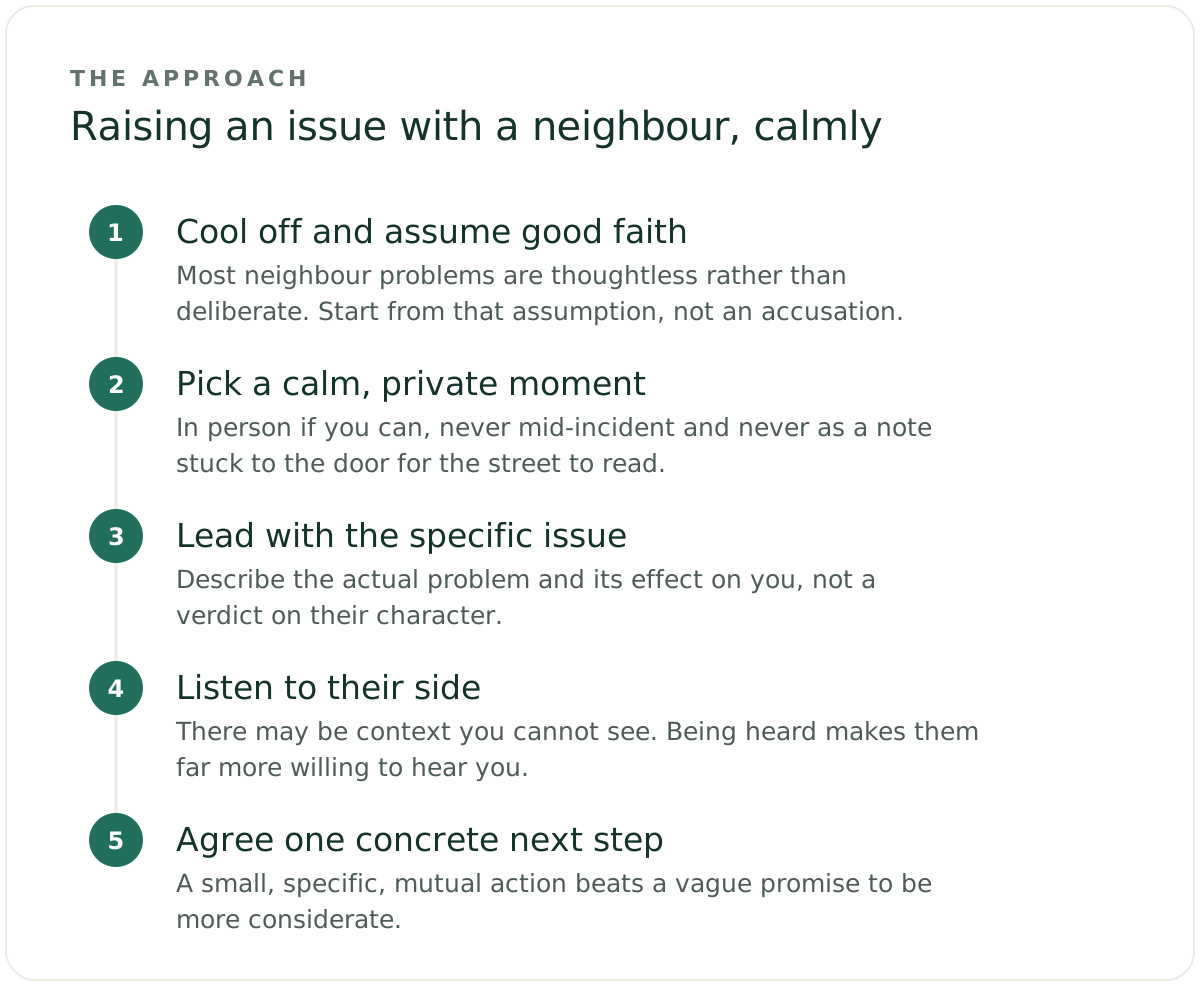
Cool off and assume good faith. Start from the assumption that the problem is thoughtless rather than deliberate, because it almost always is.
-
Pick a calm, private moment. In person is best, when neither of you is rushing or upset. Avoid raising it mid-incident, and avoid the note stuck to the door that the whole street can read, which turns a private issue into a public shaming.
-
Lead with the specific issue, not an accusation. “I’ve been finding it really hard to sleep with the music on weeknights” opens a conversation. “You’re so inconsiderate” starts a fight. Describe the actual problem and its effect on you, not a verdict on their character.
-
Listen to their side. There may be context you cannot see, a new baby, a shift job, a misunderstanding about whose responsibility something is. Letting them explain, and feeling heard yourself, makes them far more willing to meet you halfway.
-
Agree one concrete next step. A small, specific, mutual action, “music off by ten on weeknights”, beats a vague promise to “be more considerate”, which resolves nothing and is impossible to hold anyone to.
If It Starts to Get Heated
Not every conversation stays calm, especially when there is history. If you feel it escalating, the same tools that work in any conflict apply here: lower your own volume rather than matching theirs, name what is happening (“I think we’re both getting frustrated, can we slow down?”), and be willing to step away and return another time rather than push through to something you will both regret. Our guide to de-escalation techniques covers how to bring the temperature down in real time.
Reaching an Agreement That Lasts
The disputes that stay resolved end with something concrete rather than a vague truce. Be specific about what each of you will do, make sure it genuinely works for both sides rather than being something one party grudgingly accepts, and for anything significant, a short friendly message afterwards confirming what you agreed (“thanks for the chat, sounds good on the bin day swap”) creates a shared record without any of the aggression of a formal letter.
When to Get Outside Help
Some neighbour disputes should not be handled alone, and knowing which is a skill in itself.
Community mediation. For a genuine two-sided disagreement that you cannot resolve between yourselves, most parts of Australia have free or low-cost community mediation and dispute resolution services that specialise in exactly this. They are neutral, informal, and far cheaper and faster than any legal route. Your state or territory’s dispute resolution service, or Legal Aid in your state, can point you to the right one.
Council or the body corporate. For breaches of rules, noise regulations, fencing, tree, or building matters, the relevant authority has formal processes. These are better used after a direct conversation has failed than as an opening move.
The police or emergency services. Where there are threats, harassment, violence, or any concern for safety, this is not a dispute to negotiate. Contact the appropriate authorities.
The general principle is to try the direct conversation first for ordinary disagreements, and to escalate promptly and without guilt when the situation genuinely warrants it.
Where FairTalk Fits In
Where both neighbours are willing to sit down and sort something out but keep talking past each other, a structured, neutral conversation can do what an awkward exchange over the fence cannot. FairTalk provides that structure: both people talk the issue through in one session while the AI listens impartially, and the analysis afterwards lays out each person’s perspective and a shared summary you both keep. For a boundary dispute that is really a crossed-wires problem rather than a legal one, having a neutral account both people trust can be what unsticks it.
It is worth being clear about the limits. FairTalk needs both neighbours to take part willingly, so it is not the answer when one party refuses to engage, and it is not a substitute for council processes, community mediation services, or the police where a matter is legal or involves safety. For the idea behind it, see how FairTalk works.
Frequently Asked Questions
How do I approach a neighbour about a problem without causing conflict?
Approach early, in person, and calmly, before the irritation has built into anger. Assume the problem is unintentional, raise the specific issue and how it affects you rather than criticising them as a person, and give them a chance to respond. Most neighbour problems are thoughtlessness rather than malice, and a friendly, specific, early conversation resolves the large majority of them before they ever become a real dispute.
What if my neighbour won’t talk to me or ignores the issue?
If a direct approach fails or is refused, the next step depends on the issue. For a genuine disagreement, a community mediation service can bring in a neutral third party even when informal conversation has stalled. For a breach of rules, noise, fencing, or building matters, your local council or body corporate has formal channels. Keep a calm record of what has happened and what you have tried, since that will help whoever you turn to next.
Should I report my neighbour to the council or talk to them first?
For most issues, talk to them first. A complaint to the council before any conversation tends to feel like an ambush and hardens the other person against you, which makes everything harder afterwards. The exception is anything involving safety, threats, or serious breaches, where formal channels are the right first step. Otherwise, keep the council in reserve for when a direct, good-faith attempt has genuinely not worked.
What if the dispute is about a boundary or fence?
Boundary, fencing, and tree disputes often have specific laws attached, and the rules vary by state and territory. Start with a conversation if you can, but be aware that these matters may need your council, a fencing or dividing-fences process, or legal advice, because they turn on legal responsibilities rather than just goodwill. A community dispute resolution service can often help you reach agreement without going to court.