FairTalk works on a simple, well-established idea: two people in conflict find common ground more easily when an impartial third party is part of the conversation. You talk the issue through together while FairTalk listens without taking sides, and afterwards it helps you both see each other’s perspective clearly and agree a fair way forward.
That idea is not new. It is the reason mediation exists at all: people who cannot resolve something between themselves often can once someone neutral is in the room. What FairTalk changes is access. It brings that impartial presence to the everyday disagreements that would never reach a mediator’s or counsellor’s office, at the moment they actually happen.
Why conflict is so hard to resolve between two people
Most everyday disputes don’t need a lawyer or a therapist. What they lack is a fair process that neither person can easily derail once emotions run high.
When two people try to sort something out on their own, each arrives with their own version of events, their own feelings and their own habits in an argument, all at once. Each is also quietly judging whether the other is being fair, which puts both on the defensive. Without a neutral reference point, the conversation tends to go to whoever is louder, more persistent or better at arguing, not to the fairest outcome. Our guide to why conflict is so hard to resolve on your own looks at this in more depth.
What an impartial mediator brings
Mediation practice points to a handful of things a neutral third party does that two people in conflict struggle to do for themselves.
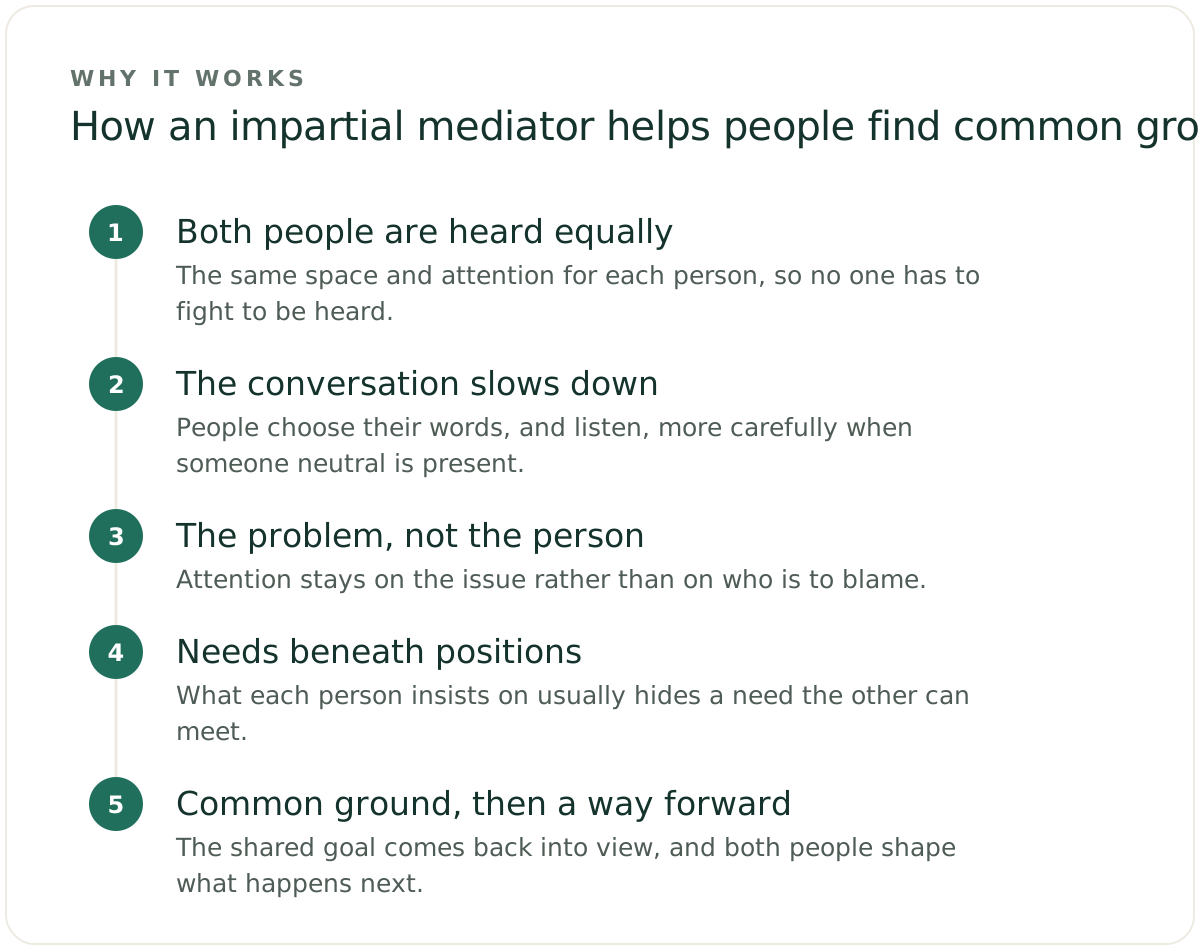
Both people are heard equally. A neutral listener gives each person the same space and the same attention, so no one has to fight to be heard. Feeling heard is often what lowers the temperature enough for anything else to happen.
The conversation slows down. People tend to choose their words more carefully when someone impartial is present, and to listen more carefully too. That alone takes much of the heat out of a disagreement.
The problem is separated from the person. A mediator keeps attention on the issue rather than on who is to blame, which makes it far easier to talk about what needs to change without either person feeling attacked.
Positions give way to needs. What each person insists on in an argument usually sits on top of something they need: to feel respected, to be treated fairly, to be able to rely on the other person. Those needs are often compatible even when the positions are not.
Both perspectives are reflected back fairly. Hearing your own view and the other person’s laid out side by side, without spin, is often the moment a conflict stops feeling personal and starts feeling solvable.
Finding common ground
Most disagreements contain more agreement than either person can see in the heat of the moment. Two partners arguing about housework usually both want a home that feels fair and calm; two siblings arguing about a parent’s care usually both want that parent safe and well. The shared goal gets lost because each person is busy defending their own position.
An impartial mediator’s real job is to bring that shared ground back into view, and then to help both people build from it: what each of them needs, where those needs overlap, and what each is willing to do. Agreements that both people have shaped themselves are the ones most likely to last, because neither feels something was imposed on them. The same principles sit behind the everyday conflict resolution strategies anyone can use, from listening properly to describing your experience instead of blaming.
Where FairTalk fits in
FairTalk brings that impartial presence to the conversations that usually happen without one. Both people agree to take part and talk the issue through together, FairTalk listens without taking sides, and either of you can pause if things get heated. Afterwards, you both get a fair picture of each other’s perspective and a way forward you have shaped together, along with practical guidance to help each of you handle the next disagreement better.
It is there whenever a conflict actually happens, not weeks later when an appointment opens up, and professional services that serve the same purpose typically cost in the vicinity of ten times as much. If the other person is not ready to take part, you can still work through your own side and resolve conflict on your own as far as you are able. To see how FairTalk compares with other tools, see the best conflict resolution apps of 2026.
What FairTalk is not
FairTalk is not a replacement for professional help in situations that require it. If there is emotional abuse, coercion or a significant power imbalance in the relationship, a self-guided tool is not appropriate. Those situations need human professionals and, in some cases, specialist support services. If you feel unsafe, contact 1800RESPECT on 1800 737 732, or 000 in an emergency.
FairTalk is also not therapy. It does not treat mental health conditions, provide ongoing emotional support, or replicate the therapeutic relationship. For deeper relational difficulties, or where mental health is part of the picture, a qualified therapist is the right support. For an honest look at what AI conflict resolution can and cannot do, see what is AI conflict resolution.
Frequently asked questions
How does FairTalk work?
FairTalk brings an impartial third party into a conversation between two people. You talk the issue through together while it listens without taking sides, and afterwards it helps you both see each other’s perspective and a fair way forward that you shape together.
Why does an impartial mediator help resolve conflict?
Because a neutral presence changes how both people behave. Each person gets the same space to be heard, the conversation slows down, attention stays on the problem rather than on blame, and the needs behind each position become easier to see. That is usually where common ground appears.
Does FairTalk take sides?
No. FairTalk is designed to be impartial: it gives both people the same attention and reflects both perspectives fairly, without deciding who is right. The aim is a way forward both of you can accept, not a verdict.
Does FairTalk work if only one person wants to use it?
A full session needs both people to agree to take part, and it works best that way. If the other person is not ready, you can still work through your own side of the conflict on your own and decide what to do next.
Can FairTalk help with disputes outside romantic relationships?
Yes. The same principles apply to disagreements with family members, friends, flatmates, neighbours and colleagues, wherever two people are willing to talk it through.
Is FairTalk a replacement for therapy or professional mediation?
No. It is built for everyday disagreements between two people who both want to sort things out. Where there is abuse, coercion, a significant power imbalance, a mental health condition or a legal dispute, a qualified professional or specialist service is the right support.