Online couples counselling is couples counselling delivered by video, and sometimes by phone, with a qualified counsellor or psychologist. In Australia it works much like an in-person session: you and your partner usually join together from home, talk the issues through with the therapist, and work on them over several sessions, without the travel.
For many couples it removes the biggest practical obstacles to getting help: the drive, the waiting room, the hunt for a time when two working adults and a therapist are all free. It is not right for every situation, though, and it is not the only option. This guide covers how online couples counselling works, what to expect, what it costs, how to choose a good counsellor, and when a self-guided tool is enough for what you are dealing with.
How online couples counselling works
Online couples counselling comes in a few forms:
- Video sessions together. The most common format. You sit side by side at home in front of one screen, and the counsellor joins by video.
- Video from two locations. Some counsellors will see partners who are in different places, such as couples living apart for work. Ask about this when you book, as not every practitioner offers it.
- Phone sessions. Useful where internet access is unreliable, though without the visual cues a video session gives.
- Structured online programmes. Self-paced courses built on couple therapy research, sometimes with short check-ins from a coach. These are not counselling, but some have good evidence behind them.
Many providers offer online sessions, from private psychologists and counsellors to not-for-profit services such as Relationships Australia, which has branches in every state and territory.
What to expect in couples therapy online
The first session usually looks a lot like an in-person one. The counsellor asks each of you what has brought you there, how you each see the problem, what you have tried, and what you would like to be different. Some counsellors also see each partner on their own early on, to hear things a person may not say in front of their partner. Most of the work, though, happens with both of you together.
Over the following sessions, a good couples counsellor will:
- stay neutral, giving each of you the same attention and not taking sides
- help you slow down and actually hear each other, rather than repeating the usual argument
- point out the patterns that keep repeating, such as one person pursuing and the other withdrawing
- give you things to practise between sessions
Expect several sessions rather than one. It is reasonable to ask at the start how many the counsellor would expect for a situation like yours, and how you will know whether it is working. Our guide to what couples therapy is covers the approach in more depth.
Does online couples therapy work?
The broader research on therapy by video is encouraging. A 2021 meta-analysis published in Clinical Psychology and Psychotherapy, drawing on more than 100 studies, found that psychotherapy delivered live by video produced substantial improvement, and that its outcomes differed negligibly from in-person therapy.
Most of that research is on individual therapy rather than couples work, so the evidence for video couples counselling specifically is thinner. There is good evidence for structured online programmes, though. A randomised controlled trial published in 2016 in the Journal of Consulting and Clinical Psychology found that couples who completed the online OurRelationship programme, which adapts an established couple therapy, reported better relationship satisfaction than couples who had not yet started it.
The pros and cons of online couples counselling
| Advantages | Drawbacks |
|---|---|
| No travel, which matters most in rural and remote areas | You need a private space at home and a reliable connection |
| Easier to find a time that suits both of you and the counsellor | Body language and tone are harder to read on a screen |
| A wider choice of counsellors, beyond the ones nearby | Technical problems can interrupt a hard moment |
| Some people find it easier to open up from home | It can be harder to settle a heated moment from a distance |
| Less time off work and fewer childcare arrangements | It may not suit situations involving safety concerns |
For couples in regional and remote Australia in particular, online sessions can be the difference between getting help and not.
What online couples counselling costs
Online sessions usually cost about the same as in-person ones. Private couples counselling in Australia commonly costs around $100 to $330 a session, depending on whether you see a counsellor or a psychologist, and progress usually takes several sessions. Our guide to couples counselling cost sets out where those figures come from.
Medicare covers mental health sessions by video and phone under the Better Access initiative, as the Department of Health explains, but the same rules apply as in person. Better Access is for one person’s treatment for a diagnosed mental health condition, so couples sessions for relationship difficulties are generally not rebated. Some private health insurance extras policies pay a rebate for counselling, and Relationships Australia sets most fees by income.
How to choose an online couples counsellor
Anyone can set up a website and call themselves a relationship coach, so it is worth checking a few things before you book.
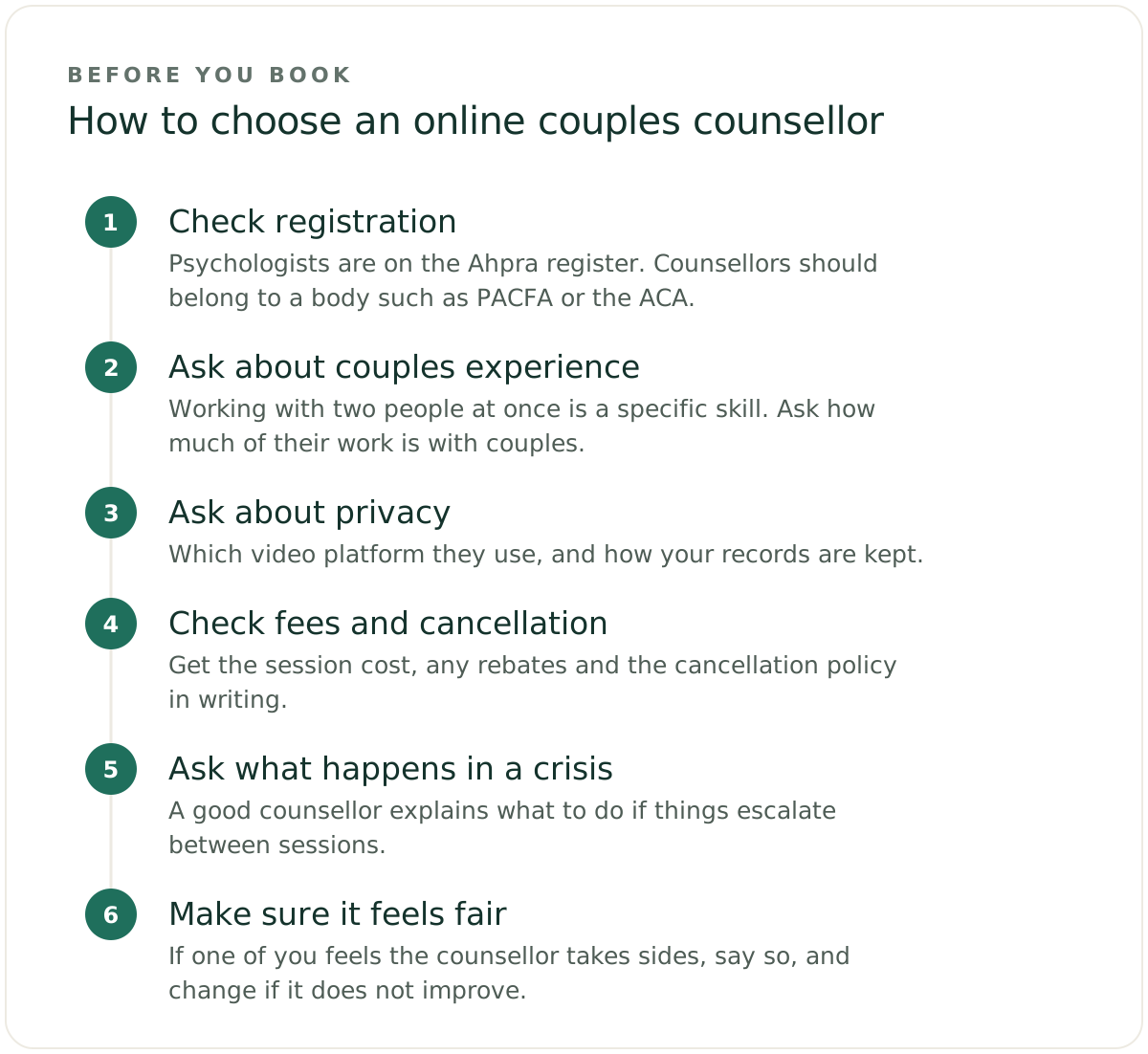
- Check registration. Psychologists must be registered, and you can look them up on the Ahpra register of practitioners. Counsellors are not registered in the same way, so look for membership of a professional body such as PACFA or the Australian Counselling Association.
- Ask about couples experience. Working with two people at once is a specific skill. Ask how much of their work is with couples and what approach they use.
- Ask about privacy. Which video platform do they use, and how are your records kept?
- Check fees, rebates and cancellation. Get the cost of a session, what rebates might apply, and the cancellation policy in writing.
- Ask what happens in a crisis. A good counsellor will explain what to do if things escalate between sessions.
- Make sure it feels fair to both of you. If one of you feels the counsellor is siding with the other, say so. If it does not improve, it is fine to try someone else.
Making online sessions work at home
- Find a private space. Somewhere children, housemates or neighbours cannot overhear.
- Sit side by side. Share one screen, close other apps and put your phones away.
- Test the technology first. Check the link, camera and sound ten minutes early.
- Plan something gentle afterwards. A walk, a cup of tea, or just some quiet. Hard sessions can leave feelings running high, and there is no drive home to settle them.
- Agree not to continue the argument later. Save it for the next session, or for a calm time you choose together.
When online counselling is not the right fit
Online couples counselling is not suitable for every situation. If there is violence, fear or controlling behaviour in the relationship, joint sessions may not be safe, and being in the same room at home can make it harder for the person at risk to speak freely. Contact 1800RESPECT on 1800 737 732, or 000 in an emergency.
If either of you is struggling with your mental health, talk to your GP, who can assess what support would help most, including individual sessions.
When a self-guided tool is enough
Not every disagreement needs a counsellor. Counselling is the right choice for long-standing patterns, a serious breach of trust, decisions about the future of the relationship, or mental health concerns. But a great deal of everyday conflict, the recurring argument about chores, money, family or time, can be worked through by two people who both want to sort it out, given some structure. A range of relationship apps and self-guided tools now aim to help with exactly that.
FairTalk is one of them, and it is not counselling. You talk an everyday disagreement through together while FairTalk listens without taking sides, and either of you can pause if it gets heated. Afterwards, you both get a fair picture of each other’s perspective and a way forward you have shaped together, along with guidance on the communication skills each of you could build. If your partner is not ready to take part, the solo session feature lets you work through your own side first. Professional services serving the same purpose are in the vicinity of ten times more expensive than the app subscription, and many couples use both: a counsellor for the deeper work, and a self-guided tool for the everyday disagreements in between. Our comparison of an AI relationship coach and couples therapy looks at where each fits.
Frequently asked questions
How much does online couples counselling cost in Australia?
Online couples counselling usually costs about the same as in-person sessions, commonly around $100 to $330 a session depending on whether you see a counsellor or a psychologist. Progress usually takes several sessions. Medicare generally does not rebate couples sessions, but some private health insurance policies pay towards counselling, and Relationships Australia sets most fees by income.
Is online couples therapy as effective as in-person?
For therapy in general, the research suggests it is close. A 2021 meta-analysis found that psychotherapy delivered live by video had outcomes that differed negligibly from in-person therapy. Most of that research is on individual therapy, so the evidence for couples specifically is thinner, though structured online couples programmes have shown benefits in randomised trials.
Is online couples counselling covered by Medicare?
Usually not. Medicare’s Better Access initiative does cover mental health sessions by video and phone, but it is for one person’s treatment for a diagnosed mental health condition, so couples sessions for relationship difficulties are generally not rebated. Check with your GP and your counsellor about your situation.
What should we expect in our first online couples counselling session?
Expect the counsellor to ask each of you what has brought you there, how you each see the problem, and what you would like to change. Some counsellors also see each partner briefly on their own early on. Have a private space ready, sit together in front of one screen, and test the technology beforehand.
Can we do couples counselling online if we live in different places?
Sometimes. Some counsellors will see partners who are in different locations, for example couples living apart for work, while others prefer both partners in the same room. Ask about this when you book.