The best relationship app for a couple is the one built for what you actually want help with. To stay connected, choose a daily questions or check-in app. For fun, choose games and quizzes. To run life together, a shared planner. To build skills, a guided course. And to work through disagreements, a tool that hears both of you.
That sounds obvious, but it is where most couples go wrong. App store lists rank apps for couples as if they all do the same job, when a question-of-the-day app and a counselling app have almost nothing in common. Pick the wrong kind and it quietly falls out of use within a fortnight, or worse, it promises to fix something it was never designed for. This guide sorts the main kinds of couples app by what they help with, what each is genuinely good at, and where each falls short.
What relationship apps for couples actually do
Almost every relationship app on the market does one of six jobs:
- helps you stay connected in small daily ways
- gives you something fun to do together
- organises the practical side of a shared life
- teaches relationship skills
- helps you work through a specific disagreement
- connects you with a qualified professional
Some apps combine two or three of these, but nearly all of them lead with one. Knowing which job an app is really built for tells you more than its star rating does, because a five-star games app will not help with a conflict and a five-star counselling app is not meant to be opened for fun on a Friday night.
The six kinds of couples app, by what they help with
Staying connected: daily questions and check-ins
These apps send both of you a question or prompt each day (“What is something small I did this week that you appreciated?”) and show you each other’s answers. Some add mood check-ins, shared photo streams or a private messaging space for just the two of you.
Good for: couples who are busy, long distance, or simply drifting into talking only about logistics. Small, regular moments of interest in each other help keep you close when life gets busy.
Look for: prompts that go beyond trivia, the option to skip without guilt, and control over notifications so it does not become another nag.
Where it falls short: it keeps a good relationship warm, but it is not designed to resolve a real disagreement, and a cheerful daily prompt can feel hollow if there is unspoken tension sitting underneath it.
Having fun together: games, quizzes and conversation cards
Quizzes about each other, would-you-rather games, date-night idea generators and digital versions of conversation card decks.
Good for: newer couples getting to know each other, and established couples who have fallen into routine. A bit of novelty and play goes a long way in a long relationship.
Look for: content that suits your relationship stage, and games you can play side by side rather than only on separate phones.
Where it falls short: it is entertainment, and that is fine. Just do not expect a quiz to surface or settle anything serious.
Running life together: shared planners, lists and budgets
Shared calendars, shopping and to-do lists, chore rotas and joint budgeting tools. Many are general productivity apps rather than relationship apps, which is often a point in their favour.
Good for: reducing a whole category of everyday friction. Plenty of couples’ arguments are not really about love or values; they are about who was meant to book the car service, whose turn it is to cook, and where the money went. Making the plan visible to both of you takes some of the heat out of those moments.
Look for: something you will both genuinely open. The best shared planner is the one already on both your phones.
Where it falls short: a shared list can show who did what, but it cannot settle a disagreement about whether the split is fair. That is a conversation, not a feature.
Building skills: guided courses and lessons
Structured programmes that teach communication and relationship skills through short lessons, exercises and reflection, often drawing on relationship research.
Good for: couples who want to get better at the basics, such as listening, raising a complaint without blame, and repairing after an argument, before small problems grow. This is also where the research is strongest. A randomised controlled trial published in 2016 in the Journal of Consulting and Clinical Psychology found that couples who completed OurRelationship, a structured online programme adapted from an established couple therapy, reported better relationship satisfaction than couples who had not yet started it. That was a guided programme with short coaching calls, not a typical couples app, and the evidence for most everyday relationship apps is far thinner.
Look for: content grounded in research, a clear structure, and exercises you do together rather than only reading.
Where it falls short: lessons take commitment, and learning a skill in calm conditions is different from using it in the middle of an argument. A daily habit like a relationship check in helps bridge that gap.
Working through disagreements: conflict tools
Apps built to help two people talk through a specific disagreement and find a way forward. The better ones are designed around both people rather than coaching one person on their side of the story.
Good for: the recurring argument you keep having, the issue you cannot discuss without it escalating, or a disagreement where each of you feels unheard.
Look for: a tool that hears both people, stays neutral, and leaves you with something concrete to do next. Our guide to choosing a conflict resolution app covers the criteria and the red flags in detail.
Where it falls short: a conflict tool needs two adults who both feel safe to talk. It is not the right choice where there is fear, control or a significant power imbalance.
Professional support: counselling apps
Apps that connect you with a qualified counsellor or therapist, usually by video or messaging. The app is the delivery method; the value is the professional. Our guide to what couples therapy is explains what the work itself involves.
Good for: deep or long-standing difficulties, a relationship in real distress, or anything involving mental health, trauma or a major breach of trust.
Look for: clearly stated qualifications, and a counsellor who works with couples rather than only with individuals.
Where it falls short: it is slower to start and costs considerably more than software-only tools, which is why many couples use it for the big things and something lighter for everyday life. Our comparison of an AI relationship coach and couples therapy looks at where each fits.
Which relationship app fits your situation
| If this sounds like you | Start with |
|---|---|
| We love each other but only talk about logistics | A daily questions or check-in app |
| We are long distance | A check-in app with a private shared space |
| Life feels like routine | Games, quizzes or date-night ideas |
| We keep arguing about chores, plans or money | A shared planner, then a conversation about the split |
| We want to communicate better before things get hard | A guided skills course |
| We keep having the same argument | A conflict tool that hears both of you |
| Something bigger is going on, or one of us is struggling | A qualified couples counsellor |
Most couples need two of these at most. A daily habit for connection plus one tool for the harder conversations covers a great deal of ground.
How to choose a couples app together
The biggest predictor of whether a relationship app works is whether both of you actually use it, which means choosing it together rather than one person installing it and announcing it.
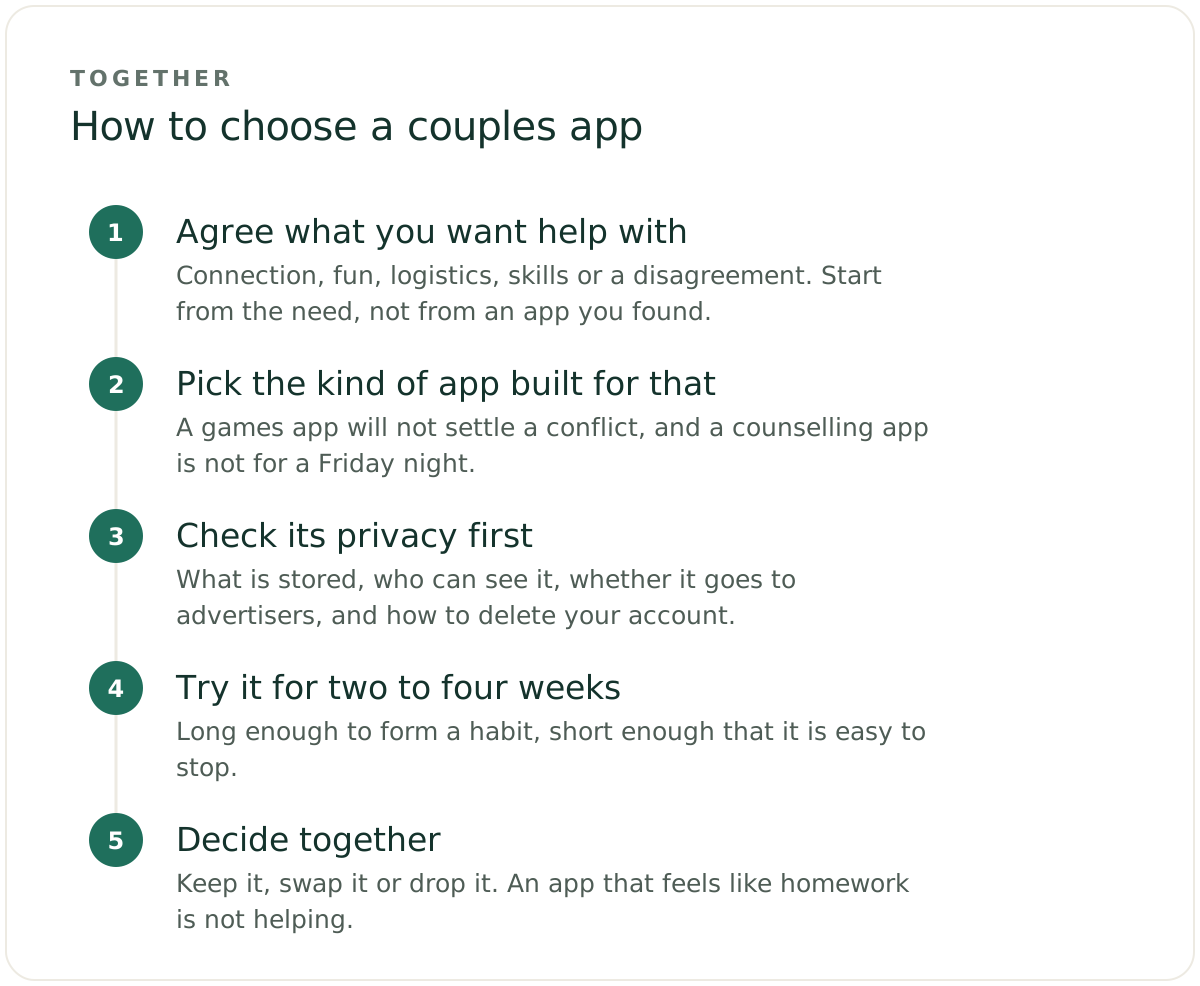
- Agree what you want help with. “I’d like us to talk more during the week” is a better starting point than “I found an app”.
- Pick the kind of app built for that. Use the table above, not the app store’s top ten.
- Check its privacy before either of you shares anything. Look at what is stored, who can see it, whether it is shared with advertisers, and how to delete your account.
- Try it for two to four weeks. Long enough to form a habit, short enough that it is easy to stop.
- Decide together. Keep it, swap it for something else, or drop it. An app that has started to feel like homework is not helping.
A word on privacy in particular: relationship apps hold some of the most personal information you will ever put on a phone. Be cautious of any app that is vague about where your data goes, and of apps that encourage one partner to track or report on the other. Monitoring a partner is not a relationship tool, and if you feel you are being watched or controlled, contact 1800RESPECT on 1800 737 732, or 000 in an emergency.
Where FairTalk fits in
FairTalk sits in the “working through disagreements” category. It is built for two adults who both want to sort something out: you talk the issue through together while FairTalk listens without taking sides, and either of you can pause if things get heated. Afterwards you both get a fair picture of each other’s perspective and a way forward you have shaped together, along with guidance on the skills each of you could build. If your partner is not ready to take part, there is also a one-person conversation so you can work through your own side first.
It pairs well with a lighter daily connection app rather than replacing one, and it is not therapy. For the broader picture of handling disagreements across every relationship, our guide to personal conflict brings the approaches together.
Frequently asked questions
What is the best app for couples?
The best app for couples depends on what you want help with. For staying connected, a daily questions or check-in app works well; for fun, games and quizzes; for everyday logistics, a shared planner; for communication skills, a guided course; and for recurring arguments, a conflict tool designed for two people. Most couples get the most from one daily habit app plus one tool for harder conversations.
Are relationship apps worth it?
Yes, when the app matches what you need and you both use it. The strongest evidence is for structured, research-based online programmes; for example, a 2016 randomised controlled trial found couples who completed one such programme reported better relationship satisfaction than couples who had not started. The evidence for most everyday couples apps is thinner, so treat them as helpful habits rather than fixes.
Should we both use the same relationship app?
Yes, for nearly every kind of couples app. Daily questions, games, shared planners and conflict tools all depend on both people taking part, and an app one person uses alone can start to feel like a scorecard. The exception is individual support, such as a counsellor or a one-person conversation, which can help when your partner is not ready.
Are couples apps private?
It varies a lot between apps, so check before you share anything. Look at what the app stores, who can see each person’s answers, whether data is shared with advertisers, and how to delete your account. Avoid any app that is vague about your data or that encourages one partner to monitor the other.
Can a relationship app replace couples counselling?
No. Relationship apps are good for everyday connection, skills and ordinary disagreements, but they are not a substitute for a qualified counsellor when a relationship is in real distress, or where there is abuse, coercion, or a mental health concern. Many couples use both: a counsellor for the deeper work and an app for everyday life.