When a husband or wife yells in an argument, it is most often because they are overwhelmed: their body has tipped into a stress response, they feel unheard or criticised, or pressure from elsewhere has spilled over. That explains the yelling. It does not excuse it, and yelling is never okay when it is used to frighten or control you.
First, a safety note. If the yelling comes with fear, threats, name-calling, intimidation, breaking things, or your partner controlling what you do, that is not an argument that went badly, and better communication will not fix it. Contact 1800RESPECT on 1800 737 732 for confidential support, or call 000 in an emergency. The rest of this article is for couples where both people feel safe with each other.
Why partners yell during an argument
Raised voices rarely come out of nowhere. In most relationships they come from one or more of a handful of causes, and knowing which one is at work changes what helps.
- Their nervous system is flooded. When an argument gets intense, the body shifts into a threat response. Heart rate climbs, stress hormones rise, and the parts of the brain that handle listening, patience and choosing words carefully work far less well. Researchers at the Gottman Institute call this state emotional flooding, and once someone is in it, volume goes up while judgement goes down. Our guide to emotional flooding explains why the same state makes some people shut down instead.
- They feel unheard. Volume is often an attempt to be heard. If someone believes they have raised something calmly and been dismissed, talked over or ignored, getting louder can feel like the only option left. This is especially likely when one partner goes quiet during conflict, because silence can look like not caring, and the other person pushes harder.
- They feel criticised or blamed. People defend themselves loudly when they feel attacked. An opening like “you always” or “you never” can trigger raised voices within seconds, even when the underlying point was fair.
- Stress from elsewhere is spilling over. Tiredness, work pressure, money worries, illness or caring for others all shorten the fuse. The argument about the dishes is sometimes carrying the weight of a whole week.
- Yelling is what they learned. In some families, raised voices were the normal volume of any disagreement. People who grew up that way may not notice how loud they have become, or how it lands on a partner who grew up in a quieter home.
None of these makes yelling okay. But a partner who yells because they feel unheard needs a very different conversation from one who yells because they are exhausted, and both are different again from someone who yells to intimidate.
Why is my husband yelling at me? Why is my wife?
The reasons above do not split along gender lines. Husbands and wives yell for the same reasons: flooding, feeling unheard, feeling blamed, stress, and habit. What differs from couple to couple is the pattern, so the more useful question is what tends to happen just before the voices rise.
A few questions help you see it:
- When does it start? Straight away, or after a long build-up? Yelling that arrives after the same issue has been raised quietly several times usually means someone feels ignored.
- What is said just before? Notice whether it follows a particular phrase, a sigh, an eye roll, or one of you walking away mid-sentence.
- What is going on around it? Late at night, after work, around money, around one family member? Stress and timing often explain more than the topic does.
- Does it go both ways? If you both raise your voices, it is a shared pattern you can change together. If it is always one person at the other, and you have started changing your own behaviour to avoid setting them off, read the next section carefully.
Raised voices are often part of a wider pattern. Criticism and defensiveness, two of Gottman’s Four Horsemen, are the most common triggers for an argument getting loud, and they are well worth recognising.
When yelling is a safety issue, not a communication problem
Most couples who raise their voices are two people who both feel safe but have not yet found a better way to disagree. Some are not. Yelling crosses a line when:
- you feel afraid of your partner, or of how they will react
- it comes with threats, insults, name-calling, or putting you down
- it comes with physical intimidation: standing over you, blocking a doorway, throwing or breaking things
- it is used to get their way, win every argument, or stop you seeing people or making your own decisions
- you find yourself walking on eggshells and changing what you say or do to avoid it
If any of that sounds familiar, it is not your fault, and it is not something you can solve by communicating better. Contact 1800RESPECT on 1800 737 732, any time, or 000 if you are in danger. FairTalk is not the right tool where there is abuse, coercion or a significant power imbalance, and neither is any approach that asks you to meet a partner halfway on how they treat you.
What to do when your partner starts yelling
When voices are already raised, the goal is not to win the point. It is to bring the temperature down so a real conversation becomes possible later.
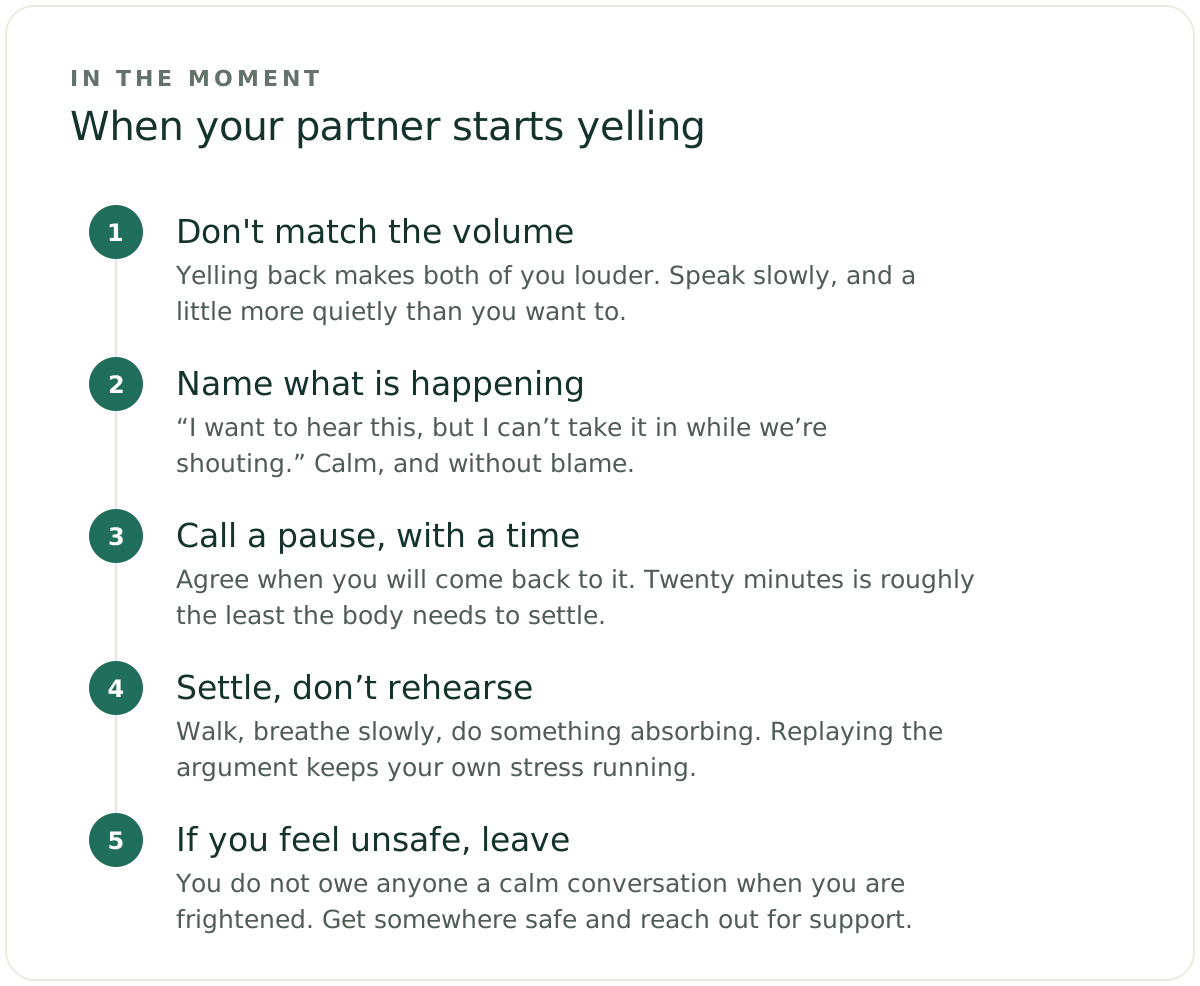
- Don’t match the volume. Yelling back almost always makes both of you louder. Speak slowly and a little more quietly than you want to.
- Name what is happening, without blame. Try “I want to hear this, but I can’t take it in while we’re shouting,” rather than “Stop yelling at me.”
- Call a pause, with a time to come back. “Let’s take twenty minutes and come back to this at eight” gives both of you a way out that is not walking away. Twenty minutes is roughly the least time the body needs to settle after flooding.
- Use the break to settle, not to rehearse. Walk, breathe slowly, do something that absorbs your attention. Replaying the argument keeps your own stress running.
- If you feel unsafe, leave. You do not owe anyone a calm conversation when you are frightened. Get somewhere safe and reach out for support.
The de-escalation techniques guide covers more ways to bring a heated moment back down, including what to say when the other person does not want to stop.
How to talk about the yelling afterwards
The yelling itself is worth talking about, once you are both calm. Otherwise it simply happens again next time. A few things make that conversation go better.
- Choose a calm moment. Not straight after, and not at bedtime. Ask for a time: “Can we talk about how our arguments have been going? Tomorrow after dinner?”
- Describe the pattern, not their character. “When our voices go up, I shut down and we never sort out the actual thing” is far easier to hear than “You’re so aggressive.”
- Ask what was happening for them. Did they feel unheard? Blamed? Exhausted? You may learn that they experienced the argument very differently.
- Own your part. If you tend to go quiet, walk off mid-sentence or open with criticism, say so. It makes it much easier for them to own theirs.
- Agree on a pause signal. A word or gesture either of you can use to call a break, plus a promise to come back, is one of the most effective changes couples make.
Our guide to how to fix a relationship after an argument covers reopening a hard conversation gently, including how to repair after things were said that hurt.
If you are the one who yells
If you recognised yourself in this article, the fix is practical. Learn your early signs: heat in your face, a tight chest, the urge to talk over the other person. Say it out loud before you get loud: “I’m getting worked up, I need a few minutes.” Take a real break, come back when you said you would, and when things are calm, acknowledge the yelling plainly without explaining it away. If you find you cannot stop, or your partner is afraid of you, talk to a professional; in Australia, Relationships Australia offers counselling and support.
How FairTalk helps
For couples who both feel safe but keep ending up shouting, a structured conversation can take the heat out of the topics that set things off. In a FairTalk session, you both talk the issue through in one conversation while the AI listens, and either of you can pause the session if it starts to get heated, then come back to it. Afterwards, the analysis sets out each person’s perspective and a small set of specific actions, each assigned to one of you. Each person also gets individual coaching on the communication skills worth building, linked to the Knowledge Hub.
If your partner is not ready to take part, FairTalk also offers a one-person conversation, so you can work through the situation from your side and leave with a structured summary of your perspective and practical next steps. FairTalk is only for two people who both feel safe to talk; it is not suitable where there is fear, abuse, coercion or a significant power imbalance.
Frequently asked questions
Why is my husband yelling at me?
Most often, a husband yells because he is overwhelmed in the moment, feels unheard or criticised, or is carrying stress from somewhere else. It can also be a habit learned in a family where raised voices were normal. If the yelling comes with fear, threats or control, that is a safety issue rather than a communication problem, and 1800RESPECT on 1800 737 732 can help.
Why is my wife yelling at me?
Usually, a wife yells for the same reasons anyone does: emotional flooding, feeling unheard or blamed, stress spilling over, or habit. Yelling that follows an issue she has raised calmly several times often means she feels ignored. Whatever the cause, being yelled at regularly is not okay, and if you feel afraid, contact 1800RESPECT on 1800 737 732.
Is it normal for couples to yell at each other?
Not as a regular thing: occasional raised voices happen in many relationships, but regular yelling is not a healthy way to disagree. It usually means arguments are getting too heated for either person to listen well. Couples who learn to notice flooding early, pause, and come back to the conversation calmly can change the pattern.
Is yelling a form of abuse?
It can be. Yelling is abusive when it is used to frighten, intimidate, belittle or control someone, especially alongside threats or name-calling, or when one partner changes their behaviour to avoid it. If that describes your relationship, contact 1800RESPECT on 1800 737 732, or 000 in an emergency.
How do I get my partner to stop yelling at me?
You cannot control your partner’s behaviour, but you can stop the argument escalating and raise the pattern calmly afterwards. In the moment, do not match the volume, name what is happening, and call a pause with a time to come back. Later, describe the pattern without blame, ask what was happening for them, and agree on a pause signal you both can use.