The best conflict resolution app is the one built for your kind of problem. For a live dispute between two willing people, choose an AI mediation tool that hears both sides. For mental health or long-standing difficulties, choose a therapy app that connects you to a professional. To build skills over time, choose a coaching app.
A few years ago, the idea of using an app to work through a disagreement would have sounded strange. In 2026 it is an established category, and a crowded one: search for a conflict resolution app and you will find dozens of options promising to fix your relationship, coach you through arguments, or mediate your disputes, all with confident marketing and very different underlying approaches.
That abundance is the problem. The apps in this space are not variations on one idea; they are fundamentally different tools that happen to share a keyword. Choosing well means understanding what type of tool you are actually looking at and judging it against the criteria that matter, rather than the ones the marketing emphasises. This guide gives you both: a map of the categories, and a set of questions to ask of any app before you trust it with something as sensitive as a conflict.
The Main Types of Conflict Resolution App
Almost everything marketed as a conflict resolution or relationship app falls into one of four broad categories. Each is genuinely useful for something, and genuinely wrong for something else.
AI mediation tools. These guide two people through a structured conversation and produce a neutral analysis of the disagreement. The distinguishing feature is that they are built to handle both sides of a dispute rather than coach one person. This is the closest digital equivalent to traditional mediation, and it suits recurring interpersonal conflict where both people are willing to engage.
Therapy and counselling apps. These connect you to a licensed human therapist, usually by video or messaging. The app is really just the delivery mechanism; the value is the qualified professional on the other end. This is the right category for mental health concerns, trauma, or deep relational difficulties, and it is correspondingly slower and more expensive than software-only tools.
Coaching and communication-skill apps. These teach skills through lessons, exercises, prompts, and daily check-ins. They are generally aimed at one user building their own capability over time, rather than resolving a live dispute in the moment. They are excellent for prevention and habit-building, less suited to a conflict that needs sorting out tonight. If you are a couple looking for everyday connection rather than help with a dispute, our guide to the best relationship apps for couples compares the wider range, from daily check-ins to shared planners.
General AI chatbots. Plenty of people now open a general-purpose AI assistant and ask it for advice about an argument. This can be genuinely helpful for a quick sanity check, but a general chatbot has no structure, no memory of both parties’ positions, and no design for the specific dynamics of conflict. It is advice, not mediation, and it only ever hears one side.
Knowing which category you are dealing with tells you most of what you need to know about whether it fits your situation.
Who Each Type Is Best For
The categories are not competing for the same person. Each has a situation it fits well, and situations it does not.
AI mediation tools are best for two people in an ongoing interpersonal dispute who both want to sort it out: couples stuck in the same recurring argument, siblings or a parent and adult child navigating a specific disagreement, flatmates or friends after a falling out, or work colleagues working through a professional disagreement. They are less useful when only one person is willing to engage, or when the problem is really a clinical or safety issue rather than a communication breakdown.
Therapy and counselling apps are best for anyone whose difficulty runs deeper than a single dispute: a mental health condition, trauma, addiction, or a long-standing pattern that predates the current argument. They are also the right choice when you specifically want the judgement and presence of a qualified human. The trade-off is cost and pace, since you are booking a professional’s time rather than opening software.
Coaching and communication-skill apps are best for the individual who wants to get better at this over time, before the next conflict rather than during it. They suit someone building habits like active listening or emotional regulation, or a person whose partner will not participate but who still wants to change their own side of the dynamic. They are a poor fit for a dispute that needs resolving tonight.
General AI chatbots are best for a fast, private gut-check: making sense of your own feelings after an argument, drafting a difficult message, or getting a second opinion before you respond. They are genuinely handy for that. They become the wrong tool the moment you need neutrality, both people’s input, or anything you would be uncomfortable being wrong about, because they only ever hear your side and have no structure to keep them honest.
The pattern across all four is the same: match the tool to the situation and it works well; use it outside its lane and it disappoints.
The Criteria That Actually Matter
Once you know the category, judge any individual app against the following. These are the questions that separate a tool you can trust from one that just markets well.
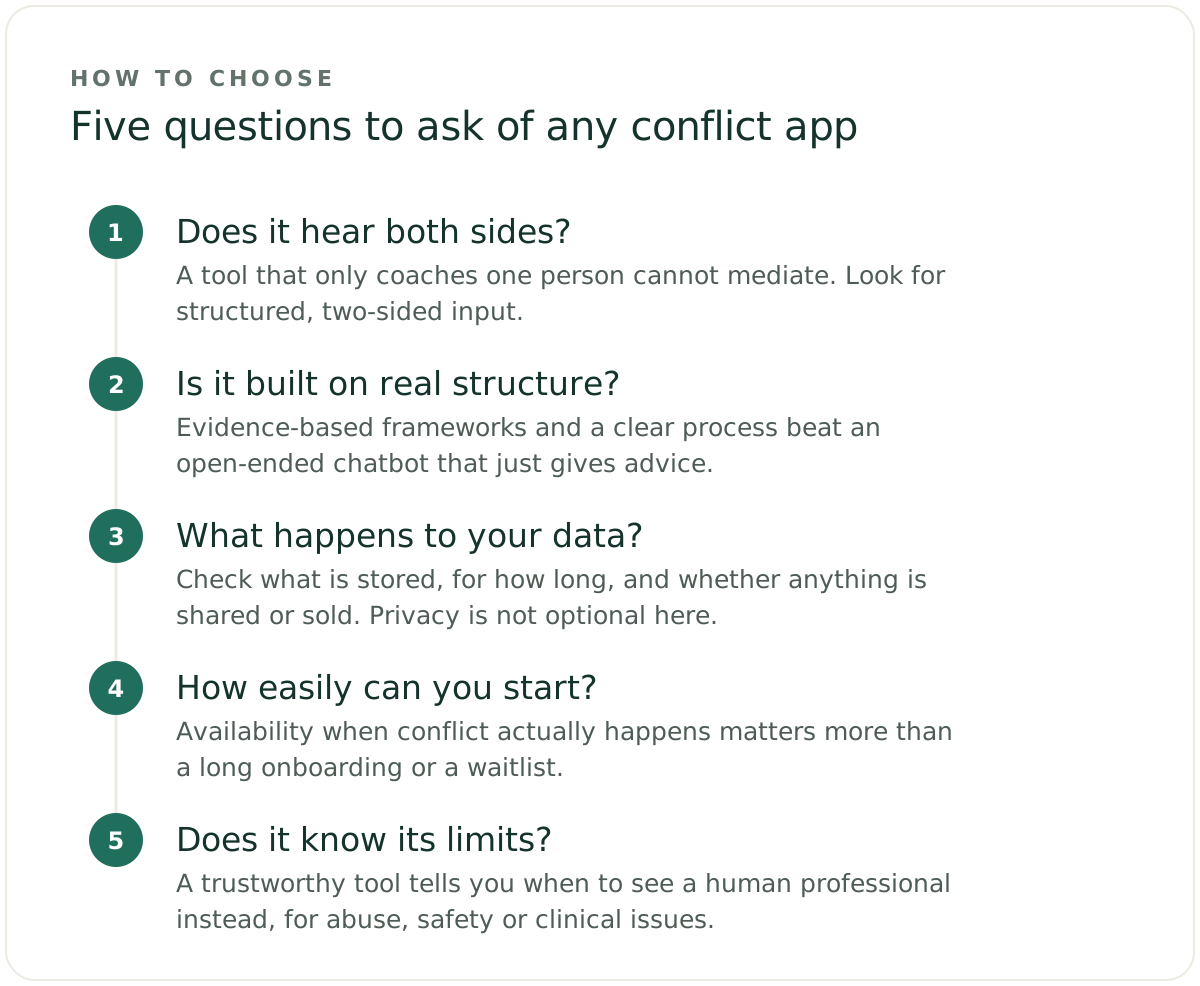
Does it actually hear both sides? This is the single most important question for anything claiming to resolve conflict rather than just advise you. A tool that only ever hears your version is coaching you, which has its place, but it cannot mediate. If both people are involved in the dispute, look for something built to take structured input from both of them.
Is it built on real structure and evidence? The best tools draw on established conflict resolution techniques, active listening, interest-based negotiation, and the research on how couples argue well, and apply it through a clear process. Be wary of anything that is essentially an open-ended chatbot dressed up as a method. Structure is the actual intervention; without it, you are just typing into a void that agrees with you.
What happens to your data? You are handing over some of the most sensitive material there is: how you feel, what you fight about, what you need. Before you do, check what the app stores, for how long, and whether any of it is shared, sold, or used to train models. Look for clear statements on encryption and retention, and for the ability to delete your data. A tool that is vague about this does not deserve the material.
How easily can you actually start? Conflict is most workable close to when it happens. A tool you can open the same evening as the disagreement is worth more than one with a long onboarding, a waitlist, or a scheduling dance between two people who are already at odds. Availability at the moment of need is a real feature, not a minor convenience.
Does it know its own limits? This is the mark of a trustworthy tool rather than an overreaching one. A conflict resolution app should be clear about what it is not for, and should point you towards a qualified human for anything involving abuse, coercion, safety, or a mental health condition. Any app that implies it can handle everything, including situations that genuinely need a professional, has told you something important about itself.
A Closer Look at Privacy
Of all the criteria, privacy deserves the closest read, because the material a conflict app handles is uniquely sensitive. This is not your step count or your shopping history. It is a record of how you feel about the people closest to you, what you argue about, and what you are afraid of. That is worth protecting properly, and it is worth a few minutes of checking before you type anything in.
Five questions cut through most privacy policies:
What is actually collected, and in what form? Some tools keep only text; others record and store audio. Audio is far more sensitive and far harder to anonymise, so it matters whether a recording is kept at all or deleted promptly once it is no longer needed.
How long is it kept, and can you delete it? Look for a clear retention policy and a genuine delete function that removes your data on request, rather than just hiding it from your own view. “We keep your data as long as necessary”, with no way to remove it, is a warning sign.
Is it encrypted? Encryption both in transit and at rest is the baseline. Its absence, or a policy that will not say either way, tells you the provider has not treated this material as sensitive.
Is anything shared, sold, or used to train models? This is the question providers are most tempted to be vague about. Your private conflicts should not become advertising data or training material for someone’s model, and a trustworthy policy states plainly that they are not.
Who can see it? Ideally, only the people in the conversation. Check whether staff can read your conversations, whether a partner organisation gets access, and whether anything is visible to anyone the conversation does not concern.
A good privacy story is specific and reassuring on all five. A poor one is vague, buried, or silent, and vagueness here is better read as a no than a maybe. You are trusting an app with material you would not hand to a stranger, so hold it to the standard you would hold a stranger to. For reference, FairTalk deletes audio once the session is complete, encrypts the data, keeps the record visible only to the two participants, and does not sell it or pass it to anyone outside the session.
Red Flags to Watch For
A few signals should make you cautious regardless of category.
“AI therapist” claims. No current app is a therapist, and software that implies it can treat mental health conditions is overreaching in a way that can genuinely harm vulnerable users. Effective tools are honest about being a structured aid, not clinical care.
Vagueness about privacy. If you cannot easily find out what happens to your conversations, assume the answer is not in your favour.
One-sided framing dressed up as mediation. An app that only coaches you while calling itself a mediator is misdescribing what it does. That is not necessarily useless, but it is not neutral, and it will tend to validate your position rather than bridge the gap.
Promising to fix the relationship. No tool fixes a relationship. Tools give you structure and insight; the work is still done by the people involved. Marketing that promises otherwise is setting you up to be disappointed.
Where FairTalk Fits In
FairTalk sits in the AI mediation category, and it is built specifically around the criteria above. A session is one conversation between the two people involved, with the AI listening impartially rather than coaching one side. Because it takes both perspectives, it can produce a genuinely neutral analysis afterwards: each person’s view and a shared summary you both keep. The analysis comes after the conversation rather than interrupting it, and the process draws on established conflict resolution frameworks rather than open-ended chat.
It also does something most tools in the category do not. Alongside the summary, the analysis identifies the specific communication skills each person could work on, drawn from where the conversation actually got stuck. Those areas then connect to a Knowledge Hub, a library of practical guidance on the same skills that each person can work through in their own time. The effect is that a dispute does not just get resolved in the moment; it shows each person what to improve and gives them the material to go and do it, so the next disagreement starts from a better place.
On privacy, audio is deleted once the session is complete, and the record stays visible only to the two participants.
It is also deliberately clear about its limits. FairTalk is for adults working through interpersonal conflict, and it is not a substitute for professional help where a situation involves abuse, coercion, safety concerns, or a mental health condition. For the idea behind FairTalk, see how FairTalk works, and for an honest comparison of when an AI tool is the right choice versus a human therapist, see AI relationship coach versus couples therapy.
None of this makes it the right tool for everyone. If what you need is a licensed therapist, a skills course, or a quick second opinion, a different category serves you better, and that is exactly the point of choosing by criteria rather than by whichever app ranks first in a list.
Making the Final Choice
The most reliable way to choose is to start from your situation rather than from the apps.
If you have a specific, recurring dispute and both people are willing to engage, an AI mediation tool is the natural fit. If the underlying issue is a mental health concern, trauma, or a pattern that predates the current conflict, a therapy or counselling app that connects you to a professional is the right call. If you are trying to build better communication habits over time rather than resolve something live, a coaching or skills app suits you best. And if you simply want a fast, one-sided sanity check, a general AI assistant will do, as long as you remember that is all it is.
Match the tool to the job, apply the five criteria, and the crowded field gets a great deal smaller.
Frequently Asked Questions
What is the best conflict resolution app in 2026?
There is no single best app, because the category contains fundamentally different tools. The best one for you depends on what you actually need: an AI mediation tool for resolving a live dispute between two people, a therapy app for clinical or mental health concerns, a coaching app for building skills over time, or a general assistant for a quick second opinion. Judging any option against the five criteria in this guide, both-sides input, real structure, strong privacy, easy access, and honesty about its limits, will point you to the right fit faster than any ranking.
Are AI conflict resolution apps actually effective?
For the job they are designed for, structured tools tend to outperform an unstructured argument, because they keep the conversation focused, surface the real issue, and produce a concrete outcome. They are far less suited to deep or clinical problems, where the evidence favours a qualified human. Effectiveness is really a question of using the right category for the situation rather than a property of AI apps in general.
Can an app replace couples therapy?
Not where therapy is genuinely needed. For communication breakdowns and recurring disputes, a good AI mediation tool can do a lot of what people hope to get from therapy, at far greater convenience. For mental health conditions, trauma, abuse, or entrenched patterns, it cannot and should not try to. The two are better understood as different tools for different jobs, and many people use a structured app for everyday friction and a therapist for the deeper work.
Is it safe to share private conflicts with an app?
It depends entirely on the app. Before sharing anything sensitive, check how your data is stored, for how long, whether it is ever shared or sold, and whether you can delete it. Look for encryption, clear retention policies, and access limited to the people in the conversation. An app that is transparent about all of this can be trusted with sensitive material; one that is vague about it should not be.
Are these apps suitable for serious issues like abuse?
No. Situations involving abuse, coercion, or any risk to safety need a qualified human professional or a relevant support service, not a self-directed app. A responsible conflict resolution tool will say so plainly and direct you to appropriate help. If you are in this situation, please contact a professional or a support service rather than relying on any app.