
To apologise properly, say sorry plainly, name exactly what you did, acknowledge how it affected the other person, take responsibility without excuses, and say what you will do differently. A real apology is a short, complete message rather than a single word, and the change that follows it matters as much as the words.
Most of us were taught to apologise before we were taught how. As children we were told to say sorry, usually to make an adult stop being cross, and that early lesson sticks: an apology becomes a word you produce to end an uncomfortable moment, rather than something you do to repair a relationship. It is why so many apologies land badly. The word is there, but the repair isn’t.
Done well, an apology can restore trust faster than almost anything else. Done badly, or offered with a hidden “but”, it can deepen the hurt it was meant to heal. This guide covers what a real apology is made of, the phrases that quietly sabotage one, how to apologise to your partner, and how to make an apology that actually sticks.
Why “sorry” so often falls flat
The single word “sorry” carries almost no information. It doesn’t tell the other person what you think you did, whether you understand how it affected them, or whether you intend to do anything differently. It asks them to supply all of that themselves, and to trust that you mean it. When someone is still hurt, that is a lot to ask.
Worse, “sorry” is the same word we use for things that aren’t our fault at all (“sorry, the traffic was terrible”). So a bare apology can sound less like an admission and more like a social reflex, a way of smoothing the surface so everyone can move on before the actual problem has been touched. The other person often senses this, which is why “I said sorry, what more do you want?” tends to make things worse rather than better. What they want is not the word. It is evidence that you understand.
The parts of an apology that actually repairs
Research on what makes apologies effective points consistently to a handful of components, and the more of them an apology contains, the more likely it is to rebuild trust. The two that matter most are taking clear responsibility and offering to put things right. An apology that has all the parts is not a longer speech, it is a more complete one.
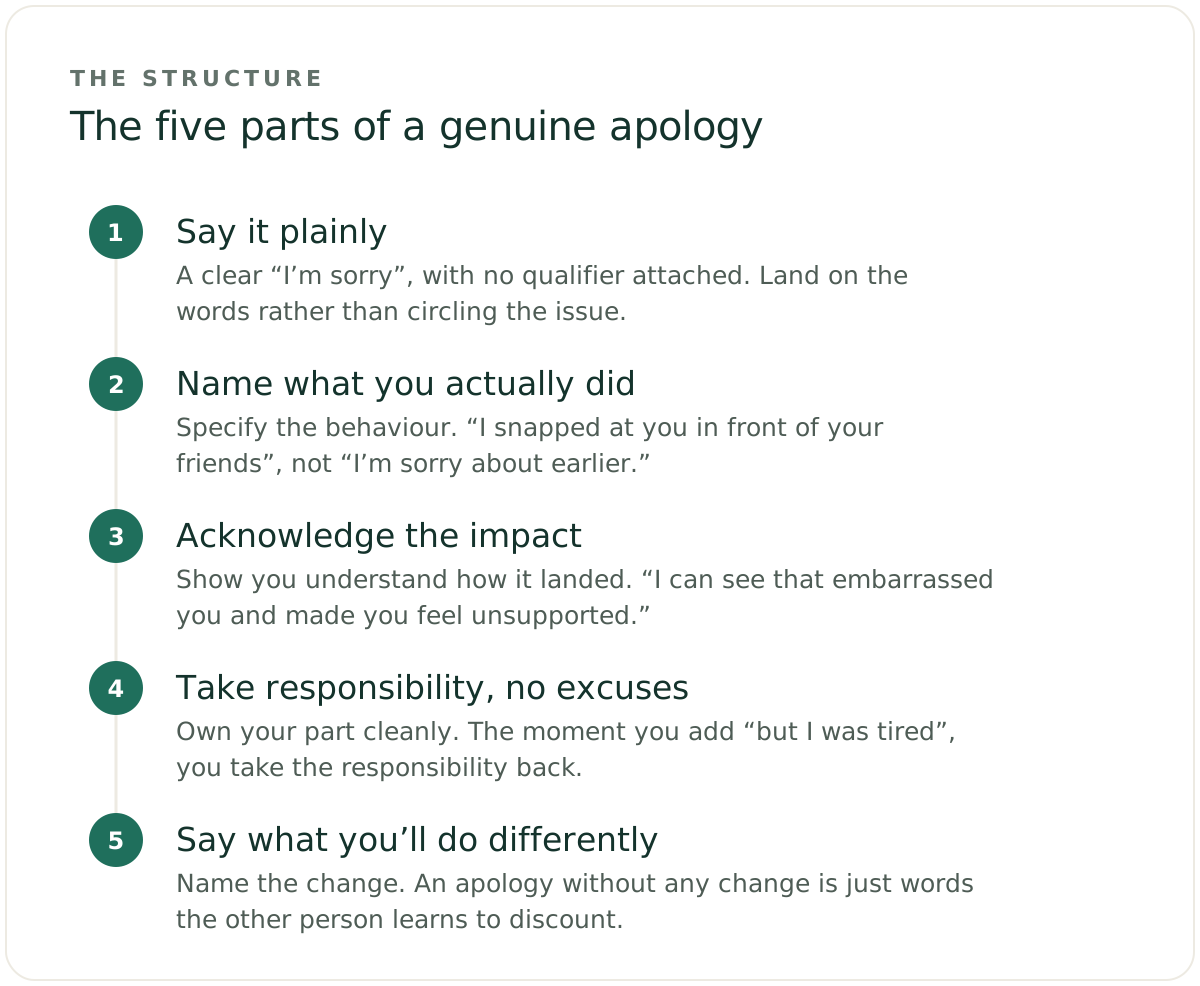
1. Say it plainly. Begin with a clear “I’m sorry” or “I apologise”, with no qualifier attached. This sounds obvious, but many apologies never quite arrive: they circle the issue without ever landing on the words. Say them, simply and directly.
2. Name what you actually did. Specify the behaviour you are apologising for, in plain terms. “I’m sorry I snapped at you in front of your friends” does far more work than “I’m sorry about earlier.” Naming it shows you have understood what happened, rather than issuing a generic apology to cover any and all offence.
3. Acknowledge the impact. Show that you understand how it affected the other person. “I can see that embarrassed you, and that it made you feel I don’t have your back in front of other people.” This is the step most people skip, and it is often the one that matters most. Being understood is a large part of what the hurt person is actually after.
4. Take responsibility, without excuses. Own your part cleanly. The moment you add “but I was tired” or “but you started it”, you have taken the responsibility back. Explanations and apologies do not mix well; if there is genuine context to share, it belongs in a separate, later conversation, not stapled to the apology.
5. Say what you will do differently. Name the repair or the change. “I’m going to keep an eye on my temper when I’m stressed, and if I feel it rising I’ll step away rather than take it out on you.” An apology without any change is just words, and people learn quickly to discount an apology that arrives on a loop.
The phrases that quietly ruin an apology
Some of the most common apology openers are actually apology-cancellers. They keep the word “sorry” while removing the responsibility, which is the very thing that makes an apology work.
“I’m sorry you feel that way” is not an apology. It is a comment on the other person’s reaction that carefully avoids owning anything you did.
The usual culprits:
- “I’m sorry if…” The “if” implies you’re not sure anything actually happened. If you’re apologising, you already know it did.
- “I’m sorry you feel…” This shifts the problem onto their feelings rather than your behaviour, and it often reads as blame in disguise.
- “I’m sorry, but…” Everything before the “but” is deleted by everything after it. The “but” is where the real message lives, and the real message is a defence.
- “I’m sorry for whatever I did.” Vagueness signals you either don’t know or don’t care what the offence was, which is not reassuring.
These are sometimes called non-apologies for good reason. They perform the social motion of apologising while protecting you from actually conceding anything, and most people can feel the difference immediately. Framing your own experience honestly rather than deflecting is the same underlying skill as the shift from blame to disclosure covered in our guide to I-statements versus you-statements.
How to apologise to your partner
Apologising to a partner is harder than apologising to almost anyone else, because the relationship carries history. Your partner is not only weighing this apology; they are weighing it against the last few, and against whatever pattern the incident belongs to. A few things make a partner apology land:
- Make it private and unhurried. Not in the car on the way somewhere, not in front of the children, not by text if the hurt happened face to face. Choosing the moment shows you are taking it seriously.
- Apologise for the pattern as well as the incident. If this is the third time you have been late without warning, “I’m sorry I was late tonight” undersells it. “I keep doing this, and I understand why it makes you feel like an afterthought” is the apology they are actually waiting for.
- Don’t ask them to manage your guilt. An apology that ends with your partner comforting you has quietly become about you. Let them respond however they need to, including needing time.
- Ask what would help. “Is there anything that would make this easier to move past?” invites them into the repair rather than presenting it as finished.
- Let the follow-through do the talking. In a long relationship, trust is rebuilt less by the apology than by the next few weeks of changed behaviour.
If the same apology keeps being needed, it is usually a sign that an underlying issue has never been talked through properly, which is a conversation worth having on its own terms.
Timing and tone matter as much as words
Even a well-constructed apology can fail if it arrives at the wrong moment. If the other person is still flooded, still in the grip of the heat of the argument, an apology can feel like pressure to hurry up and forgive. It is often better to let things settle first. If someone has withdrawn or gone quiet, pushing an apology at them can deepen the shutdown rather than resolve it, a dynamic we cover in why people shut down in arguments.
Tone carries the meaning. The same words delivered with visible impatience, a sigh, or a defensive edge will not land, because the other person reads your manner more than your sentences. A genuine apology is quiet, unhurried, and free of the sense that you’re doing them a favour. If you can’t yet deliver it that way, it is usually worth waiting until you can.
When the other person owes you one too
Apologies get complicated when the hurt runs both ways, which in real conflicts it usually does. The instinct is to hold your apology hostage until theirs arrives first, and the result is a standoff where nobody moves.
The more effective approach is to apologise for your part regardless of what they do. This is not about being a pushover or accepting blame you don’t hold. It is about cleanly owning your share, which often lowers the other person’s defences enough that they can look at their own. You cannot control whether they reciprocate, but a genuine apology makes it far more likely, because it removes the threat they were bracing against. Taking responsibility for your part is also the antidote to defensiveness, one of Gottman’s Four Horsemen. Apologising for your part is not the same as taking on all of it, and keeping that distinction clear is closely related to the work of setting healthy boundaries: you can be accountable and self-respecting at the same time.
Repairing after the apology
An apology opens a door; it does not walk through it. What rebuilds trust is the behaviour that follows. If you apologised for interrupting, the repair is visible in the next ten conversations where you let them finish. If you apologised for forgetting something important, the repair is that you set a reminder so it doesn’t happen again.
This is why “I’ve said sorry a hundred times” is not the reassurance people think it is: a hundred apologies for the same thing is not evidence of remorse, it is evidence that nothing changed. One apology followed by changed behaviour is worth more than any number of repeated ones. The apology is the promise. The repair is keeping it. For the full sequence from cooling down to agreeing what changes, see how to fix a relationship after an argument. And if you are on the receiving end, the counterpart to a good apology is learning how to forgive someone, which is ultimately more for your own peace than for theirs.
Where FairTalk fits in
Some ruptures are simple enough to repair with a quiet, well-judged apology. Others sit on top of a longer pattern, the same argument returning in different clothes, where it is genuinely unclear who owes what to whom, and each person remembers the incident differently.
That is the kind of situation FairTalk is built for. In a session, both people talk the issue through in one guided conversation, and the analysis that follows lays out each person’s perspective and a set of practical next steps for each of you. Seeing the impact of your actions laid out plainly, in the other person’s words, often makes a sincere apology far easier to give, and the tailored suggestions each person receives point toward the specific changes that turn an apology into lasting repair. For anything involving abuse, coercion, or a serious imbalance of power, a qualified professional is the right kind of help, rather than a self-guided tool.
Frequently asked questions
What makes an apology sincere?
Sincerity shows up in the specifics, not the volume. A sincere apology names the actual behaviour, acknowledges how it affected the other person, takes responsibility without adding excuses, and is followed by changed behaviour. The word “sorry” on its own, or repeated many times without anything changing, tends to read as hollow. People trust apologies that show understanding and lead to a genuine difference in what you do next.
Should I apologise even if I don’t think I was entirely wrong?
Yes, for your part. Most conflicts are not one person’s fault, and you can apologise cleanly for your share, how you spoke, your timing, your tone, without accepting blame you don’t hold. Apologising for your part often lowers the other person’s defences enough that they can acknowledge theirs, whereas waiting for them to go first usually produces a standoff. Owning your contribution is not the same as taking on all of it.
Why does “I’m sorry you feel that way” make people angrier?
Because it isn’t really an apology. It comments on the other person’s reaction while carefully avoiding any admission that you did something wrong, which often reads as blame dressed up as an apology. It leaves the hurt person feeling both wronged and told that their feelings are the problem. A genuine apology owns the behaviour (“I’m sorry I said that”) rather than pointing at their response to it.
How do you apologise without saying sorry?
You can apologise without the word “sorry” by naming what you did, acknowledging its impact and saying what you will change, for example “I was wrong to speak to you like that, and I can see it hurt you.” Actions can carry an apology too, such as making amends or visibly changing the behaviour. For most people the word itself still matters, though, so leaving it out entirely can read as avoiding the admission.
How soon after an argument should I apologise?
Usually once things have cooled enough that both of you can think clearly, but not so long that the silence becomes its own problem. Apologising while the other person is still flooded can feel like pressure to hurry up and forgive, so a short pause often helps. If either of you has withdrawn, give it time before re-approaching gently. The goal is an apology the other person is able to actually receive, which means waiting for the moment they can hear it.