Not every conflict has two people ready to sit down and sort it out. Sometimes only one person is carrying it, turning it over on the drive home, rehearsing conversations that never happen, feeling it tighten in the background of an ordinary day, and that person is you. The other side may not even know anything is wrong. They may know and refuse to engage. They may not be someone you can safely or sensibly approach at all. And sometimes you simply are not ready to raise it yet.
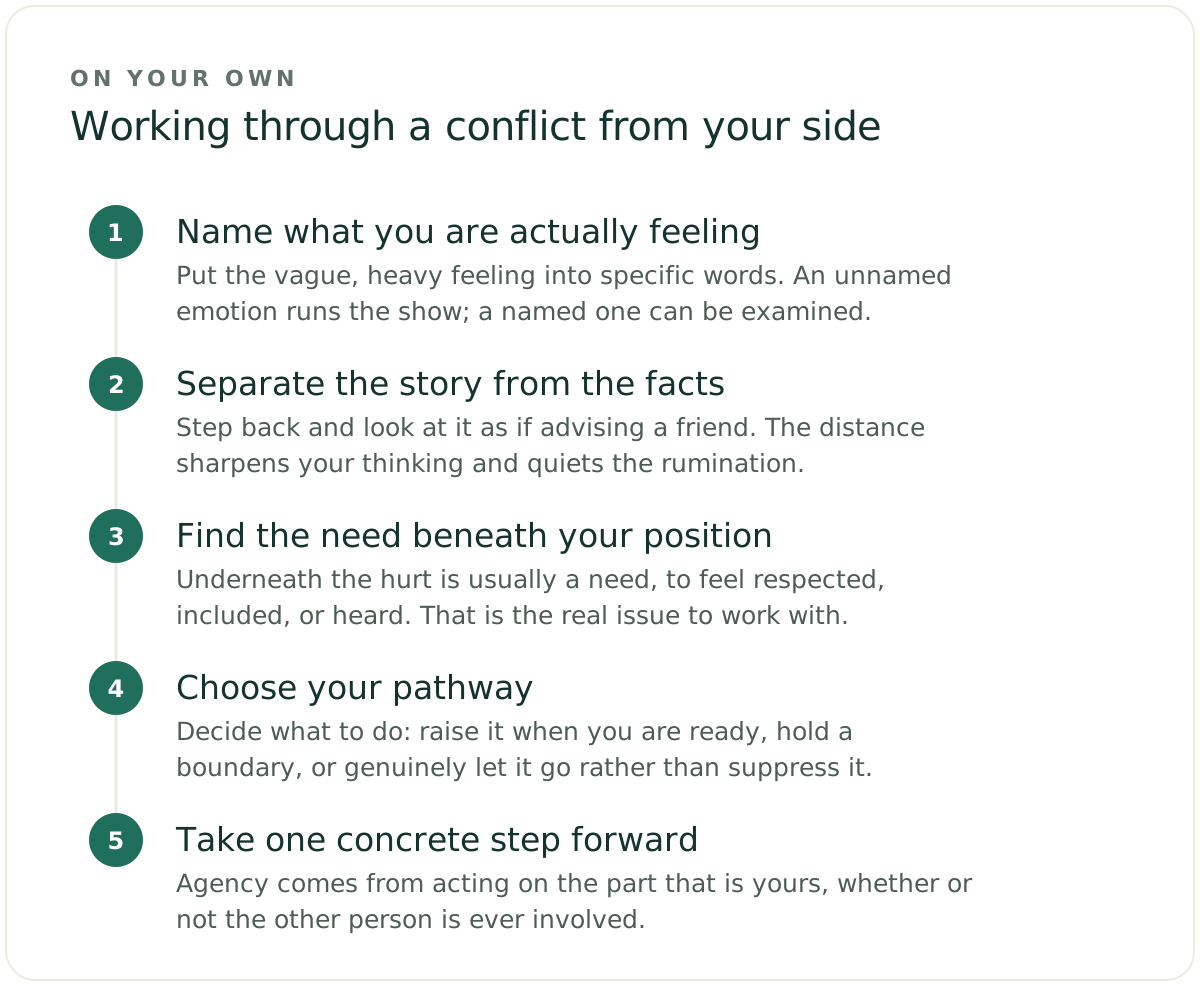
The usual advice, “just talk it out”, quietly assumes the other person is in the room, willing, and calm. When they are not, you can still work the conflict through from your own side: name what you actually feel, separate the story from the facts, find the need beneath your position, and choose your next step, whether that is raising it, resetting a boundary or letting it go. This guide covers how, why psychologists find that so powerful, and how FairTalk’s one-person conversation gives the process a structure.
The conflicts you can’t resolve together
There is a whole category of conflict that a two-person conversation cannot reach, at least not yet. It usually looks like one of these.
- They don’t know there’s an issue. The friction is entirely on your side. Something they said or did landed hard, and you have been carrying it while they carry on unaware.
- It’s an internal conflict about a person. The struggle is happening inside you, about someone who may be distant, difficult, or no longer in your life. There may be no conversation available to have.
- They aren’t willing, or aren’t ready. You have tried, or you know them well enough to know a direct approach would be shut down or turned around on you. With a partner, our guide to the reluctant partner covers ways to invite them in when you are ready.
- You don’t feel ready or confident to approach them. You are not sure what you even want to say, or the thought of raising it makes your stomach drop, and forcing the conversation before you are steady rarely goes well.
In every one of these, the shared, structured conversation is off the table for now. That does not mean you are powerless. It means the work starts with you.
Why carrying it alone costs so much
Unresolved conflict does not sit quietly. Your mind treats an unfinished, unresolved situation as an open loop it cannot close, so it keeps returning to it, replaying the incident, drafting comebacks, running imaginary confrontations. This is rumination, and it is exhausting precisely because it feels like problem solving while actually going nowhere.
The particular sting of a one-sided conflict is the helplessness. When resolution seems to depend on someone who will not engage, or who does not even know, you can feel as though your own peace is being held hostage by another person’s behaviour. That sense of having no control is a major driver of stress, and it is the exact thing that working through your own side is designed to give back to you. For the wider picture of what unaddressed conflict does over time, see the real cost of unresolved conflict, and for why it is so hard to think your way out of from the inside, see why conflict is so hard to resolve on your own.
The psychology of working through your own side
Here is the part that surprises people: you can get a great deal of resolution without the other person doing anything at all. Several well-established findings in psychology explain why.
Naming what you feel loosens its grip. Putting a vague, heavy emotion into specific words, “I feel dismissed”, “I feel taken for granted”, reliably reduces its intensity. An unnamed feeling runs the show; a named one can be examined. Most people carrying a conflict have never actually articulated what the feeling underneath it is.
Stepping outside your own head sharpens your thinking. When you view a situation from a little distance, as if advising a friend rather than living it in the first person, you reason about it more clearly and react to it less. The problem with rumination is that it keeps you locked inside the story; structured reflection pulls you out far enough to see it.
Reclaiming agency is the whole point. You cannot control whether the other person apologises, changes, or even listens. You can control how you interpret what happened, what you choose to do next, and the boundaries you hold. Shifting your focus from the part you cannot control to the part you can is what turns helpless rumination into forward movement, and it is often the moment the weight starts to lift.
Closure is something you can give yourself. People wait years for an apology or an explanation that may never come. But closure is not something the other person hands you; it is a decision you reach about how you understand the situation and how you want to carry it. That decision is entirely yours to make, and you can make it alone.
None of this requires the other person’s participation. It requires structure, honesty with yourself, and a way to turn a swirl of feeling into something clear enough to act on.
What a one-person FairTalk session gives you
This is exactly what FairTalk’s single-person conversation is built for. You do not need the other person present, willing, or even aware. On your own, you talk through what has happened and how it has landed, and FairTalk gives you back something structured and genuinely useful.
- A clear summary of your own perspective, laid out calmly so you can finally see the shape of it instead of looping through fragments.
- The needs and interests underneath your position, which are usually the real issue and are easy to miss from inside the feeling.
- Concrete pathways and strategies, tailored to your situation: how you might raise it if and when you choose to, how to hold a boundary, or how to genuinely let something go rather than just suppressing it.
- The specific communication skills worth building, with a Knowledge Hub covering what each one is, why it matters, and how to practise it, so the next difficult situation finds you better equipped.
It is self-mediation with the structure built in, available the moment you need it, private, and entirely on your terms. If you would rather understand the reasoning behind this than take our word for it, our piece on why FairTalk is more than a chatbot explains how the single-person session is grounded in conflict resolution rather than simply agreeing with you.
Taking steps forward, with or without them
Working through your side on your own is not a consolation prize for when the real conversation is impossible. It leads to real outcomes, and they take one of two shapes.
Sometimes it prepares you to approach the other person well. Having named what you feel, found the need beneath it, and thought through how to say it, you can raise the issue from a place of clarity rather than raw hurt, which is the difference between a conversation that repairs and one that reignites. When they are ready, our guides to I-statements and difficult conversations help you carry it well.
And sometimes the resolution is entirely internal, and that is not a lesser result. You decide how to understand what happened, you set a boundary, you let something go, and you move forward whether or not the other person is ever involved. Either way, you have stopped waiting on someone else to release you, and started acting on the part that was always yours. This is the heart of resolving any personal conflict: the only side you can ever fully work on is your own. When the conflict is one the other person may never even know about, how to find peace with unresolved conflict goes deeper into that internal side.
When you need more than a solo session
Working through your own perspective is powerful for the ordinary conflicts and hurts of life, but it is not the right tool for everything. If what you are carrying involves abuse, coercion, or someone who has genuine power over you, or if it is weighing heavily on your mental health, the wiser step is support from a person, not a structured reflection on your own.
In Australia, Relationships Australia offers counselling and support, and Beyond Blue is there for anyone struggling with their mental wellbeing. Reaching for that kind of help is not giving up your agency; it is one of the strongest ways to use it.
The bottom line
You do not need the other person to be willing, ready, or even aware to start resolving a conflict. So much of what keeps a conflict painful lives on your side of it: the rumination, the unnamed feeling, the sense of helplessness, the wait for a closure that may never be offered. Those are the things you can work on directly, and doing so is what gives you back your agency and a way forward. FairTalk’s single-person session exists for exactly that moment, when only one person is carrying it, and that person is ready to stop just carrying it and start moving through it.
Frequently asked questions
Can you really resolve a conflict on your own?
You can resolve a great deal of it, yes. You cannot force the other person to apologise or change, but a surprising amount of what keeps a conflict painful is on your side: the rumination, the unnamed hurt, the feeling of having no control, and the wait for a closure that may never come. By naming what you actually feel, understanding the need beneath it, and deciding how you want to carry it, you can find genuine peace and a clear way forward without the other person’s involvement, and often arrive better prepared for a conversation if one becomes possible.
How do you deal with conflict when the other person won’t talk?
Shift your focus from the part you cannot control to the part you can. You cannot make them engage, but you can work through your own perspective: get clear on what happened and how it landed, name the specific feeling underneath it, and decide on a pathway, whether that is to raise it differently later, to hold a boundary, or to let it go. FairTalk’s one-person session is designed for exactly this, giving you a structured read on your side and concrete strategies you can act on alone, so their unwillingness no longer keeps you stuck.
How do you deal with someone who doesn’t know they’ve upset you?
Start by getting honest with yourself about what actually happened and why it stung, since the friction is currently entirely on your side. Working through your own perspective first helps you decide whether this is something to raise with them or something to release. If you do choose to bring it up, having named the specific need it touched lets you do so calmly and clearly rather than out of built-up resentment, which makes it far more likely they will hear you rather than get defensive.
How do you find closure without confrontation?
Closure is not something the other person hands you; it is a conclusion you reach about how you understand a situation and how you want to carry it forward. You can get there without a confrontation by working through your own perspective: naming what happened and how it affected you, making sense of it, deciding what you need, and choosing to set it down. A structured process, such as FairTalk’s single-person session, makes this far easier than trying to think it through in circles, because it turns a swirl of feeling into something clear enough to actually resolve.