
Whether a relationship lasts has less to do with how much a couple argues than with how they argue. Decades of research on couples has found that it is possible to predict relationship breakdown with surprising accuracy, not by looking at the topics people fight about, but by looking at the way they communicate when they disagree. These patterns are a specific case of the wider skill of resolving personal conflict.
The encouraging part is that these patterns are observable and changeable. Once you can recognise them, you can interrupt them. Here are five of the most reliable warning signs, and what to do when you notice them.
Pattern 1: Criticism
Criticism is different from raising a complaint. A complaint is about a specific behaviour: “I was frustrated that the bins didn’t go out.” Criticism attacks the person’s character: “You never think about anyone but yourself.”
The Gottman Institute identified criticism as the first of the Gottman Four Horsemen, the communication patterns most predictive of relationship breakdown. The problem with criticism is that it puts the other person on the defensive immediately, so the actual issue never gets addressed. It also tends to escalate, because a character attack invites a character attack in return.
The antidote: state a specific complaint and a positive need instead of a global criticism. “I felt overwhelmed doing the housework alone this week. Could we agree on how to split it?” names the problem without indicting the person. This is the same shift covered in depth in I-statements vs you-statements.
Pattern 2: Contempt
Contempt is criticism delivered with a sense of superiority: sarcasm, mockery, eye-rolling, name-calling, or a dismissive tone. It communicates disgust, and it is the single most corrosive of the five patterns.
In the Gottman research, contempt was the strongest individual predictor of relationship breakdown. It is damaging because it conveys that one partner looks down on the other, which erodes the basic respect a relationship depends on. Contempt also tends to appear when positive feelings have already been running low for some time, so it is often a signal that the relationship needs attention well beyond the current argument.
The antidote: build a culture of appreciation. The most durable protection against contempt is a habit of regularly expressing genuine respect and gratitude, so that the balance of the relationship stays positive even during conflict.
Pattern 3: Defensiveness
Defensiveness is the reflex to protect yourself by deflecting responsibility, making excuses, or counter-attacking. It usually shows up as a response to criticism, and it almost always makes things worse, because it tells the other person that you are not willing to hear their concern.
The trouble with defensiveness is that it is self-perpetuating. When one person defends, the other feels unheard and pushes harder, which triggers more defence. The loop can run indefinitely without either person ever feeling understood.
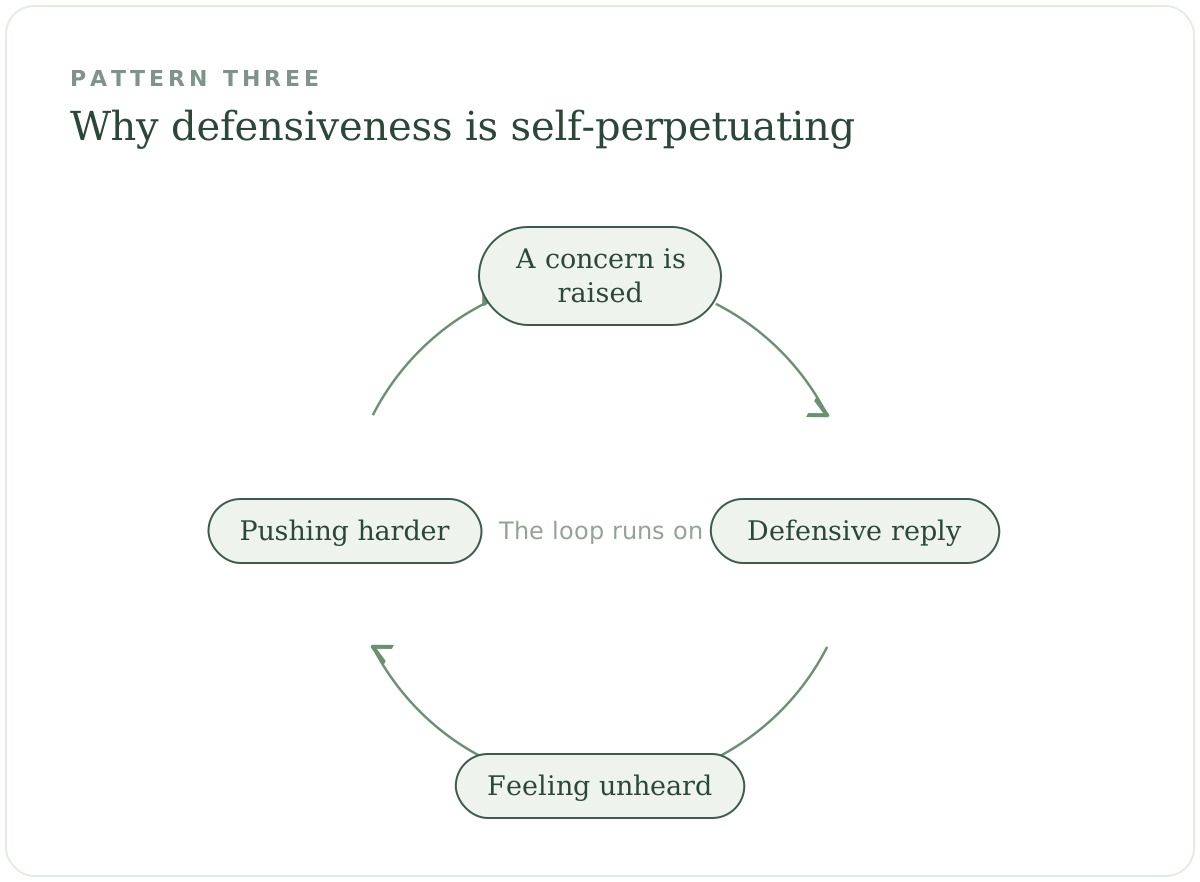
The antidote: take responsibility for your part, even a small part. “You have a point, I did forget to call. Let me fix that.” Accepting even a fraction of the concern breaks the loop and de-escalates the exchange.
Pattern 4: Stonewalling
Stonewalling is withdrawal. One partner shuts down, stops responding, looks away, or physically leaves the conversation. It often looks like indifference, but underneath it is usually the opposite: the person is overwhelmed.
This connects to what researchers call emotional flooding. When a conversation becomes intense enough, the nervous system moves into a defensive state, the heart rate climbs, and the capacity for calm, rational conversation drops sharply. Stonewalling is frequently a sign that someone has flooded and can no longer engage productively. Our guide to why people shut down in arguments covers this dynamic, and how to reconnect, in depth.
The antidote: take a deliberate break and agree to return. Stonewalling only becomes destructive when the withdrawal is silent and open-ended. Saying “I am too overwhelmed to talk well right now, can we come back to this in half an hour?” turns a shutdown into a pause, which is a completely different thing.
Pattern 5: Failed Repair Attempts
A repair attempt is anything a partner does to interrupt a negative exchange and bring the temperature down: a bit of humour, an apology, a softened tone, or simply saying “I don’t want to fight.” Healthy couples make and accept these constantly, often without noticing.
The fifth warning sign is not the absence of repair attempts but the failure of them to land. When one partner reaches out to de-escalate and the other rejects it, the relationship has lost one of its most important safety mechanisms. Research suggests that whether repair attempts succeed depends less on how skilful they are than on the overall goodwill in the relationship. Where there is enough underlying warmth, even clumsy repairs work. Where warmth has drained away, even good ones get rejected.
The antidote: make and accept repair attempts more deliberately, and invest in the positive interactions outside conflict that make them work. A relationship with a healthy balance of positive moments has the reserves to absorb the occasional bad argument.
Spotting the Patterns in Your Own Relationship
These patterns are easier to see in other people than in yourself. A useful exercise is to think back to your last significant disagreement and ask which of the five showed up, on both sides. The goal is not blame. It is recognition. Naming the pattern in the moment, out loud, is often enough to interrupt it: “I think we’re both getting defensive here. Can we slow down?”
Changing these patterns does not require both people to work on them at once, either. Because each pattern tends to trigger a matching response in the other person, one partner shifting their approach usually changes the whole exchange.
Where FairTalk Fits In
Recognising these patterns in the heat of an argument is genuinely hard, because that is exactly when self-awareness is lowest, and knowing how to fix communication in a relationship starts with seeing the patterns clearly. A couples communication app like FairTalk is built to notice them for you. Both of you talk the issue through in one conversation while the AI listens impartially, and the analysis that follows identifies the communication patterns that showed up, where criticism or defensiveness crept in, alongside feedback and ideas for handling the next conversation better.
For the practical techniques that address these patterns, see how to stop fighting with your partner, and for the listening skill that underpins most of the antidotes above, see our guide to active listening in relationships.
Frequently Asked Questions
Do all couples show these patterns sometimes?
Yes. Every couple slips into criticism, defensiveness, or withdrawal from time to time. The patterns predict trouble when they become the habitual way a couple handles disagreement, not when they appear occasionally. The aim is to reduce how often they run and to repair quickly when they do. Our guide to whether arguments are normal in a relationship covers where the healthy line sits.
Which pattern is the most damaging?
Contempt is generally considered the most corrosive, because it communicates disrespect and tends to reflect a longer-term erosion of positive feeling. It is also the strongest single warning sign, so it is worth paying particular attention to sarcasm, mockery, and a dismissive tone.
Can a relationship recover once these patterns set in?
Often, yes. These are habits, not fixed traits, and habits can change. Recovery usually involves reducing the negative patterns, rebuilding positive interactions, and learning to repair during conflict. Where the patterns are entrenched or there is a history of contempt, professional support can help.
When should we see a couples therapist instead?
If the same destructive patterns keep recurring despite genuine effort, if contempt is a regular feature, or if either person feels consistently unheard or unsafe, a qualified couples therapist is the right resource. Structured tools are well suited to communication breakdowns and recurring disputes, but deeper relational difficulties benefit from professional human support.