
Almost everyone has been told, at some low point, that they need to forgive someone, usually by a person who did not have to live with what happened. It is advice that can feel impossible, even offensive, when the hurt is still raw. Part of the reason is that most of us carry a badly wrong idea of what forgiveness actually is: that it means letting the other person off the hook, pretending it did not matter, or welcoming them back as though nothing happened.
None of that is what forgiveness means. Learning how to forgive someone is really about what happens inside you, not about what the other person deserves. It is the decision to stop carrying the weight of a wrong that is doing you no good to hold. This guide covers what forgiveness is and is not, why the research keeps finding that it benefits the forgiver most of all, and a realistic path towards it, including how to forgive someone who has never said sorry.
What forgiveness is not
Clearing away the misconceptions is the first step, because the wrong definition is often what makes forgiveness feel unreachable.
- It is not condoning. Forgiving someone does not mean what they did was acceptable. You can hold, at the same time, that an action was genuinely wrong and that you no longer want to carry the resentment about it.
- It is not forgetting. The phrase “forgive and forget” does a lot of damage. You can forgive but not forget; in fact, remembering clearly is often what lets you forgive safely, because it keeps you honest about what happened and what you will not accept again.
- It is not reconciliation. Forgiveness happens inside one person. Reconciliation takes two, and rebuilding trust. You can fully forgive someone and still decide the relationship is over, or keep it at a careful distance.
- It is not a favour to them. Forgiveness does not require the other person to apologise, to change, or even to know you have done it. It is not something you owe them.
Forgiveness is giving up the hope that the past could have been any different. It is releasing your grip on a wrong, not excusing it.
Why forgiveness is really for you
The strongest case for forgiveness is not moral, it is practical. Holding onto resentment keeps the original injury alive in your body long after the event itself has passed. Research catalogued by the American Psychological Association links chronic unforgiveness and rumination to higher stress, anxiety, and poorer physical health, while the act of forgiving is associated with lower stress and better wellbeing. In other words, the person most affected by your resentment is usually you.
This is the sense in which forgiveness is “for you.” Carrying a grudge is like drinking poison and waiting for the other person to feel it. The other person, quite often, has moved on entirely, while you replay the injury and pay its cost daily. Choosing to let go of anger is not about their comfort, it is about reclaiming your own. It is closely related to the wider toll of holding conflict unresolved, which we cover in the cost of unresolved conflict.
Forgiveness versus reconciliation
Because these two get tangled together, it is worth being very clear: forgiveness is internal and one-sided; reconciliation is relational and requires rebuilt trust. Separating them is what makes forgiveness possible in situations where reconciliation would be unwise.
You might forgive a friend and rebuild the friendship, the sort of repair covered in conflict resolution for friends. Or you might forgive someone and choose to keep firm limits on the relationship, or end it. Forgiving does not oblige you to lower your guard. Deciding what access someone has to you after a hurt is a matter of setting healthy boundaries, and you are allowed to forgive and protect yourself at the same time.
How to forgive someone: a realistic path
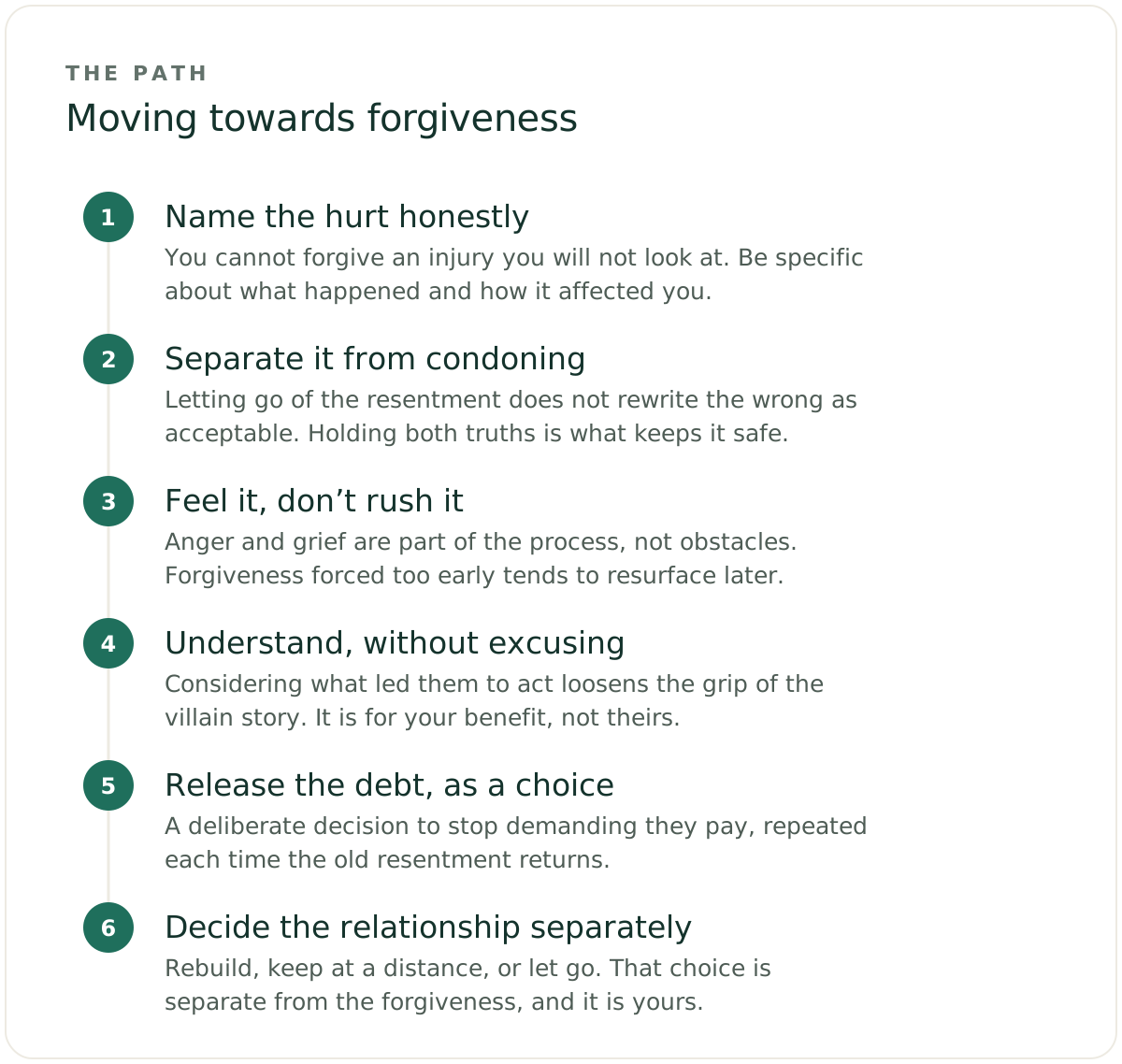
Forgiveness is rarely a single decision. It is more often a process you move through, sometimes more than once. These steps map the ground most people have to cross.
-
Name the hurt honestly. You cannot forgive an injury you will not look at. Be specific about what happened and how it actually affected you. Minimising it (“it wasn’t a big deal”) skips a step you will have to come back for.
-
Separate forgiveness from condoning. Remind yourself that letting go of the resentment does not rewrite the wrong as acceptable. Holding both truths at once is what makes forgiveness feel safe rather than like a betrayal of yourself.
-
Feel it, rather than rush it. Anger and grief are part of the process, not obstacles to it. Forgiveness that is forced too early tends to be a performance that resurfaces later. Give the feelings room; healing and forgiveness go together, and neither can be hurried.
-
Try to understand, without excusing. Where you can, consider what led the other person to act as they did, not to justify it, but because understanding loosens the grip of the story that they are simply a villain. This is an act of empathy, the same skill explored in emotional intelligence in relationships, and it is for your benefit, not theirs.
-
Release the debt, as a choice. At some point forgiveness becomes a decision rather than a feeling: a deliberate choice to stop demanding that the other person pay for what they did. You may have to make this choice more than once, each time the old resentment resurfaces. That repetition is normal, not failure.
-
Decide the relationship’s future separately. Once the internal work is underway, choose consciously whether to rebuild, keep at a distance, or let go. That is a separate decision from the forgiveness itself, and it is entirely yours to make.
How to forgive someone who has not apologised
One of the hardest cases is forgiving a person who never said sorry, or who is no longer in your life at all. It can feel as though forgiving without an apology means they got away with it.
The reframe that helps is this: waiting for an apology hands the other person control over your peace. If they never apologise, you are sentenced to carry the resentment indefinitely. Forgiving without an apology is not about excusing them, it is about refusing to let their failure to make amends keep costing you. A good apology, when it does come, genuinely helps, and our guide to how to apologise properly explains what makes one land. But your ability to move on after conflict cannot depend on receiving one, or you may wait forever.
When you are the one who needs forgiving
Sometimes the person who needs to forgive is you, of yourself. Self-forgiveness follows a similar path: name honestly what you did, take real responsibility rather than either excusing it or drowning in shame, make amends where you can, and then release yourself from paying for it endlessly. Endless self-punishment helps no one, least of all the person you hurt. Owning it and changing your behaviour does. If you are trying to earn back someone else’s trust, the repair-focused approach in how to fix a relationship after a fight covers the follow-through that makes forgiveness possible for them.
Where FairTalk fits in
Forgiveness often becomes possible only after you feel genuinely understood, and after the other person understands the impact of what they did. That is exactly the gap a structured conversation can close. In a FairTalk session, both people talk the issue through once, and the analysis afterwards lays out each person’s perspective, where you align, where you differ, and a few concrete next steps. Seeing the hurt named and acknowledged calmly, rather than argued over, is frequently what unlocks the willingness to let go on both sides.
FairTalk is not therapy, and forgiveness after serious betrayal, abuse, or trauma often needs proper professional support rather than a self-guided tool. In Australia, Beyond Blue offers free, confidential mental health support. For the everyday hurts that make up most of life, though, being heard is often the thing that makes forgiveness feel possible, and a fair, structured conversation is a good place to start.
Frequently asked questions
What does it really mean to forgive someone?
To forgive someone is to release your resentment about a wrong, without pretending the wrong was acceptable. It is an internal shift, letting go of the demand that the other person pay for what they did, rather than an endorsement of their behaviour. Crucially, forgiveness is not the same as reconciliation: you can forgive someone entirely and still choose to keep your distance or end the relationship. It is something you do primarily for your own peace, not as a favour to them.
Can you forgive someone but not forget what they did?
Yes, and often you should. “Forgive but not forget” is not a contradiction; remembering clearly is what lets you forgive safely. Forgiveness releases the resentment, while memory keeps you honest about what happened and alert to what you will not accept again. Forgetting a serious wrong entirely would strip you of the information you need to protect yourself. Healthy forgiveness lets go of the grudge while keeping the lesson.
How do I forgive someone who hasn’t apologised?
Start by accepting that your peace cannot be held hostage to their apology, which may never come. Forgiving without an apology is not excusing what they did; it is choosing to stop letting their failure to make amends keep costing you. Name the hurt honestly, allow yourself to feel the anger and grief, and then make the deliberate choice to release the debt, as many times as the resentment returns. You may find it helps to write down what you would have wanted them to say, as a way of acknowledging the wrong without needing them present.
Does forgiveness mean I have to let the person back into my life?
No. Forgiveness and reconciliation are separate. Forgiveness happens inside you and requires nothing from the other person; reconciliation requires rebuilt trust and a genuine change in behaviour. You can forgive someone completely and still decide that the relationship stays over, or continues only with firm boundaries. Deciding how much access someone has to you after a hurt is a separate, entirely legitimate choice, and forgiving does not oblige you to make yourself vulnerable to being hurt the same way again.