The argument is over, but nothing feels over. You are in separate rooms, replaying what was said, and the silence has a texture to it. Most advice about couple conflict focuses on the fight itself. What happens in the hours and days after matters just as much, because that is when a disagreement either gets repaired or gets filed away as another entry in a growing ledger. Repair is one stage of resolving any personal conflict; this guide focuses on the aftermath specifically.
To fix a relationship after an argument, let both of you calm down first, then reopen the conversation gently, take responsibility for your part, listen to how it felt for the other person, and agree one thing that will change, so the same argument doesn’t come back next month. This guide covers each step.
Why the hours after an argument matter
Research from the Gottman Institute points to repair as one of the strongest markers of relationship health. Repair is anything that re-establishes connection after conflict: an apology, a softened tone, an acknowledgement of the other person’s point, a hand on a shoulder. Healthy couples repair constantly, and often clumsily. What matters is that the attempt is made and accepted.
The research also shows the window narrows over time. The longer an argument sits unrepaired, the more fixed each person’s account of it becomes, and the more the distance starts to feel normal. An issue addressed the same day costs far less, emotionally and relationally, than the same issue addressed after a fortnight of polite frost, a compounding effect covered in the real cost of unresolved conflict.
Repair is not about deciding who was right. It is about restoring the connection first, so the actual issue can be dealt with by two people who are back on the same team.
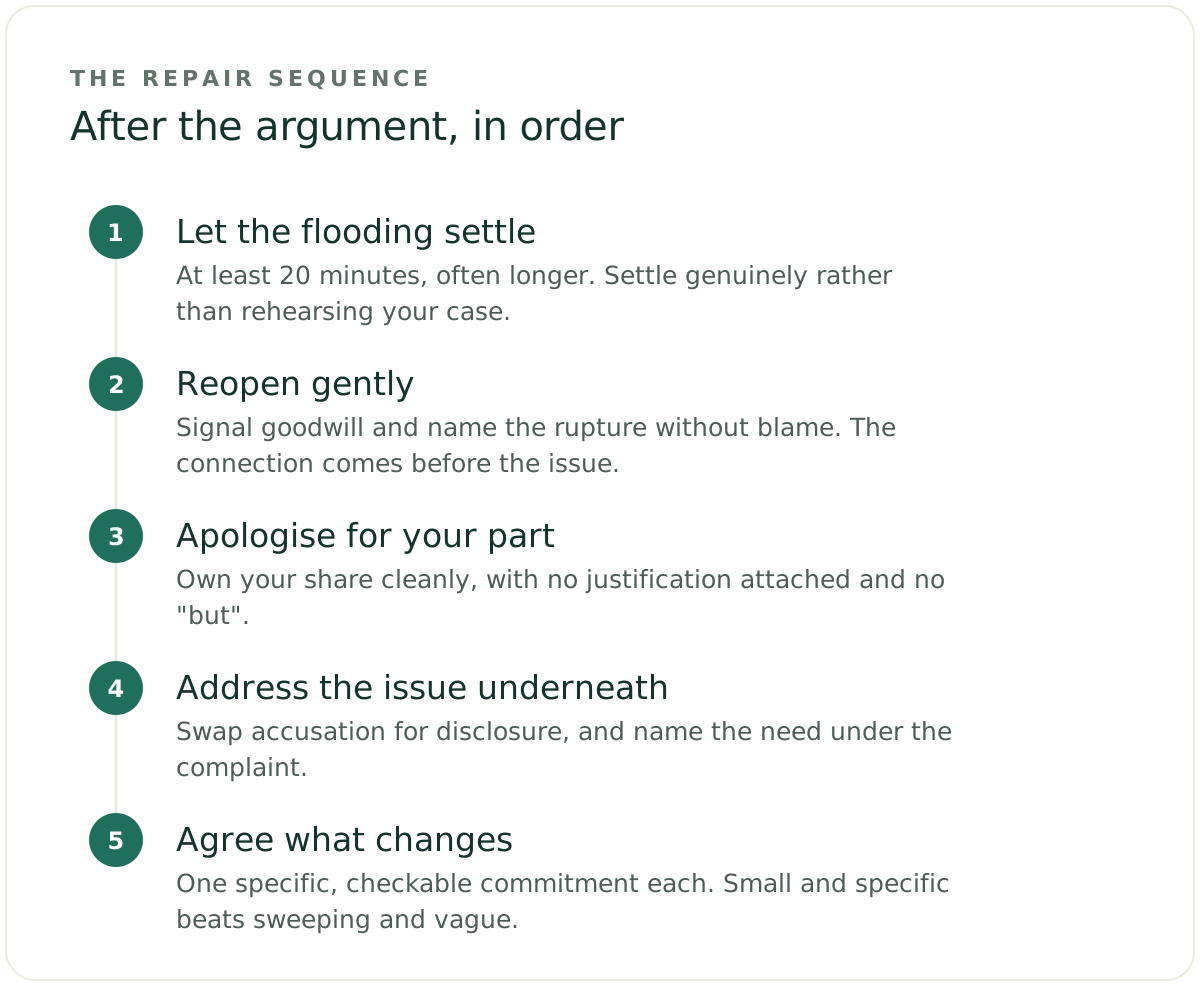
Step one: let the flooding settle
Straight after a heated argument, both nervous systems are still activated. Heart rates are elevated, and the capacity for empathy and clear thinking is physiologically reduced. Attempting a deep repair conversation in that state usually restarts the argument instead.
Give it time. The research suggests a minimum of 20 minutes for the body to return to baseline, and after a significant fight it can reasonably take a few hours. Use the time to genuinely settle rather than to rehearse your case. If your partner has gone quiet or withdrawn, that is usually overwhelm rather than punishment, and pressing them to talk before they are ready deepens the shutdown, a dynamic we cover in why people shut down in arguments.
Waiting is not avoiding. The difference is intent: a pause with the intention to return is repair in progress. Silence with no intention to return is how issues calcify.
Step two: reopen gently
How you restart the conversation largely decides how it goes. Reopening with a summary of your grievances relitigates the fight. Reopening softly makes repair possible.
A soft reopening does three things: it signals goodwill, it names the rupture without blame, and it invites the other person in rather than putting them on trial. It can be as simple as:
- “I don’t like how that went. Can we try again?”
- “I’ve calmed down and I want to understand what happened. Are you up for talking?”
- “We’re on the same team, and that didn’t feel like it. Can we sort it out?”
Notice that none of these concedes the underlying issue. They concede only that the connection matters more than winning, which is exactly the footing a repair conversation needs.
Step three: apologise for your part
Almost every argument leaves both people with something worth owning: a raised voice, an unfair exaggeration, a low blow, a wrong assumption. Owning your share cleanly, without attaching a justification or a counter-claim to it, lowers the other person’s defences faster than almost anything else you can do.
A genuine apology names what you did, acknowledges its impact, and does not smuggle in the word “but”. Apologising for your part is not accepting blame for all of it. The anatomy of an apology that actually repairs, and the common phrases that quietly ruin one, are covered in our guide to how to apologise properly.
Step four: address the issue underneath
Once the connection is re-established, deal with the thing you actually argued about, because unaddressed it will return. Two habits make this part work.
Swap accusation for disclosure. “You embarrassed me in front of your parents” invites a defence. “I felt embarrassed when that story came up, and I need to know we’re a team in front of your family” invites a response. The shift from you-statements to I-statements is the single most reliable technique for keeping a repair conversation from becoming round two.
Look for the need under the complaint. Most recurring arguments are not about the surface topic. The dishes argument is about feeling unsupported. The lateness argument is about feeling deprioritised. When each person can name what they actually need, solutions tend to appear that the original argument never got near.
Step five: agree what changes
Repair without change is an apology on repeat. End the conversation with something concrete: one specific, checkable commitment from each of you. Not “I’ll be more considerate”, but “I’ll message you if I’m going to be later than six.” Small and specific beats sweeping and vague, because small and specific actually happens, and each kept commitment rebuilds trust for the next disagreement.
It is also worth agreeing on the process for next time: what either of you can say mid-argument to call a break, and when you will come back. Couples who agree on their rules before they need them argue measurably better, one of the techniques covered in how to stop fighting with your partner.
How to stop the same argument coming back
If you keep having the same fight, repair alone is not enough. Recurring arguments usually mean either an unmet need that keeps being negotiated at the surface level, or a communication pattern that turns small friction into a fight before the issue can be discussed. The patterns worth checking yourself for, criticism, contempt, defensiveness and stonewalling, are covered in our guide to the Four Horsemen in relationships.
It can also mean the repair conversations themselves keep going wrong: each attempt to resolve the issue turns into a new version of the argument, so you both stop attempting. That is the point where structure helps more than goodwill.
Where FairTalk fits in
A repair conversation is exactly the kind of conversation FairTalk is built for. When you are both ready to talk it through, you start a session together and speak naturally while the AI listens impartially. Afterwards, the analysis lays out both perspectives side by side: what each of you said and what each of you needs. The session ends with specific actions you have both chosen, so the conversation produces a real outcome instead of an uneasy truce, and the action tracker helps the commitments survive past the weekend.
Frequently asked questions
How long should you wait after an argument before talking?
Long enough for both of you to be genuinely calm: at least 20 minutes, often a few hours after a significant fight. Waiting longer than a day or two starts to work against you, because accounts harden and distance begins to feel normal. The best marker is intent. Pause deliberately, and agree, even roughly, on when you will come back to it.
What if my partner refuses to talk about it?
Do not chase them around the house with the conversation. Pressure deepens withdrawal. Instead, make it safe and bounded: let them know you want to sort it out, not to relitigate it, and offer a specific later time. Most withdrawal is overwhelm rather than indifference, and a calm, time-boxed invitation is much easier to accept than an open-ended demand.
Should every argument be talked through afterwards?
No. Minor friction that both people have genuinely let go of does not need a debrief, and over-processing every disagreement can become its own burden. The arguments worth revisiting are the ones that left a residue: someone got hurt, something important went unsaid, or the issue is going to come up again.
Is it really so bad to go to bed angry?
The old rule is half right. Forcing a resolution at midnight while exhausted and flooded usually goes badly, and sleep genuinely helps regulation. What matters is not resolving before bed but repairing the connection enough to sleep on the same team: a brief acknowledgement that you will sort it out tomorrow does more good than two more hours of argument.