There is a particular kind of conflict that no one else can see. The person it involves is going about their day, perhaps completely unaware that anything is wrong, while you carry the whole thing alone: in the replay that starts up the moment your head hits the pillow, in the tightness that arrives when their name comes up, in the conversations you keep having with them entirely in your own mind. Nothing has been said. Nothing has been settled. And yet it takes up real space in your life, every day.
This is internal conflict: a personal conflict with someone that you hold entirely on your own, and one of the most quietly draining experiences a person can have. Finding peace with it does not depend on the other person apologising, changing or even knowing. It comes from getting clear on three things: what you actually feel, what you genuinely need, and what is within your control to do about it, whether that means raising it, holding a boundary or genuinely letting it go. This article covers why that unresolved weight is so draining, why you cannot always just talk yourself out of it, and how to reach that clarity.
When a personal conflict lives only in you
Not every conflict is a two-way event. A great deal of it happens entirely on one side, and the reasons vary.
- They have no idea anything is wrong. Something they said or did landed hard, and while you have been carrying it for weeks, they have carried on as normal, unaware.
- You have never voiced it. The moment passed, or it never felt safe or worth the awkwardness, so it stayed inside and quietly hardened.
- It is someone from your past. A parent, an ex, a former friend, someone you may not speak to any more, yet the unresolved feeling still surfaces years later.
- You cannot or would rather not raise it. The relationship, the timing, or the risk means a direct conversation is not on the table, at least for now.
In each case there is no shared argument to resolve. The entire conflict is happening inside you, which is exactly what makes it so easy to dismiss and so hard to escape.
What carrying it actually does to you
Unresolved internal conflict does not sit quietly in a corner and wait. It works on you, often in ways you do not connect back to the original issue.
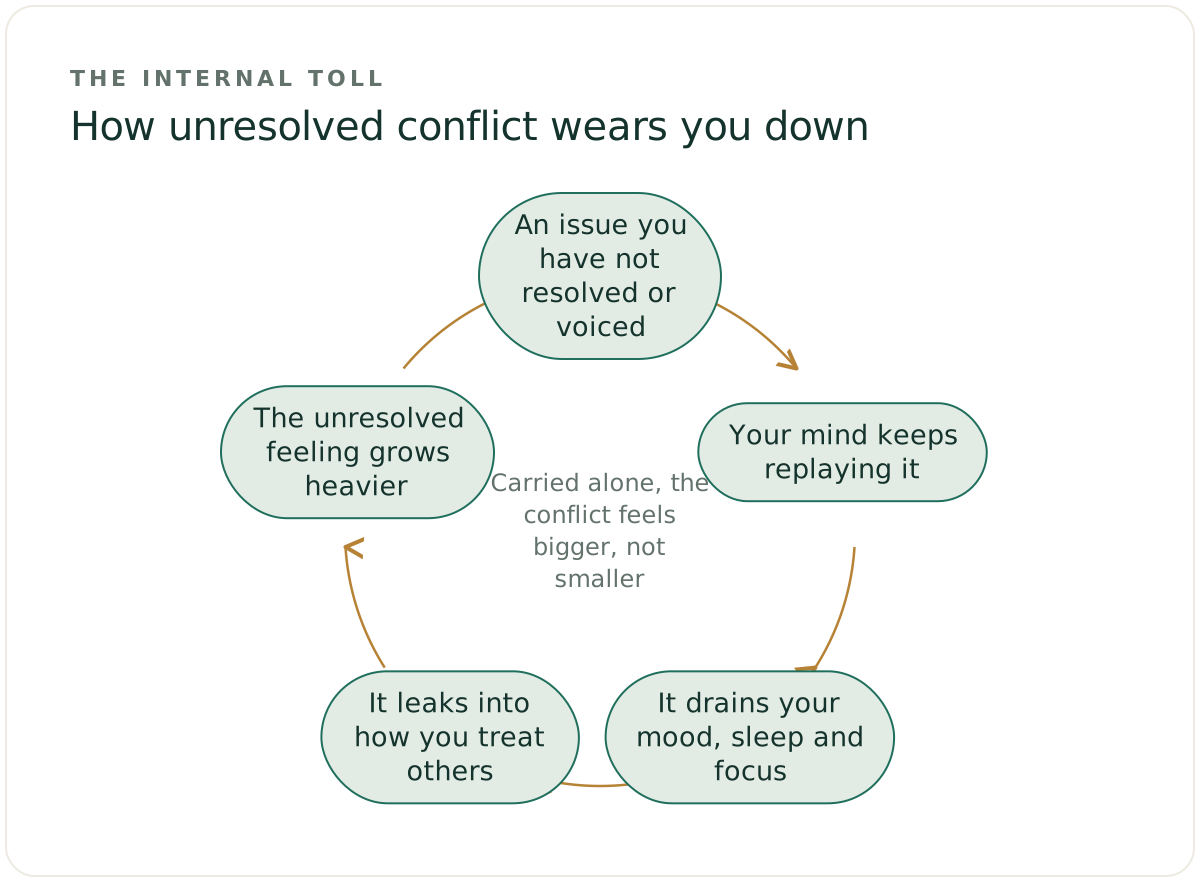
- It occupies your mind. You replay the incident, rehearse what you should have said, and run imaginary confrontations. This rumination, the overthinking that keeps a conflict alive long after the moment has passed, feels like problem solving but resolves nothing, and it quietly consumes your attention and energy.
- It affects your mood and body. A background hum of resentment, anxiety, or low-level dread is tiring to hold. It disturbs sleep, tightens the body, and leaves less of you available for everything else.
- It leaks into your other relationships. The irritation you are holding toward one person has a way of spilling onto the people around you, so you are shorter, more withdrawn, or less present than you want to be.
- It grows rather than fades. Left unaddressed, an unspoken grievance tends to harden and generalise, so a specific hurt slowly becomes a heavier, vaguer weight you carry into new situations.
This is the real cost, and it is entirely yours to pay, regardless of whether the other person ever knows a thing. For the wider toll conflict takes when it is left to sit, see the real cost of unresolved conflict.
Why you can’t just “let it go”
The advice everyone offers is to let it go, and the reason it so rarely works is that “letting go” is not a decision you can simply make. Your mind will not close a loop it has not yet made sense of. As long as the feeling remains a tangled, unnamed swirl, telling yourself to move on just adds frustration on top of the original hurt.
Genuine peace does not come from suppressing the conflict or pretending it does not bother you. It comes from the opposite: understanding it clearly enough that it no longer needs to keep demanding your attention. And that understanding is difficult to reach alone, precisely because you are inside the feeling, without the distance to see it whole. This is part of why conflict is so hard to resolve on your own.
What finding personal peace actually takes
Here is the freeing part: the peace you are looking for does not depend on the other person. It does not require them to apologise, to change, or even to know. Many people wait years for closure from someone who may never offer it, but closure is not something another person hands you. It is a conclusion you reach yourself, and so is peace of mind. What it requires is clarity, and clarity is something you can reach on your own side of the conflict.
That means understanding three things that usually stay muddled while a conflict is live:
- What you actually feel, named specifically rather than carried as a heavy, vague ache. A precise feeling can be worked with; an unnamed one just runs in the background.
- What you genuinely need, which is nearly always the real issue underneath the surface story: to feel respected, valued, trusted, or simply heard.
- What you can do about it, the concrete actions that are within your control, whether that is to raise it, reframe it, hold a boundary, or genuinely release it.
Once those three are clear, the conflict stops being an open wound you keep returning to and becomes something you can actually resolve, on your own terms. That is where inner peace comes from: not from the conflict disappearing, but from it no longer having a hold on you. This is the heart of working through any personal conflict: the only side you can fully change is your own, and it turns out that is usually enough to find peace.
How a FairTalk solo session helps
Reaching that clarity alone, in your own head, is exactly what tends to fail, because the mind loops rather than resolves. This is what FairTalk’s one-person conversation, the solo session, is built for. You do not need the other person present, willing, or aware. On your own, you talk through what has happened and how it has affected you, and FairTalk helps you turn the swirl into something clear and workable.
- It gives you a clear summary of your own perspective, laid out calmly so you can finally see the shape of the thing rather than looping through fragments of it.
- It helps you name the feeling underneath, and surface the real need it points to, which is usually what has been keeping the conflict alive.
- It offers concrete tools and resolutions you can work toward yourself, tailored to your situation, so you leave with a genuine way forward rather than just more to think about.
- It points you to the communication skills worth building, through its Knowledge Hub, so you are better equipped for whatever comes next.
It is private, available whenever the weight of it surfaces, and entirely on your terms. If you would like to understand why a structured session does what circular thinking cannot, our piece on why FairTalk is more than a chatbot explains how the solo session is grounded in real conflict resolution rather than simply telling you what you want to hear, and resolving conflict on your own walks through the wider approach.
Beginning to dissolve it, with or without them
With that clarity in hand, the conflict starts to loosen, and it resolves in one of two ways. Sometimes it prepares you to finally raise it well, from a place of understanding rather than raw hurt, which is the difference between a conversation that repairs and one that reignites. And sometimes the resolution is entirely internal: you make sense of what happened, decide what you need, set a boundary or forgive and release it, and move forward with your peace intact, whether or not the other person is ever involved.
Either way, you stop waiting on someone else to hand you the peace that was always yours to build, and start doing the part that was always within your reach.
When you need more than a solo session
Working through your own perspective is powerful for the ordinary conflicts and hurts of life, but it is not the right tool for everything. If what you are carrying involves abuse, coercion, or someone who holds real power over you, or if it is weighing heavily on your mental health, the wiser and stronger step is support from a person.
In Australia, Relationships Australia offers counselling and support, and Beyond Blue is there for anyone struggling with their wellbeing. Reaching for that help is not a failure of self-reliance; it is one of the strongest ways to care for yourself.
The bottom line
The conflicts that steal the most peace are often the ones no one else can even see: the unspoken grievance, the internal struggle, the issue you carry alone about someone who may never know. That weight is real, and it does not lift by being ignored or by being told to let it go. It lifts through clarity, understanding what you feel, what you need, and what you can do, and that is something you can reach without the other person. FairTalk’s solo session exists for exactly that: to help you turn a private, circling conflict into a clear path toward your own peace.
Frequently asked questions
How do you find peace with a conflict the other person doesn’t know about?
You find it through clarity rather than confrontation, because the peace does not depend on them knowing. Start by getting the conflict out of your head and understanding it: name specifically what you feel, identify the real need underneath it, and decide what, if anything, you want to do. From there you can choose to raise it, to reframe how you hold it, or to genuinely release it. A structured process such as FairTalk’s solo session makes this far easier than trying to think it through in circles, because it helps you see the whole thing clearly and gives you concrete steps toward resolution.
Why does unresolved conflict bother me so much even when nothing is happening?
Because your mind treats an unresolved situation as an open loop it cannot close, so it keeps returning to it, replaying the incident and rehearsing what you might say. This rumination feels like problem solving but resolves nothing, and it quietly drains your mood, your sleep, and your focus while the unspoken feeling slowly hardens. The discomfort is a signal that something meaningful to you has not been made sense of yet, not a flaw in you, and it tends to ease once you understand the conflict clearly rather than just carrying it.
Can you resolve a conflict inside yourself without the other person?
Yes, a great deal of it. You cannot control whether the other person changes or apologises, but much of what keeps an internal conflict painful lives on your side: the rumination, the unnamed feeling, and the sense of having no way forward. By naming what you feel, understanding the need beneath it, and deciding how you want to carry it, you can reach genuine peace on your own terms, and often arrive better prepared for a conversation if one ever becomes possible. FairTalk’s single-person session is designed to help you do exactly that.
How do I stop overthinking a conflict with someone?
Overthinking a conflict is your mind trying to close a loop it has not yet made sense of, so telling yourself to stop rarely works. What helps is giving it the resolution it is looking for: get the conflict out of your head and into a clear shape, name the specific feeling underneath it, identify the need it touched, and decide on one concrete thing you will do, whether that is raising it, setting a boundary, or letting it go. Once your mind can see that the issue has been understood and there is a plan, the replaying tends to quieten. A structured one-person conversation, such as FairTalk’s solo session, is designed to do exactly this.
Is it healthy to just try to forget about a conflict?
Trying to forget or suppress a conflict usually backfires, because the feeling does not disappear, it simply goes underground and resurfaces later, often heavier and vaguer than before. Genuine peace comes from the opposite of suppression: understanding the conflict clearly enough that it no longer needs your attention. That might end in raising it, in reframing how you see it, or in a deliberate choice to let it go, but it works because you have made sense of it first rather than just pushing it out of sight.