Most people know that unresolved conflict is bad for their relationships. What is less understood is how far the damage spreads. A single avoided conversation can compound into something much harder to undo.
Research across psychology, medicine, and organisational behaviour agrees on one thing. When conflict goes unaddressed, it does not stay still. It bleeds into mental health, physical health, work, and the survival of the relationships that matter most.
The cost is often invisible until the damage is done. In Australia, only 54% of people with mental health conditions seek professional support, according to Beyond Blue.
This article covers what the research says about the effects that build up in everyday life. It also covers what you can do to break the pattern early.
What “Unresolved Conflict” Actually Means
Unresolved conflict is not just the big argument you keep putting off. It is smaller than that:
- The eye-roll you swallowed
- The topic you sidestepped
- The conversation you half had, then let trail off
- The grievance that was never fully aired
- The apology that never quite landed
Psychologists draw a line between two things. Avoided conflict is where neither person raises the issue. Unresolved conflict is where someone raises it, but you never work it through to an agreement.
Both carry a cost. Unresolved conflict tends to do the most lasting harm, because one or both people walk away feeling unheard.
The hallmark of unresolved conflict is that it does not disappear. It resurfaces. Each new argument carries the weight of the ones before it. Over time the story shifts. It stops being “we disagree about this specific thing” and becomes “something is fundamentally wrong between us.”
The Toll on Your Relationship
The research here is unambiguous. Prolonged, unaddressed conflict does real damage to close relationships.
John Gottman’s landmark research at the University of Washington identified four communication patterns:
- Contempt
- Criticism
- Defensiveness
- Stonewalling
He called them the “Four Horsemen” of relationship breakdown. Importantly, these patterns do not cause conflict. They are responses to conflict that was never resolved.
When couples repeatedly fail to work through disagreements, they fall back on these behaviours to protect themselves. Once the habit sets in, the relationship enters what Gottman calls a “negative sentiment override.” At that point even neutral comments get read as hostile.
The outcomes are measurable. Gottman’s long-term studies found that couples who used these patterns were far more likely to separate. In some studies, researchers predicted the outcome with over 90% accuracy after watching a fifteen-minute conversation.
Unresolved conflict also wears down trust. Every time a concern is raised and not really engaged with, the message lands the same way: your feelings are not safe here. Over time both people stop raising what actually matters. That looks like peace. Underneath, the tension keeps building.
The Impact on Mental Health
The American Psychological Association has documented the link between unresolved conflict and mental health across dozens of studies. Chronic conflict in close relationships is tied to higher rates of anxiety, depression, and post-traumatic stress responses.
What happens in the body is worth understanding. When you sense a threat, including a personal one, the amygdala sets off a stress response. The body floods with cortisol and adrenaline.
In a healthy cycle, that response switches off once the conflict is settled. When conflict stays unresolved, the threat signal stays on. The body stays on low-grade alert and cortisol stays high.
Over weeks and months, this takes a toll. Research published in journals including Psychoneuroendocrinology links ongoing conflict to:
- A weaker immune system
- Disrupted sleep
- Higher inflammation
- Worse anxiety and depression
Beyond Blue notes that relationship and family problems are among the most common causes of psychological distress in Australian adults. This connection is not theoretical. It is one of the most consistent findings in the field. If the conflict is one you are carrying alone, finding peace with unresolved conflict is possible even without the other person.
The Hidden Cost at Work
The cost of workplace conflict in Australia is large. Research cited by the Australian Human Resources Institute puts it at around $36 billion a year. That covers lost productivity, absenteeism, staff turnover, and HR time.
That figure only counts measurable output. It misses the mental load: the energy people spend replaying arguments, rehearsing future ones, or just managing their mood while trying to work.
Psychologists call this rumination, the habit of replaying conflict in your head. Studies show it degrades attention, decision quality, and creative problem solving. People in unresolved conflict do not just feel worse. They work worse, decide worse, and are harder to collaborate with.
The World Health Organization treats workplace conflict as a real occupational health risk. The risk is highest where people depend on each other closely, such as teams, healthcare, education, and service work.
In those settings, conflict rarely stays between two people. It spreads. Bystanders get drawn in, and factions outlast the original dispute. Dealing with it early, while it is still one specific disagreement, is almost always cheaper. Our guide to workplace conflict resolution covers how to raise a dispute with a coworker or manager professionally, and when to escalate.
How Conflict Compounds Over Time
Ignored conflict rarely stays at the same intensity. It compounds. Small grievances left alone tend to accrue interest.
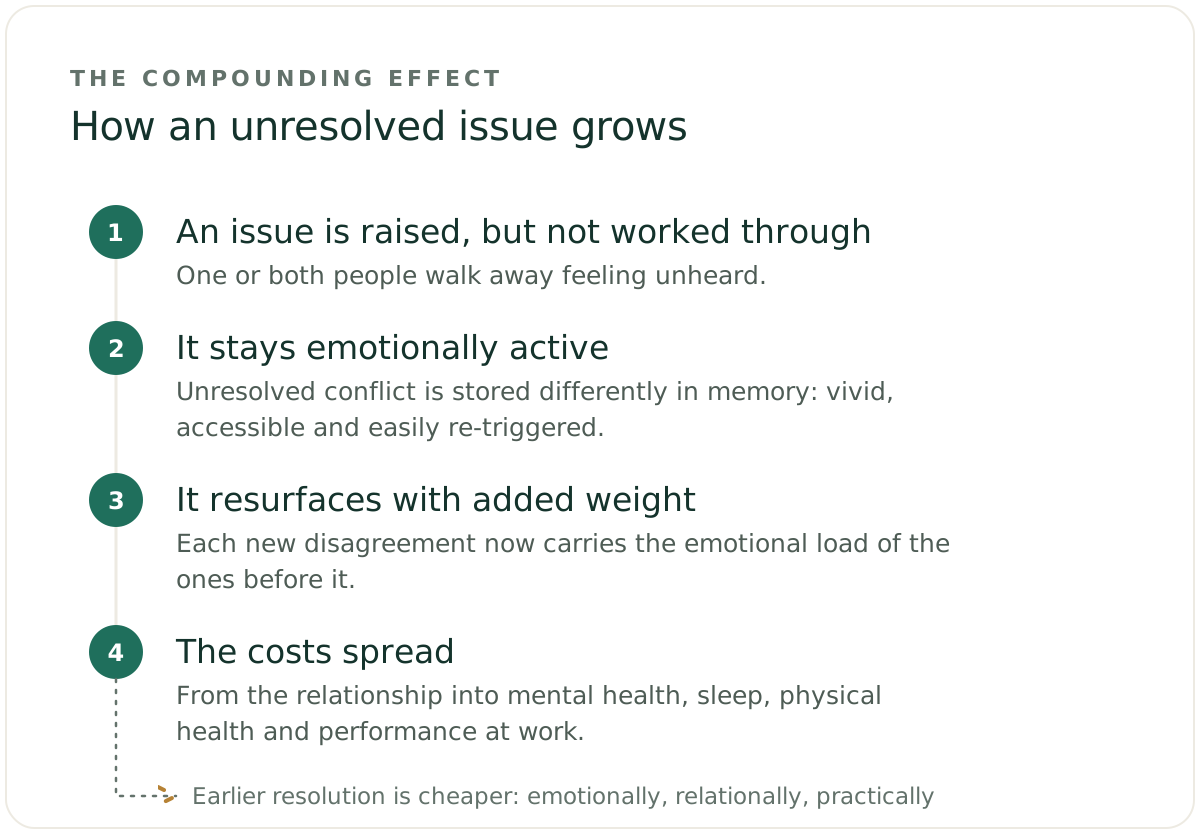
This happens for three reasons.
Emotional memory. We do not file away unresolved experiences the way we file resolved ones. They stay active in memory, so they surface faster and more vividly next time. The new argument does not happen on its own. It happens on top of the old one.
Behavioural drift. People adapt to ongoing tension. They get more guarded and less willing to be open. They start reading neutral moments as negative. Each shift is small. Together, over months and years, they reshape the whole relationship.
Missed repair windows. Gottman’s research shows the window for repair narrows over time. Repair means reconnecting, acknowledging impact, and reaching a shared understanding. The longer an issue sits, the more fixed the emotional responses become, and the harder that work gets.
This is why the earliest response is almost always the most effective one. Addressing an issue while it is small costs far less than addressing it once it has compounded.
The Physical Price
The mind and body link here is more direct than most people expect. Research from the Gottman Institute, Ohio State University, and others has measured real physical effects in people living with chronic relationship conflict.
The documented findings include:
- Higher systolic blood pressure
- Slower wound healing
- Greater vulnerability to viral infection
All of these trace back to stress hormones staying elevated. One study made the point plainly. Couples who argued with hostility healed from standardised blisters measurably slower than couples who discussed the same issues more calmly.
Sleep is another casualty. Conflict switches on arousal systems that make it harder to fall asleep and cut the restorative deep sleep you get. Poor sleep then weakens emotional control, which makes the next conflict harder to handle.
That closes a loop. Conflict disrupts sleep. Poor sleep raises reactivity. Higher reactivity produces more unresolved conflict.
The Good News: Addressing Conflict Is a Skill
None of this is inevitable. The same research that documents the damage also shows the outcomes are not fixed. They depend heavily on what happens next.
Some people learn to engage with conflict constructively. They neither avoid it nor escalate it. They work through it. Those people show better mental health, longer relationships, and better physical health markers.
The skill is learnable, and the evidence suggests it does not take years of therapy to build. Our guide to conflict resolution strategies sets out the ones that work in everyday disagreements.
What it does take is structure. Most people simply lack the tools to handle conflict well in the heat of the moment. That is where support makes a measurable difference, whether from a professional or a structured digital tool. As covered in how to stop fighting with your partner, even small changes to how you open a disagreement can break patterns built over years. If the barrier is starting the conversation at all, our step-by-step guide to difficult conversations covers how to open one well.
How FairTalk Helps Resolve Conflict Before It Compounds
FairTalk is built around one insight. The best time to address conflict is early, before it compounds.
The app gives you private, structured conflict resolution at any hour, and guides both people through a session at their own pace. You do not have to wait weeks for an appointment, or attempt a hard conversation with no framework. A session gives you:
- A neutral structure. One conversation between the two of you, with an impartial AI listening, so each person can say what they actually mean.
- Pattern detection. The AI spots escalating or unproductive patterns in the conversation, then offers feedback and ideas for personal development.
- A shared resolution summary. Both of you get the same record of what was agreed, what each person commits to, and what to revisit.
The result is that conflict gets handled when it is still most resolvable, rather than after it has hardened into something bigger.
On a monthly subscription, FairTalk also costs a fraction of the $150 to $300 per session that couples therapy typically costs in Australia. For how that comparison plays out in practice, see AI relationship coach vs couples therapy.
For the idea behind it, and why an impartial third party makes such a difference, see how FairTalk works.
Frequently Asked Questions
What are the most common effects of unresolved conflict in relationships?
The most documented effects are:
- Trust eroding gradually
- Growing emotional distance
- Hostile communication habits such as contempt, stonewalling, and defensiveness
- Lower relationship satisfaction
- A higher risk of separation in sustained cases
Research also shows physical effects, including raised cortisol, disrupted sleep, and a weaker immune response. Because unresolved conflict compounds, these effects tend to worsen over time rather than settle.
How does unresolved conflict affect mental health?
It keeps the brain’s threat-response system partly switched on. That raises cortisol and increases the risk of anxiety and depression. The American Psychological Association links chronic relationship conflict to measurable changes in mood, thinking, and emotional control. In Australia, Beyond Blue names relationship and family problems as among the most common causes of psychological distress in adults.
Can you recover from a long period of unresolved conflict?
Yes. The repair work usually takes more effort the longer things have been compounding. Research shows that couples who learn to engage constructively can rebuild trust and improve relationship quality, even after long avoidance. The deciding factor is willingness to engage rather than keep avoiding, paired with a structure that makes that engagement productive.
How much does unresolved workplace conflict cost?
Estimates put the Australian total at around $36 billion a year. That covers reduced productivity, absenteeism, staff turnover, and HR costs. The real figure is likely higher. It does not capture the cognitive and emotional toll on individuals, the loss of attention and decision quality, or the way conflict spreads through a team.
What’s the difference between avoided conflict and unresolved conflict?
Avoided conflict is an issue nobody has raised. It stays under the surface. Unresolved conflict is an issue that was raised but never worked through to a real understanding.
Both carry a cost. Unresolved conflict tends to be more damaging, because it builds a record of failed repair attempts. That teaches both people the relationship cannot handle disagreement. Either pattern improves with earlier intervention.
Is an AI tool like FairTalk suitable for serious conflicts?
FairTalk is built for everyday conflicts in relationships, workplaces, and families. Those are situations where what you mainly need is structure, neutral framing, and room for both perspectives to be genuinely heard.
For legal disputes, domestic safety concerns, or significant trauma, the right path is professional mediation, legal counsel, or clinical support. FairTalk is designed to complement those services, not replace them.
Sources: American Psychological Association (apa.org) | World Health Organization (who.int) | Beyond Blue (beyondblue.org.au) | Gottman Institute (gottman.com)