
Yes, arguing in a relationship is normal: every couple argues, including happy ones, and the research on this is unusually clear. What matters far more than how often you argue is how you argue, which is why a couple who bickers often but repairs quickly can be in better shape than one who rarely fights at all.
If you have ever come out of a fight with your partner wondering whether other couples do this too, this article is for you. Arguing is simply the everyday face of personal conflict, and handling it well draws on the same principles. Below is what the research says about how much couples actually argue, whether it is normal to argue every day, when arguments are a sign of a healthy relationship, and when they are a warning sign worth taking seriously.
How often do couples actually argue?
More than most people admit to. The Gottman Institute, which has studied couples for more than four decades, found that even happy, stable couples have perpetual disagreements: around 69% of the problems couples argue about are never fully resolved. They are ongoing differences in personality, priorities and preferences that the couple learns to manage rather than eliminate.
That finding matters because it reframes the question. If most couple conflict is perpetual, then a relationship without arguments is not the goal, and it is not what successful couples actually have. What successful couples have is a way of arguing that does not damage the relationship.
Frequency varies enormously between couples and between seasons of life. New parents argue more. Couples under financial stress argue more. None of that, by itself, predicts anything about whether the relationship will last.
Is it normal to argue every day?
Short runs of daily arguing are common, and usually temporary. A new baby, a move, money pressure, illness or a stretch of exhaustion can turn small irritations into a daily fight for a few weeks, and burnout in particular shrinks the patience both people bring to ordinary friction. When the pressure eases, the arguing usually does too.
Fighting every day for months is different. Persistent daily arguments usually mean one of three things: an underlying issue is not being addressed, so it resurfaces in a new form each day; the way you argue is creating new hurt faster than you resolve the old; or stress from outside the relationship is being discharged inside it. In each case, the daily frequency is the symptom rather than the problem.
Three questions help to find the real issue:
- Is it the same argument in different clothes? Dishes, lateness and phone use can all be one argument about feeling unsupported or unimportant.
- When do the fights happen? Arguments that cluster at the end of the day, or around one situation, point at the pressure behind them.
- Does anything ever get settled? If every argument ends without an agreement, the next one inherits its weight.
Once you can name the underlying issue, raise it deliberately at a calm moment rather than waiting for it to surface mid-fight. That single change moves most couples out of the daily cycle faster than trying to argue less by willpower.
When arguments are healthy
It sounds strange to call an argument healthy, but some genuinely are. A healthy argument has a few recognisable features.
It stays about the issue. The disagreement is about the dishes, the budget, or the in-laws, and it stays there. Nobody’s character goes on trial.
Both people get heard. Each person gets to say their piece, and the other actually takes it in rather than just waiting to reply. The skills behind this are covered in our guide to active listening in relationships.
Repair attempts land. One person cracks a small joke, softens their tone, or says “I don’t want to fight with you,” and the other accepts it. These small de-escalations are one of the strongest markers of a healthy couple.
It ends somewhere. Not necessarily with full agreement, but with something: an understanding, a compromise, or an agreed plan to come back to it. The issue does not simply get buried to resurface later.
Arguments like this are not just harmless. They are often how couples surface needs, renegotiate expectations and stay honest with each other. Research from the American Psychological Association on relationship conflict consistently finds that constructive disagreement is associated with better long-term outcomes than avoidance.
When arguments are a warning sign
The concern is not arguing. It is a particular way of arguing. The Gottman research identified specific communication patterns that predict relationship breakdown with striking accuracy, and none of them is about frequency.
The argument attacks the person, not the problem. “You forgot to book the appointment” is a complaint. “You are so useless” is a character attack, and character attacks escalate.
Contempt shows up. Sarcasm, mockery, eye-rolling, a dismissive tone. Contempt is the single strongest predictor of separation in the couples research. Our guide to Gottman’s Four Horsemen covers each warning sign and its antidote.
Repair attempts get rejected. One person tries to de-escalate and the other refuses the offer. When the safety mechanisms stop working, ordinary disagreements start doing real damage.
The same fight returns with nothing settled. Recurring arguments that never reach any resolution accumulate emotional weight, and each new round carries the load of the ones before it.
One person shuts down entirely. Regularly going silent, leaving, or refusing to engage is usually a sign of emotional flooding rather than indifference, and it stops resolution from ever happening. We cover this dynamic in why people shut down in arguments.
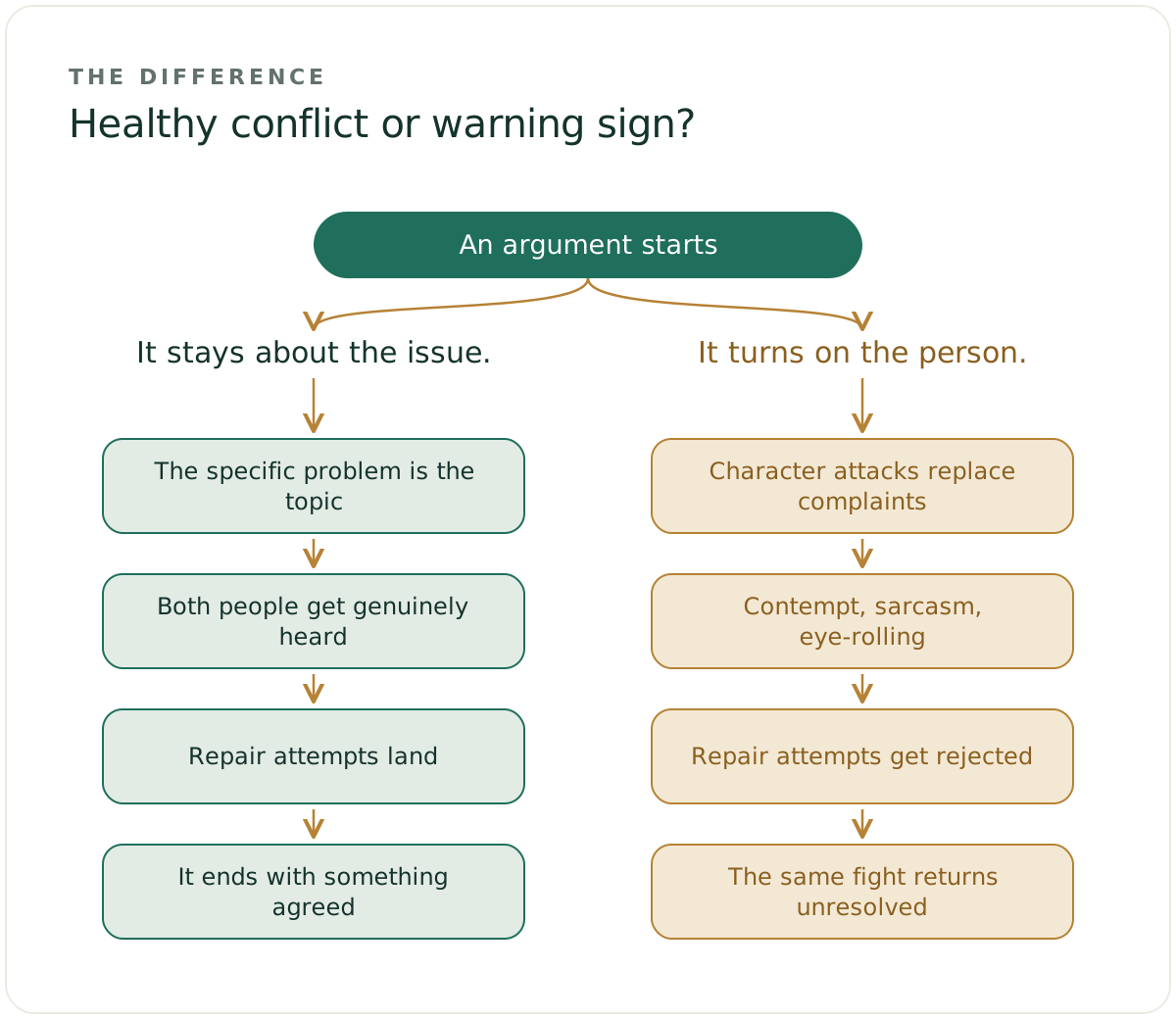
It is not how often you argue. It is how.
If there is one finding to take from the research, it is this: frequency is a poor predictor, and process is a strong one. A couple who bickers weekly but repairs quickly, stays on topic and treats each other with respect is in far better shape than a couple who fights rarely but with contempt, or who never fights because one person has stopped raising things at all. Gottman’s research on the magic ratio makes the same point: what predicts a lasting relationship is the balance of positive and negative moments during an argument, not whether you argue.
That last case deserves a mention. Total silence is not the same as peace. When one or both people stop bringing up what bothers them, the conflict does not disappear. It compounds quietly, with real costs to the relationship and to each person’s wellbeing, as covered in the real cost of unresolved conflict.
How to argue less, without burying issues
Arguing less is a reasonable goal as long as the issues still get addressed. A few evidence-based places to start:
- Raise things early and small, before they have accumulated enough charge to explode
- Open softly. How a conversation starts predicts how it ends with remarkable reliability
- Take a timed break when either of you is flooded, with a specific time to return
- Fight the problem, not each other, and say what you need rather than what they did wrong
The full set of techniques, with the research behind each one, is in our guide to how to stop fighting with your partner.
Where FairTalk fits in
Knowing what a healthy argument looks like is easier than producing one mid-disagreement. FairTalk gives the conversation structure: both of you talk the issue through in one session while the AI listens impartially, and the analysis that follows shows you what actually happened, where each of you was heard, where the conversation went off the issue, and what each of you needs. The session ends with a shared summary and specific actions you have both agreed to, so the argument ends somewhere rather than going back into circulation.
Frequently asked questions
Are arguments healthy in a relationship?
They can be. An argument that stays on the issue, lets both people be heard, and ends with something agreed often strengthens a relationship, because it is how needs get raised and expectations get renegotiated. Arguments become unhealthy when they turn into character attacks, contempt or stonewalling, or when the same one keeps returning with nothing ever settled.
Is it normal to fight about the same thing over and over?
Yes, up to a point. Gottman’s research found that most of the problems couples argue about are perpetual differences they manage rather than solve. It becomes a problem when the repeat argument generates fresh hurt each time instead of a little more understanding, which usually means the underlying need has never been named.
Do happy couples argue?
Yes, consistently. The research shows the majority of couple disagreements are perpetual rather than solvable, so happy couples are not couples without conflict. They are couples who handle conflict without criticism, contempt, defensiveness or stonewalling, and who repair quickly when an argument goes badly.
Can a relationship work without any arguments?
A relationship with genuinely few disagreements can be perfectly healthy. What is not healthy is silence that comes from suppression, where one or both people have stopped raising things to keep the peace. Buried conflict compounds, and the distance it creates is usually worse than the argument would have been.
When is arguing too much?
The clearer warning signs are about quality rather than quantity: contempt or character attacks in most arguments, repair attempts that get rejected, the same fight recurring with nothing ever settled, or one person routinely shutting down. If those patterns are present, the relationship needs a change of approach, and possibly professional support, regardless of how often you argue.