Conflict resolution is the process of working through a disagreement so the underlying problem is actually settled, not just paused, avoided or won. In everyday life it means two people understanding what each of them needs, agreeing a way forward both can accept, and coming out of it with the relationship intact.
That definition sounds simple, and the idea is. What makes it useful is the difference between a conflict that has been resolved and one that has only gone quiet. Most people have plenty of experience of the second kind: the argument that ended because someone gave in, walked away or ran out of energy, and then came back a month later in a slightly different form.
Conflict resolution meaning, in plain English
It helps to take the phrase in two halves.
Conflict is a clash between people who matter to each other in some way: partners, family members, friends, housemates, colleagues, neighbours. The clash can be over what should happen, what did happen, what something means, or what each person needs. Conflict is not a sign that a relationship is failing. Disagreement is a normal part of any relationship between two people with their own lives, preferences and histories.
Resolution means the clash has been settled in a way both people accept. Not necessarily a way both people love, but one that addresses the real issue well enough that it stops causing harm and stops coming back.
Put together, conflict resolution is less about the argument and more about what happens to the problem underneath it. Three things tend to be true when a conflict has genuinely been resolved:
- Both people feel heard. Each understands the other’s view, even if they still see some things differently.
- The real issue has been named. Not just the surface complaint (“you never reply to my messages”) but the need under it (“I need to know I can count on you”).
- There is something specific to do next. A change, an agreement or a plan, so the conversation leads somewhere.
Resolution or management?
Not every conflict can be settled once and for all. Research from the Gottman Institute suggests that most conflict in relationships, around 69 percent, is about perpetual problems: lasting differences in personality, habits or values that will never fully go away. One partner will always be tidier, or more social, or more cautious with money.
For those, the goal shifts from resolution to good conflict management: talking about the difference calmly and with humour, understanding why it matters to the other person, and finding workable arrangements that you revisit as life changes. That is still a healthy outcome. The problem is no longer the difference itself, only how you handle it.
What conflict resolution is not
A few things look like resolution from the outside but are not:
- Winning. If one person proves their point and the other feels flattened, the conflict has a loser, and losers rarely stay settled.
- Avoiding. Changing the subject, staying busy, or deciding it is not worth the fight can be sensible for small things. For anything that keeps coming back, avoidance just stores the problem for later, and the cost of unresolved conflict tends to grow while it waits.
- One person always giving in. Peace that depends on one person routinely setting aside their own needs is fragile, and it breeds resentment.
- Agreeing on everything. Two people can reach a genuine resolution and still see some things differently. Sometimes “we see this differently, and here is how we will handle it” is the resolution.
The five ways people handle conflict
One of the most widely used models of conflict behaviour is the Thomas-Kilmann model, developed in the 1970s by Kenneth Thomas and Ralph Kilmann. It describes five ways people respond to conflict, based on how much each person focuses on their own concerns and how much on the other person’s.
- Competing. Pushing for your own outcome. Useful in a genuine emergency; costly in relationships when it becomes the default.
- Accommodating. Setting your own concerns aside for the other person. Generous when the issue matters far more to them than to you; damaging if it is always the same person doing it.
- Avoiding. Stepping away from the issue entirely. Fine for trivial things or as a short cooling-off; a problem when it is how every disagreement ends.
- Compromising. Each person gives up something to meet in the middle. Quick and fair-looking, though it can leave both people only half satisfied. Our guide on how to compromise in a relationship covers when meeting in the middle is the right answer and when there is a better one.
- Collaborating. Working together to find an outcome that meets both people’s real needs. It takes the most time and honesty, and it is the style most likely to produce a genuine resolution rather than a truce.
Everyone uses all five at different times. Trouble usually starts when one person defaults to the same style regardless of the situation, or when two people’s defaults clash: a competer and an avoider, for example, can lock into the same pattern for years.
The main forms of conflict resolution
Conflict resolution also varies by who is involved and who makes the final call. Broadly, the further along this list you go, the more control over the outcome the two people hand to someone else.
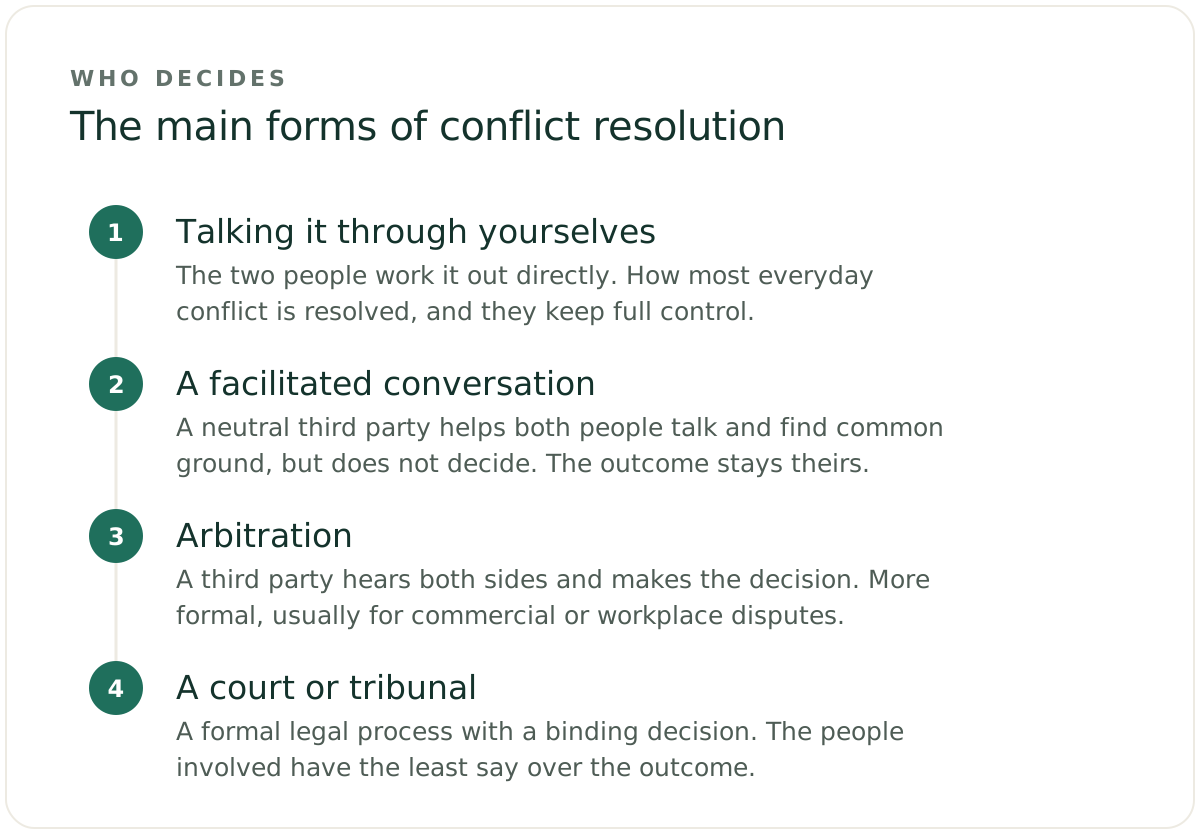
- Talking it through yourselves. The two people work it out directly. This is how most everyday conflict is resolved, and it is the form most of us can get much better at. Our guide to self mediation covers doing it with some structure.
- A facilitated conversation. A neutral third party helps both people talk, listen and find common ground, but does not decide anything. Mediation is the formal version of this. The two people still own the outcome.
- Arbitration. A third party hears both sides and makes a decision. It is more formal and is usually used for commercial, workplace or contractual disputes.
- Courts and tribunals. A formal, legal process with a binding decision. Necessary for some disputes, but slow, costly and adversarial, and the people involved have the least say.
In Australia, the Resolution Institute is the main professional body for mediators, arbitrators and other dispute resolution practitioners, and a good place to understand the formal options when a dispute needs them.
Conflict resolution examples from everyday life
Definitions only go so far. Here is what resolution looks like in practice, in four common situations.
With a partner. The surface argument: “You never do the dishes.” The need underneath: one partner feels they are carrying the household alone and it is starting to feel like they are not valued. Resolution is not a week of the other person doing the dishes. It is a conversation about how the load is shared overall, and an agreed split that both think is fair, with a check-in a month later.
With family. Two siblings keep clashing over an ageing parent’s care. One visits weekly and feels taken for granted; the other lives interstate and feels judged. Resolution starts when both say what they are each worried about, often the same thing, and agree on who does what, including the things the interstate sibling can genuinely take on, such as handling appointments and paperwork.
With a friend. One friend keeps cancelling plans at the last minute. Instead of quietly withdrawing, the other says: “When plans get cancelled late, I end up feeling like I’m not much of a priority. Is something going on?” It turns out the friend is overwhelmed at work. The resolution is smaller plans, closer to the day, and an honest message when they cannot make it.
With a colleague. Two people keep clashing in meetings over a shared project. The issue underneath is that neither knows who has the final say on design decisions. Resolution is not a truce; it is agreeing who decides what, and saying so to the rest of the team.
In each case, the outcome works because it deals with the need underneath rather than the complaint on top. The conflict resolution strategies guide sets out ten practical ways to get there, with an everyday example for each, and for disagreements in your own relationships, our guide to personal conflict brings the approaches together by situation.
Where FairTalk fits in
FairTalk sits in the middle of the list above: an impartial third party for the everyday conflicts that would never reach a mediator. You and the other person talk the issue through together while FairTalk listens without taking sides, and either of you can pause if things get heated. Afterwards, you both get a fair picture of each other’s perspective and a way forward you have shaped together. It does not decide for you; the outcome stays yours.
If the other person is not ready to take part, FairTalk also offers a one-person conversation, so you can work through your own side and decide what to do next. FairTalk is not therapy or legal mediation, and it is not suitable where there is abuse, coercion or a significant power imbalance.
Frequently asked questions
What is conflict resolution in simple terms?
Conflict resolution is working through a disagreement so the real problem is settled, not just paused or won. It usually means both people feel heard, the need underneath the argument has been named, and there is a specific way forward both can accept. The aim is to settle the issue while keeping the relationship intact.
What are the five conflict resolution styles?
The five styles are competing, accommodating, avoiding, compromising and collaborating, from the Thomas-Kilmann model. They describe how much a person focuses on their own concerns versus the other person’s. Collaborating, where both people work towards an outcome that meets both sets of needs, is the most likely to produce a lasting resolution.
What is an example of conflict resolution?
A common example is a couple arguing about housework who stop trading complaints about the dishes and instead talk about how the overall load is shared. One partner explains that they feel they are carrying the household alone; together they agree a split that both think is fair, and check in a month later. The conflict is resolved because the underlying need, feeling valued and supported, has been addressed.
What is the difference between conflict resolution and conflict management?
Conflict resolution settles a disagreement so it stops coming back, while conflict management is about handling an ongoing difference well. Some conflicts, such as lasting differences in personality or habits, cannot be resolved once and for all. For those, managing them calmly and fairly over time is the healthy outcome.
Is avoiding conflict a form of conflict resolution?
Not usually. Avoiding a conflict can be sensible for something trivial or as a short break to calm down, but it leaves the underlying problem in place. For any issue that keeps coming back, avoidance tends to let resentment build until the conflict resurfaces, often bigger than before.