
There is a conversation you have been putting off. Most people, at any given moment, have at least one: the feedback you owe a colleague, the boundary you need to set with a family member, the hurt you have not raised with a partner because raising it feels worse than carrying it. Avoidance is the natural response, and it is almost always the more expensive one.
The good news is that difficult conversations feel unmanageable mostly because we go into them without a plan. The framework is simple: prepare by getting clear on the real issue and settling yourself, open with care and without blame, state your perspective with I-statements, listen to understand, and close by agreeing a concrete way forward. This guide walks through each step, from the preparation beforehand to the follow-through afterwards.
Why We Avoid Difficult Conversations
Understanding the avoidance helps you get past it. Most of it comes down to a few fears: that raising the issue will damage the relationship, that it will turn into a fight, or that we will handle it badly and make things worse. So we wait, and hope the problem resolves itself.
It rarely does. Unspoken issues do not disappear; they go underground and compound. The resentment builds, the distance grows, and the eventual conversation, when it finally comes, is bigger and angrier than the one you could have had months earlier. As we cover in the real cost of unresolved conflict, avoidance is not a way of keeping the peace. It is a way of deferring the cost at interest.
The reframe that helps most is this: a difficult conversation is not the thing that damages a relationship. The unaddressed problem is already doing that. The conversation is how you stop it.
Before the Conversation: Prepare
Most difficult conversations are won or lost before anyone opens their mouth. A little preparation changes everything.
Get clear on the actual issue. Name, for yourself, what the conversation is really about. “I want to talk about the washing up” is often a stand-in for “I feel like I’m carrying more than my share and it isn’t being noticed.” You cannot address the real issue if you have not identified it.
Decide what you actually want. Are you looking to be understood, to change a specific behaviour, to make a decision together? A clear goal keeps the conversation from drifting into a general airing of grievances.
Settle your own state first. You cannot have a calm conversation from an activated nervous system. Research summarised by the American Psychological Association shows that naming your own emotion reduces its intensity, so noticing “I’m anxious about this” is itself part of preparing. If you are still furious, it is not yet time to talk.
Anticipate their perspective. Spend a moment genuinely imagining how the other person sees it. You do not have to agree, but going in curious rather than certain makes the whole exchange less adversarial.
How to Open It
The opening sets the tone for everything that follows, and a good one signals that you are inviting a conversation, not launching an attack.
Lead with the specific issue and your own experience of it, not a verdict on the other person. “I wanted to talk about how the project handover went, because I’ve been feeling out of the loop” opens a door. “We need to talk about your communication” slams it, because the other person now has to defend themselves before they even know what happened.
It also helps to be transparent about your intention. Something as simple as “This is a bit awkward to raise, and I’m telling you because I care about getting it right between us” lowers defences immediately, because it names the difficulty rather than pretending it is not there.
The Step-by-Step Framework
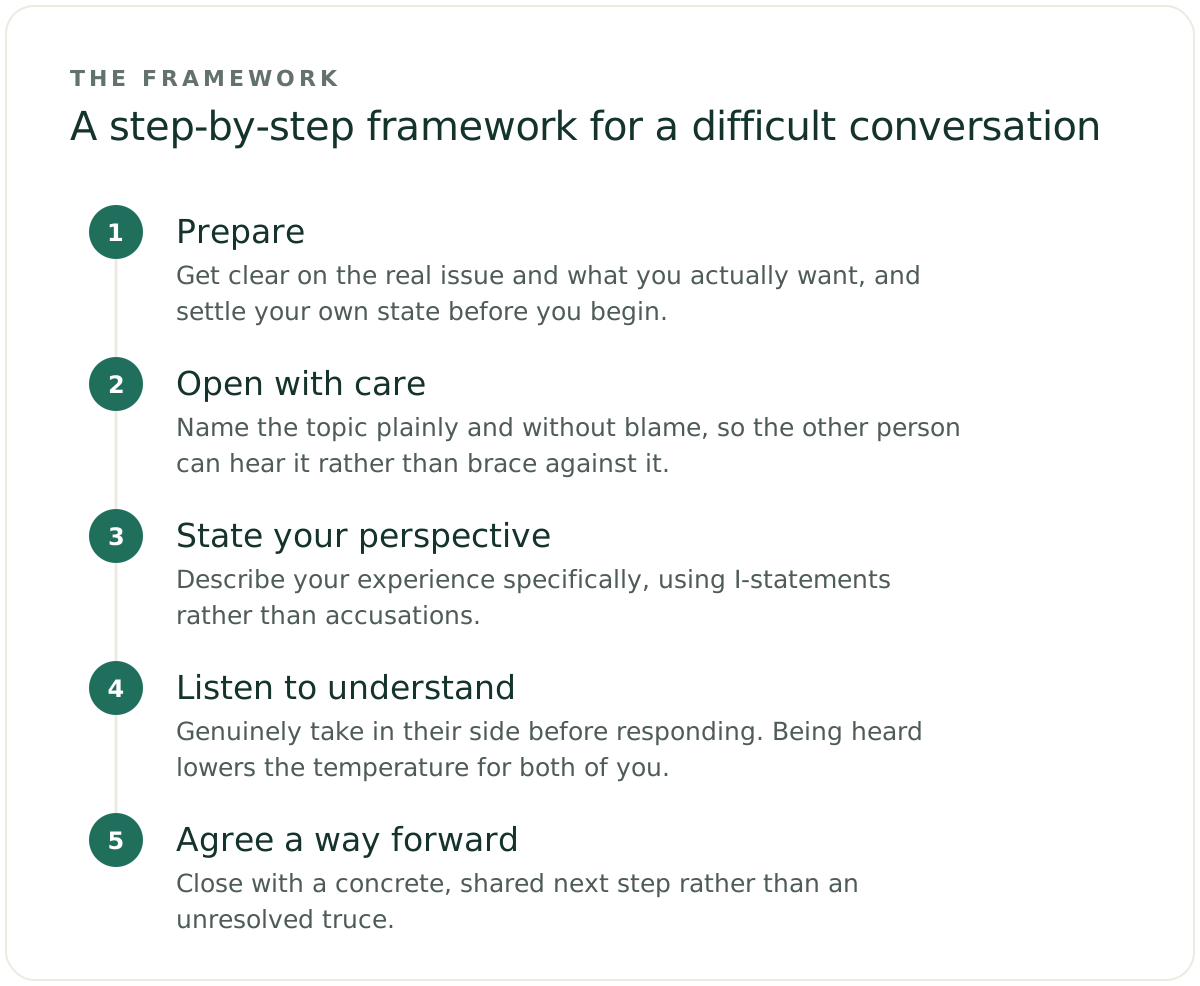
When you are in the conversation, a simple sequence keeps it constructive even when emotions rise.
-
Prepare. Know the real issue and what you want, and settle your own state before you begin, as above.
-
Open with care. Name the topic plainly and without blame, and signal that you are here to work it out together.
-
State your perspective clearly. Describe your experience specifically, using “I” statements rather than accusations. “I felt sidelined when the decision was made without me” is far harder to argue with than “you cut me out.” This is the shift our guide to I-statements versus you-statements covers in depth.
-
Listen to understand. Once you have said your piece, genuinely take in theirs, without using their speaking time to prepare your rebuttal. Feeling heard lowers the temperature for both of you, and you will often discover context that changes the picture. Our guide to active listening covers how to do this well.
-
Agree a way forward. Close with something concrete: a specific, shared next step you have both had a hand in shaping, rather than an uneasy truce that leaves everything unresolved.
When It Starts to Get Hard
Even a well-prepared conversation can heat up, and the moment it does is the moment the framework matters most. If you feel the temperature rising, the same principles that de-escalate any conflict apply: lower your own intensity rather than matching theirs, name what is happening (“I think we’re both getting a bit heated, can we slow down?”), and be willing to pause and return rather than push through to something you will both regret. Our guide to de-escalation techniques covers this in more detail.
It also helps to remember that a difficult conversation does not have to be resolved in one sitting. “I want to keep talking about this, but I think we both need a break first” is a legitimate and often wise move. A conversation that pauses and resumes calmly beats one that is forced to a damaging conclusion.
After the Conversation
The conversation is not really finished when the talking stops. What you do next determines whether it holds.
Follow through on whatever you agreed, promptly and visibly, because nothing undermines a hard-won agreement faster than the same behaviour continuing as if the conversation never happened. And if you did not handle a moment of it well, which happens, a short follow-up repairs it: “I was more defensive than I wanted to be yesterday. I’ve thought about what you said.” Repair after the fact is itself one of the most trust-building things you can do. When a difficult conversation is really a two-sided dispute you are trying to settle between you, the structured approach in our guide to self-mediation extends this framework further, and our guide to conflict resolution strategies collects the techniques that work across every kind of disagreement.
Where FairTalk Fits In
Some difficult conversations are best had directly, one to one, and this framework is built to help you do exactly that. Where FairTalk helps is when the conversation is between two people who both want to work something through but keep talking past each other. In that case it provides the structure a charged conversation usually lacks: both of you talk the issue through in one session while FairTalk listens, and once the session is complete it lays out each perspective and a shared way forward, with the same summary for both of you.
For building the underlying skills this framework relies on, in your own time and before the next hard conversation arrives, FairTalk’s Knowledge Hub offers practical guidance on the specific abilities, like clear expression and genuine listening, that make these conversations go better. For anything involving abuse, coercion, or safety, though, a qualified professional is the right support rather than a self-directed tool.
Frequently Asked Questions
How do I start a difficult conversation?
Open with the specific issue and your own experience of it, rather than a criticism of the other person, and be transparent that it is a hard thing to raise. Something like “I wanted to talk about something that has been on my mind, because our relationship matters to me” signals that you are inviting a conversation, not starting a fight. Preparing what you actually want to say beforehand makes the opening far easier.
What if the other person gets defensive or angry?
Defensiveness usually means the person feels attacked, so the most effective response is to lower your own intensity rather than match theirs, and to make clear you are trying to understand rather than blame. Naming what is happening (“I can see this is landing badly, that isn’t what I intended”) and being willing to pause and return often resets the exchange. If it becomes genuinely aggressive, it is reasonable to stop and pick it up another time.
How do I stop avoiding difficult conversations?
Start by reframing the avoidance: the unaddressed issue is already affecting the relationship, so the conversation is not what creates the problem, it is what addresses it. From there, preparation is what makes it feel manageable. Getting clear on the specific issue, your goal, and a calm opening line removes most of the uncertainty that makes these conversations feel so daunting.
What if I get too emotional during the conversation?
Strong emotion is normal and not a failure. If you feel overwhelmed, it is completely reasonable to say so and take a short break, since a pause is far better than saying something you regret. Preparing your emotional state beforehand helps, and simply naming what you are feeling in the moment, to yourself or out loud, tends to reduce its intensity enough to keep going.