
We tend to talk about connection as something you either have or you do not: chemistry, a spark, the right person, the right team, a natural fit. It is a comforting idea, and it is mostly wrong. The relationships that stay close over years, whether romantic, family, professional, or a long friendship, are not the ones that started with the most chemistry. They are the ones that were maintained, deliberately, through how the people in them communicate.
That is the good news hidden inside the research on relationships: connection is a skill, not a stroke of luck. If it is built rather than found, then it can be learned, repaired, and strengthened at any point. This guide covers what actually makes connection healthy, what the research tells us sustains it, and the everyday communication habits that build stronger relationships, whoever they are with.
Connection is built, not found
The myth of the perfect match quietly damages relationships, because it frames closeness as a fixed property of the pairing rather than something you keep making. If you believe a good relationship should feel effortless, then the ordinary work of staying connected starts to look like evidence that something is wrong.
In reality, every close relationship is maintained the way a garden is: through small, regular attention rather than one grand act. Two well-matched people who stop communicating will drift apart; two less obviously matched people who keep turning toward each other will build something durable. What determines the difference is not compatibility, which is largely fixed once you have chosen each other, but the ongoing quality of communication, which you can keep improving for as long as the relationship lasts.
What the research says about healthy connection
Decades of study point to a handful of consistent findings about what keeps relationships healthy.
The most influential comes from the Gottman Institute, whose research on thousands of couples identified the humble “bid for connection” as the basic unit of a relationship. A bid is any small attempt to connect: a comment, a question, a shared observation, a hand on the shoulder. What predicts whether a relationship thrives is not the absence of conflict but how often each person “turns toward” those bids, with attention and interest, rather than turning away or against them. Couples who stayed together turned toward each other’s bids the vast majority of the time; those who did not, turned away far more often. Connection, in other words, is built in dozens of tiny moments most people barely notice.
The same research points to the importance of the overall balance of interactions. Stable relationships maintain a strong ratio of positive moments, warmth, appreciation, humour, interest, to negative ones, not because conflict is absent but because there is enough goodwill in the account to absorb it. And the wider literature, including work summarised by the American Psychological Association, consistently links strong social connection to better mental and physical health, while isolation and chronic relational stress do the opposite. Connection is not a luxury; it is one of the strongest predictors of wellbeing we have.
The everyday habits that build connection
If connection is built in small moments, then the habits that build it are correspondingly small and repeatable. These are the ones that do the most work.
-
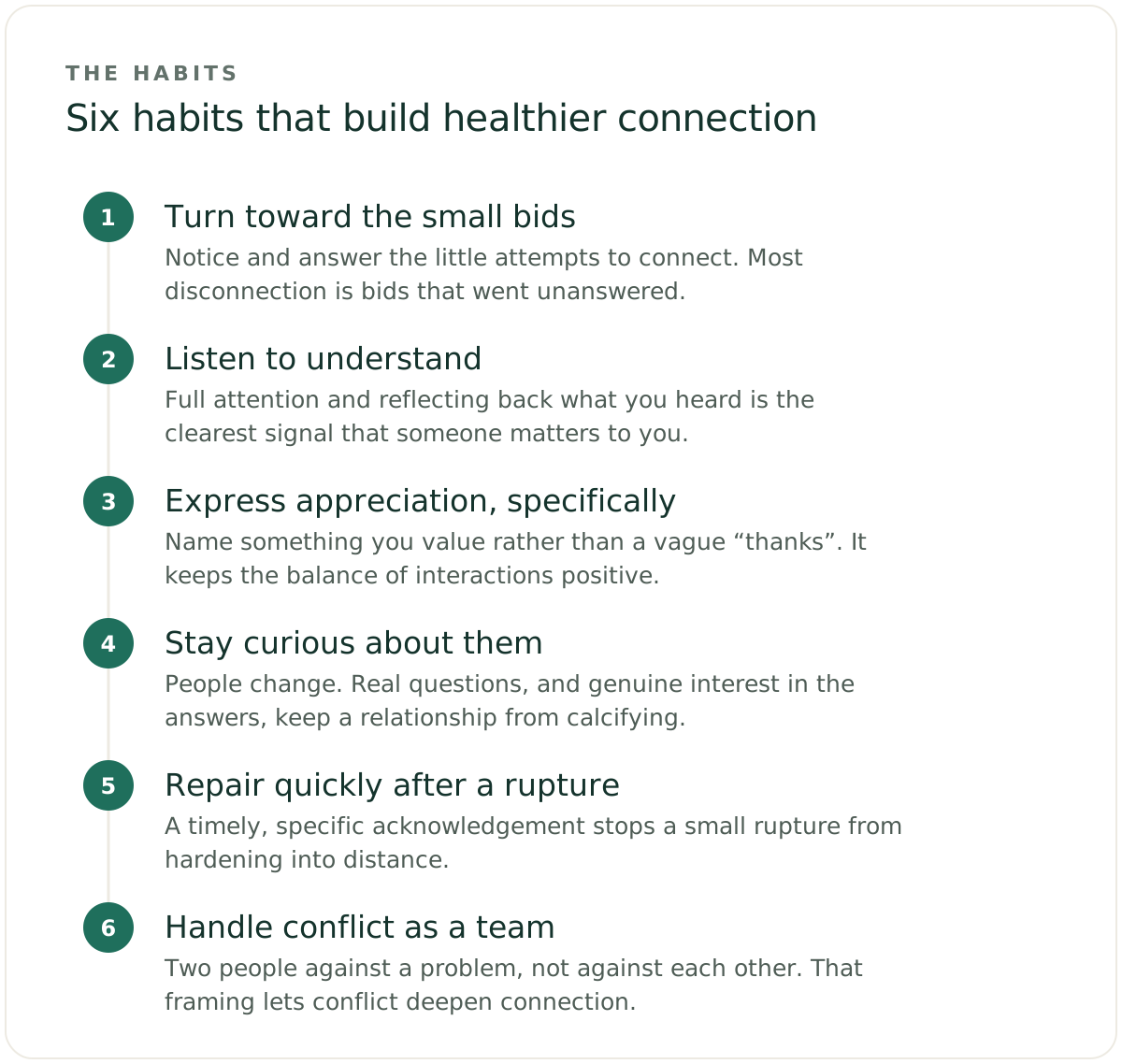
Turn toward the small bids. The single highest-leverage habit is simply noticing and responding to the little attempts at connection: looking up when they speak, answering the throwaway comment, acknowledging the message. Most disconnection is not dramatic; it is a slow accumulation of bids that went unanswered.
-
Listen to understand, not to reply. Giving someone your full attention and reflecting back what you heard is the clearest signal that they matter to you. It is also the skill most people overestimate in themselves, which is why our guide to active listening is worth revisiting deliberately.
-
Express appreciation, often and specifically. Relationships run on a reservoir of goodwill, and appreciation is how you keep it filled. Naming something specific you value, rather than a vague “thanks”, is what tips the balance of interactions toward the positive.
-
Stay curious about the other person. People change, and assuming you already know someone is a quiet form of disconnection. Asking real questions, and being genuinely interested in the answers, keeps a relationship alive rather than letting it calcify into a set of assumptions.
-
Repair quickly after a rupture. Every relationship has friction; what distinguishes the healthy ones is how fast they repair. A timely, specific acknowledgement, as covered in how to apologise properly, stops a small rupture from hardening into distance.
-
Handle conflict as a team. In durable relationships, disagreement is two people against a problem, not against each other. Keeping that framing, especially when you are activated, is what turns conflict from something that erodes connection into something that can deepen it.
Why communication is the foundation of every relationship
It is easy to think of communication as a relationship skill for couples, but the same foundations hold across every kind of connection. A manager and a report, siblings, old friends, new colleagues: in each case, the relationship is only ever as healthy as the communication running through it. The specifics differ, but turning toward bids, listening well, showing appreciation, staying curious, and repairing after friction are universal. This is the underlying skill set our guide to improving your communication skills sets out to build, and it sits at the heart of emotional intelligence in relationships.
Small moments matter more than grand gestures
One of the most freeing findings in relationship research is that the big gestures, the anniversary trip, the dramatic apology, the occasional deep conversation, matter far less than the accumulation of small, ordinary ones. A relationship is not sustained by rare peaks; it is sustained by the daily texture of how two people treat each other in passing.
This is freeing because the small moments are entirely within reach. You do not need more time, money, or eloquence to answer a bid, ask a real question, or say a specific thank you. Healthier connection is less about doing something extraordinary and more about doing the ordinary things consistently, and with attention.
When connection has frayed
Sometimes the small moments have been missed for so long that a relationship feels distant, and no single conversation will fix it. Rebuilding connection works the same way it was built in the first place: through consistency rather than intensity. Start turning toward the small bids again, repair the ruptures that were left unaddressed, and rebuild the balance of positive interactions over time. If the distance has calcified into recurring, unresolved conflict, working through the specific issues directly is often what clears the way for connection to return, and where the friction is chronic, it is worth being honest about whether stress or burnout is quietly draining the energy the relationship runs on.
Where FairTalk fits in
Connection frays fastest when the same issues keep going unspoken or unresolved, quietly eroding the goodwill a relationship depends on. FairTalk is built to help with exactly that. When something needs working through, both people talk it through in one guided session, and the analysis afterwards lays out each perspective, where you align, where you differ, and a few concrete next steps, so an issue that was draining the connection gets genuinely addressed rather than left to fester.
Beyond resolving the issue in front of you, FairTalk is designed to surface the specific communication skills each person can strengthen, and its Knowledge Hub offers self-paced guidance for building the everyday habits, turning toward bids, listening well, repairing quickly, that this article is really about. For relationships strained by abuse, coercion, or a mental health condition, a qualified professional or a service such as Relationships Australia is the right support rather than a self-guided tool.
Frequently asked questions
How do you build healthier connections with people?
Through small, consistent communication habits rather than grand gestures. Notice and respond to the little bids for connection, listen to genuinely understand rather than to reply, express specific appreciation often, stay curious about the other person, and repair quickly whenever there is friction. Connection is built in dozens of tiny moments, so the habits that build it are correspondingly small and repeatable. Doing the ordinary things consistently, and with attention, matters far more than the occasional big effort.
Why is communication so important in relationships?
Because communication is the mechanism through which connection is maintained. Compatibility and attraction help a relationship begin, but what keeps any relationship healthy over time is the ongoing quality of how the people in it communicate: whether they turn toward each other, feel heard, express appreciation, and repair after conflict. Two well-matched people who stop communicating drift apart, while less obviously matched people who communicate well build something durable. It applies across every kind of relationship, not just romantic ones.
What does research say makes relationships last?
The strongest findings point not to the absence of conflict but to how couples handle everyday interaction. Research from the Gottman Institute found that relationships thrive when people consistently “turn toward” each other’s small bids for connection and maintain a healthy balance of positive to negative moments. Broader research links strong social connection to better mental and physical health. What lasts, in short, is not perfect compatibility but responsive, warm, well-repaired communication sustained over time.
How do you rebuild a connection that has faded?
The same way it was built: through consistency rather than one big conversation. Begin turning toward the small bids again, repair the ruptures that were left unaddressed, express appreciation, and rebuild the balance of positive interactions gradually. If the distance has hardened into recurring, unresolved conflict, working through the specific issues directly tends to clear the way for closeness to return. Rebuilding takes patience, but because connection runs on small moments, every small moment is a chance to start.